

More news on this day
Europe has entered a new phase of border control, as the European Union’s long delayed Entry Exit System becomes fully operational across the Schengen external borders, ushering in biometric checks and digital records for every non EU tourist crossing into or out of the bloc.
Get the latest news straight to your inbox!
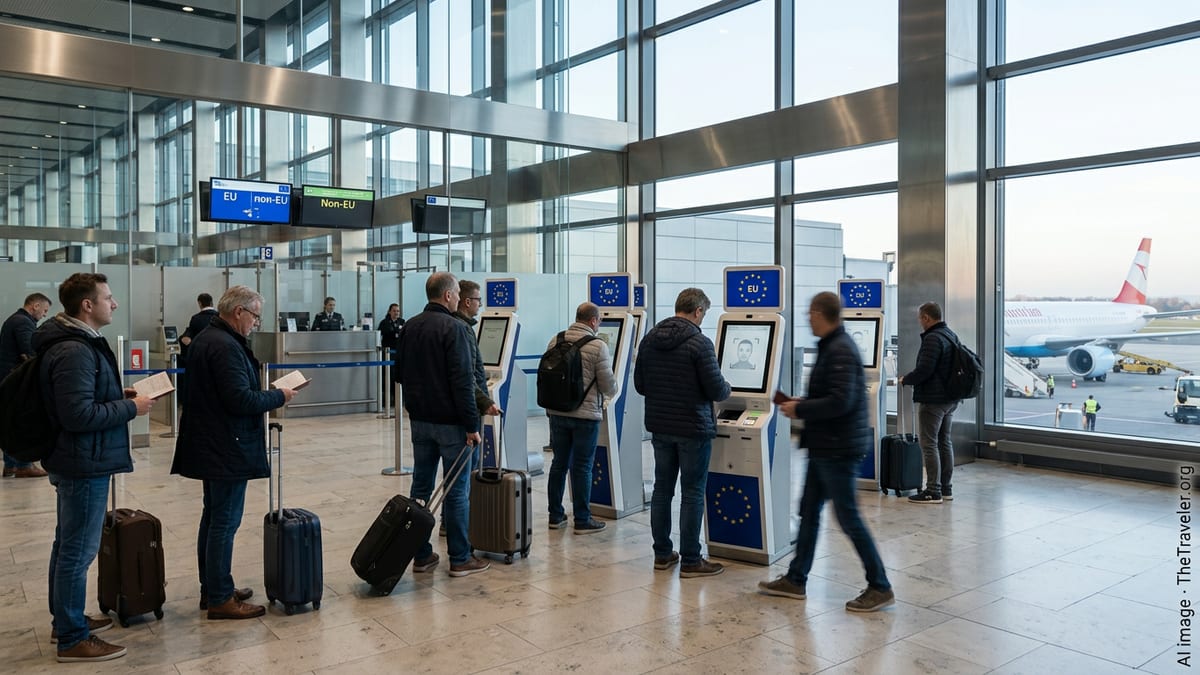
A Six Month Rollout Culminates in a New Border Reality
The Entry Exit System, or EES, began its phased introduction on 12 October 2025 after years of postponements and technical preparation. Reports from European institutions and national governments indicate that the six month transition period was designed to avoid a single, disruptive switch at every airport, land and sea crossing at the same time.
That period ended on 10 April 2026, when EES became mandatory and fully deployed at all Schengen external border points. From that date, third country nationals making short stays, including tourists from the United States, the United Kingdom and many other visa exempt countries, are processed through the new system whenever they enter or leave the zone.
The launch marks a structural shift in how Europe manages its borders. Passport stamps, the traditional visual proof of entry and exit, are being phased out and replaced by a centralised database that logs each crossing together with biometric identifiers. Publicly available information from the European Commission and Council shows that the project is intended to modernise border management, improve detection of overstays and reinforce security, while ultimately enabling more automated controls.
For travellers, the practical impact is already visible. Air and sea hubs that began using EES in late 2025 reported longer queues and adjustment pains as staff and passengers adapted to the technology. With the system now obligatory rather than optional, those experiences are becoming standard across all Schengen gateways.
How the Entry Exit System Works for Tourists
The EES applies to non EU and non EFTA nationals entering the Schengen Area for short stays, typically up to 90 days in any 180 day period. Each time an eligible traveller arrives at an external border, border control staff or automated kiosks capture data from the travel document together with biometric information such as facial images and fingerprints.
This information is stored in a shared database that records the date, time and place of entry and exit, as well as any refusal of entry. Published summaries of the scheme explain that, instead of relying on manual passport stamps and the traveller’s own calculations, authorities can now see electronically whether someone has respected the authorised length of stay or has overstayed a previous visit.
For most tourists, the first encounter with EES comes in the form of a one off, more time consuming registration. Once the initial biometric profile has been created and linked to a passport, subsequent crossings are expected to be faster, particularly where airports and ports provide self service kiosks or eGates connected to the system. Coverage from travel media notes that some locations also support pre registration via apps, although these tools are not yet available at every destination.
European officials have repeatedly presented EES as the foundation for the upcoming European Travel Information and Authorisation System, or ETIAS, a separate pre travel authorisation that is scheduled to start in late 2026. Together, the two systems will tighten checks at the border and before departure, bringing Schengen practices closer to models used in other regions such as North America and parts of Asia.
Early Experiences: Queues, Kiosks and Mixed Reactions
Travel reports from autumn 2025 through early 2026 describe a mixed picture as EES moved from pilot use to full operation. Major gateways, including busy hubs in Portugal, Spain, France and the Netherlands, experienced noticeable increases in waiting times, particularly during holiday peaks and at airports that relied heavily on manual registration desks.
At Lisbon airport, for example, local media and passenger accounts highlighted episodes of several hour delays during the first months after introduction. Similar concerns were raised at the Channel crossings between the United Kingdom and France, where juxtaposed controls mean that French checks for Schengen entry occur on British soil, compounding space and staffing constraints.
Other locations reported a smoother transition, especially where significant investments had been made in biometric kiosks and automated gates before the launch. Travel outlets such as The Guardian and Euronews have pointed out that, once passengers complete their first registration, crossings at well equipped airports can be comparable in speed to previous automated passport checks, albeit with more data collected in the background.
Reactions from travellers have ranged from frustration at teething problems to cautious acceptance of the changes. Privacy advocates have drawn attention to the scale of biometric data now stored in EU systems, while many tourists have focused on practical questions about queue times, the need to arrive earlier at the airport and how the new rules might affect tight connections.
What Changes for Non EU Travellers Now
With EES fully operational, the rules for entering and leaving the Schengen Area have not changed in terms of who needs a visa or how long they can stay, but enforcement has effectively been tightened. The system automatically calculates the number of days spent in the zone and flags overstays more reliably than the old stamp based approach.
For visa exempt tourists, the most immediate change is procedural. First time visitors since the system went live must plan for additional time at border control for the capture of fingerprints and facial images. Returning visitors may see shorter checks, especially where eGates are used, but are still subject to standard questions on the purpose of stay, accommodation and means of support.
According to widely shared guidance from European authorities and travel industry bodies, travellers are advised to carry clear documentation of their plans, such as hotel bookings or proof of onward travel, and to factor potential delays into their itineraries. Families, groups and travellers with reduced mobility may be particularly affected where airports funnel all first time EES registrations through a limited number of staffed booths.
Some national governments and airports have launched information campaigns explaining the new procedures in multiple languages. However, recent coverage in European and UK media suggests that awareness among occasional leisure travellers remains uneven, raising the risk of surprise at the border during busy summer and winter seasons.
Looking Ahead: ETIAS, Digital Travel and the New Normal
The full activation of the Entry Exit System is widely seen in specialist analysis as a cornerstone of a broader shift towards digital travel credentials in Europe. Council documents and Commission communications outline plans for ETIAS to follow in the last quarter of 2026, requiring many visa exempt visitors aged between 16 and 70 to obtain an advance travel authorisation before departure.
Once ETIAS is running, border guards will be able to consult both the pre travel clearance and the real time EES record when assessing whether to admit a traveller. Industry commentators note that this model resembles existing systems such as the United States ESTA programme, though with the added dimension of a shared biometric and movement database across multiple countries.
At the same time, technology providers and airlines are testing complementary tools like digital wallets and biometric boarding, raising the prospect that, in the coming years, many passengers could travel through airports using electronic identities stored on phones rather than presenting physical documents at every step.
For now, the immediate reality for tourists is more modest but still significant. Entering and exiting the Schengen Area has become more data intensive and, at least during the bedding in period, more time consuming. As procedures stabilise and travellers become familiar with the new requirements, EES is expected to fade into the background of the journey, shaping who can come and go, and for how long, without being as visible as the now disappearing ink stamps it replaces.