

More news on this day
European Sleeper has confirmed that its long-awaited Brussels to Milan night train will now launch on September 9, 2026, creating a new overnight corridor that links four key European destinations and strengthens rail’s role as a low-carbon alternative to short-haul flights.
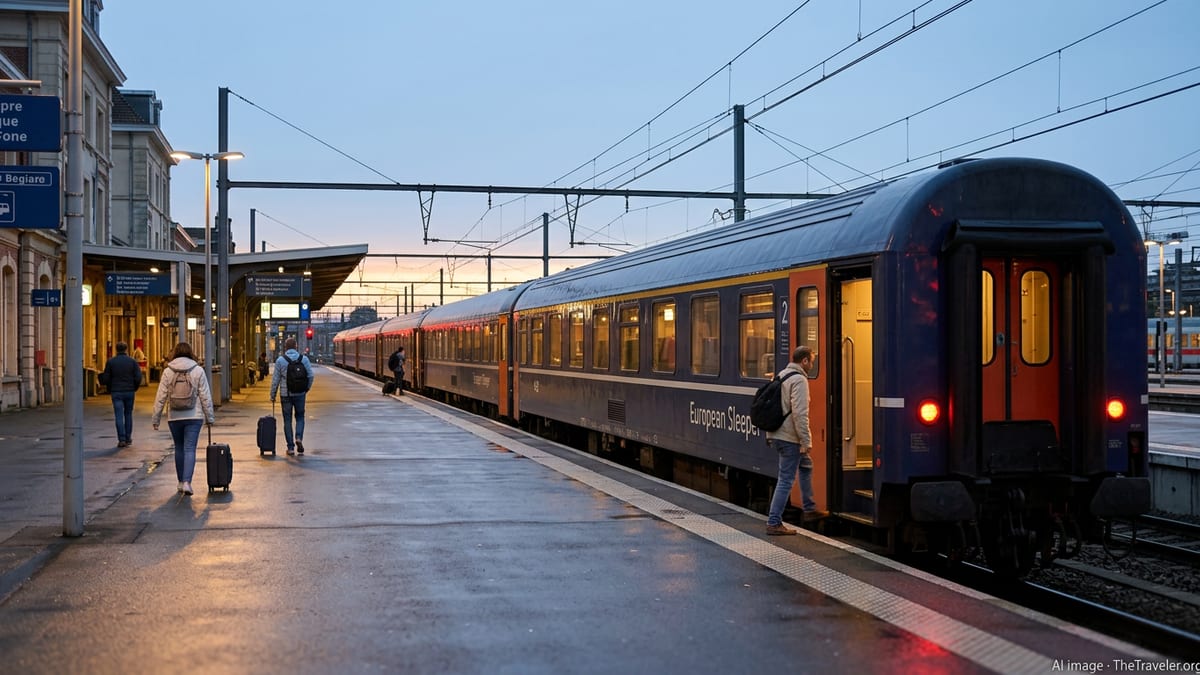
Revised Launch Date for Ambitious Cross-Border Route
The Brussels to Milan night train was initially scheduled to start running in June 2026, but the operator has pushed the launch back by nearly three months. The first departure is now set for September 9, 2026, following timetable adjustments and infrastructure works along the route in Germany and Switzerland that made the original date unworkable.
The service is being developed by European Sleeper, the Belgian-Dutch cooperative that already runs overnight trains from Brussels and Amsterdam to Berlin and Prague. The new line will extend its network deep into the Alps and northern Italy, adding a fresh north-south spine to Europe’s resurgent sleeper-train map.
Despite the delay, the operator has framed the September start as a major milestone. The Brussels–Milan connection will be its third regular night route and its first to serve Switzerland and Italy, marking a step up in operational complexity and geographical reach.
Ticket sales are expected to open in mid-March 2026, giving travelers and rail enthusiasts several months to plan autumn trips using the new overnight service.
Four Key Cities Linked: Brussels, Cologne, Zurich and Milan
The new night train will connect four key cities along one of Europe’s busiest leisure and business corridors: Brussels, Cologne, Zurich and Milan. Starting in the Belgian capital, the service will run east into Germany with stops including Aachen and Cologne, before continuing south through Switzerland with calls at major hubs such as Zurich and Lugano en route to Italy.
This configuration positions Brussels as a gateway not only for Belgian travelers but also for passengers from London and northern France, who can connect via existing high-speed services. Cologne offers a powerful second anchor in Germany, feeding in travelers from the Rhine-Ruhr region, while Zurich provides access to the Swiss network and Alpine resorts. Milan, one of Europe’s largest rail hubs, opens onward links to destinations across northern and central Italy.
The four-city chain is designed to balance tourism and business demand. Brussels and Cologne serve institutional, corporate and conference traffic, while Zurich and Milan are magnets for both city-break visitors and travelers heading further into the mountains or down the Italian peninsula. European Sleeper aims to capture a share of short-haul airline traffic on these corridors by offering a city-center to city-center journey that doubles as a hotel night.
For rail planners, the route also helps fill a looming gap. Nightjet sleeper services from Austria to Milan are expected to be scaled back in the 2026 timetable year, and the Brussels–Milan train is set to become one of the few regular overnight options directly serving northern Italy from northwest Europe.
Timetable, Frequency and Onboard Experience
The Brussels–Milan sleeper is planned to run three times a week in each direction, in line with European Sleeper’s strategy of building a regular but manageable operation rather than a daily high-frequency schedule from day one. Exact departure and arrival times have not yet been published, but the pattern is expected to mirror the company’s existing services, with early evening departures and morning arrivals at the final destination.
On board, travelers can expect the same broad comfort categories already offered on European Sleeper’s other routes. These typically range from budget couchettes with shared facilities to more spacious sleeping compartments marketed under Classic and Comfort-style labels, offering greater privacy and upgraded bedding. Private compartments for solo travelers and small groups are expected to be part of the mix, alongside seats for those seeking the lowest fares.
The operator has invested in upgrading older rolling stock to meet modern expectations for night trains, including power sockets, Wi-Fi on some sections and improved sound insulation. A dedicated service crew is intended to give the trains a boutique feel, with an emphasis on personal welcome, safety and a quiet environment after lights-out.
European Sleeper has previously experimented with additional amenities such as a dining car on its Brussels–Berlin services, and industry observers will be watching to see which features make the cut on the Brussels–Milan line. With a route that threads together several culinary capitals, demand for a quality food-and-drink offer on board is expected to be strong.
Green Travel Across the Alps and a Shift from Short-Haul Flights
The overnight train between Brussels and Milan comes at a time when European travelers and policymakers are increasingly scrutinizing the environmental impact of short-haul flights. By linking four major cities across Belgium, Germany, Switzerland and Italy in a single overnight run, the new service offers a lower-emission option on routes that are currently dominated by air travel.
Crossing the Alps by rail is significantly less carbon intensive than flying, especially when powered by Europe’s largely electrified rail network. For many travelers, the ability to board in Brussels in the evening, sleep through the night and wake up as the train rolls into Zurich or Milan could make it easier to choose rail over a two-hour flight, particularly for city breaks, business trips or onward journeys by train.
The route also arrives as several European governments explore restrictions, taxes or other measures on short domestic or cross-border flights where a rail alternative of under a certain duration exists. While the Brussels–Milan journey is longer than those thresholds, the service fits into a wider political and cultural push to make rail the default for medium-distance travel within Europe.
Travel industry analysts note that night trains are especially attractive because they combine transport and accommodation in one purchase, saving travelers the cost of a hotel and maximizing time at the destination. For families, small groups and business travelers working across multiple cities, the Brussels–Milan sleeper could become a practical backbone for more sustainable itineraries.
Strengthening Europe’s Night Train Revival
The Brussels to Milan launch reinforces the perception that overnight rail in Europe is experiencing a cautious but real revival after years of decline. European Sleeper joins operators such as ÖBB’s Nightjet and other private and state-backed ventures in rebuilding a continent-wide network of sleeper services.
However, the postponement from June to September 2026 highlights the challenges that small open-access operators face when coordinating cross-border services. Track works in Germany, safety certification in Switzerland and the complex task of securing suitable paths through several national networks have all contributed to the revised timeline.
Industry observers say that if the Brussels–Milan route beds in successfully, it will strengthen the business case for further expansion of the cooperative’s network, including long-discussed links from Amsterdam and Brussels to Barcelona. It will also demonstrate that independent operators can stitch together new international routes that complement existing national services rather than compete directly with them.
For travelers, the September 2026 launch date means one more high-profile night train on the map for autumn and winter journeys. With four key European cities on a single overnight line, the Brussels–Milan service is poised to become a flagship example of how rail can connect major destinations in a way that is practical, comfortable and significantly more climate-friendly than taking to the skies.