

More news on this day
A new low-cost electric train service linking London with key Scottish cities is set to shake up UK rail travel, with one-way fares advertised from just over thirty five dollars equivalent, opening the door to more affordable long-distance journeys and fresh momentum for domestic tourism.
Get the latest news straight to your inbox!
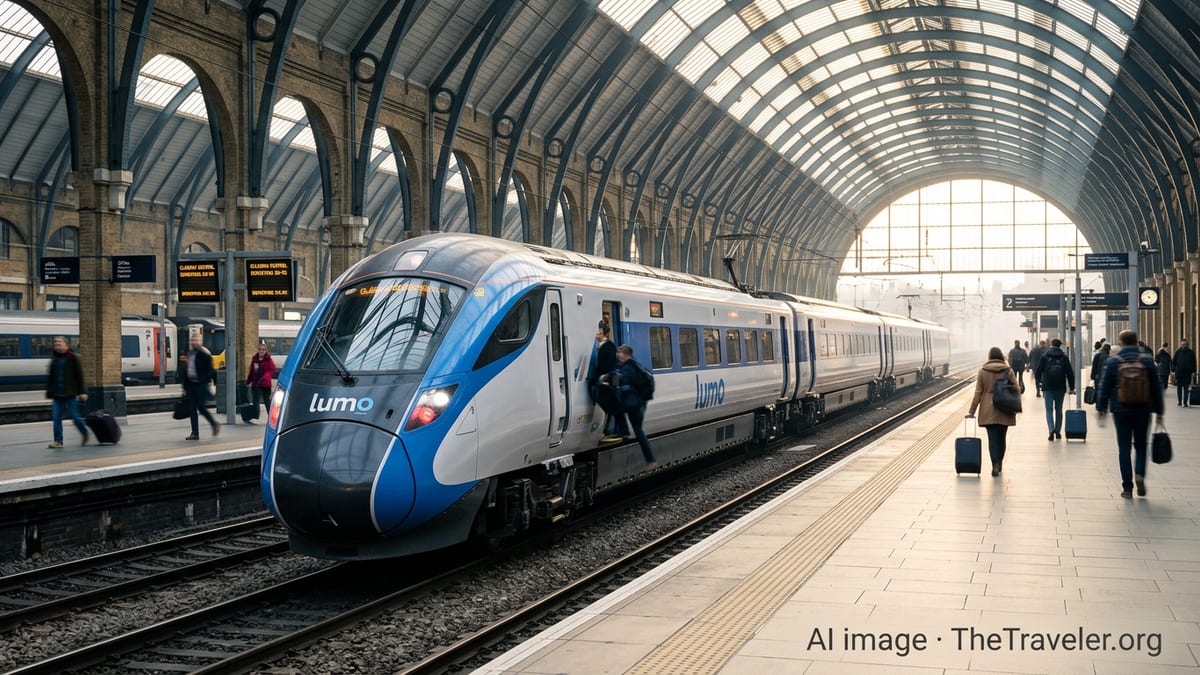
Budget Operator Lumo Expands Beyond Edinburgh
The latest wave of price-cutting on UK rail is being led by Lumo, the open-access, all-electric operator that first entered the market on the London to Edinburgh corridor. Publicly available information shows that Lumo has now extended its model north and west, adding direct trains between London and Glasgow with headline fares starting at around £33, or just over thirty five US dollars at recent exchange rates. These tickets sit well below many standard intercity fares on comparable routes, positioning the service as a rail alternative to low-cost airlines.
Reports indicate that the new Glasgow services build on Lumo’s existing pattern between London King’s Cross and Edinburgh, with trains continuing beyond the Scottish capital or originating in Glasgow for select northbound and southbound journeys. The company has highlighted limited onboard frills, single-class seating and heavy use of digital ticketing as core elements that help keep costs down while keeping journey times competitive with traditional operators.
According to coverage in UK transport and travel media, the first phase of the expanded London to Glasgow operation began in December 2025, with a more robust timetable scheduled to follow as additional rolling stock and train paths become available. A related London to Stirling link via central Scotland is expected to commence during 2026, further extending low-cost options across the Anglo Scottish network.
The expansion underscores how open-access operators, which run services on a commercial basis outside the standard government-franchised system, are increasingly targeting long-distance flows that have historically commanded premium fares. For passengers, the emergence of additional competition on these routes is starting to translate into more choice and a wider spread of price points.
Fares Under £35 Aim to Rival Low-Cost Flights
Published coverage describes Lumo’s price strategy as directly comparable to low-cost airlines, with a small pool of the cheapest tickets offered on each departure and higher but still simplified fares available as trains fill. Starting prices around £33 for London to Glasgow, with similarly low entry-level fares between Glasgow, Newcastle and Edinburgh, are designed to undercut many traditional advance rail fares and even some budget flights on the same city pairs.
The low advertised prices come with conditions that will be familiar to air travellers. Reports indicate that there is no first-class cabin, and optional extras such as additional luggage, seat preferences or enhanced flexibility can affect final costs. Catering is pared back, with a focus on at-seat trolley service and an emphasis on passengers bringing their own food or relying on station facilities before boarding.
Industry analysts quoted in recent business and transport reporting note that the new services arrive at a time when many regulated UK rail fares have continued to rise, and when passengers on some intercity routes have seen discounted off-peak options scaled back. In that context, the ability to travel the length of Britain by train for under thirty five pounds is being presented as a powerful marketing message, especially for younger and price-sensitive travellers.
However, the very lowest fares are capacity controlled and require advance booking, particularly on popular weekends and holiday dates. Travel journalists caution that prospective passengers need to be flexible on timings and should be prepared to book early to secure the headline prices, with less flexible tickets rising in cost as departure dates approach.
Tourism and Regional Economies Set to Benefit
Tourism bodies and business groups across the UK have long argued that more affordable rail links between London and Scotland are crucial for spreading visitor spending beyond traditional gateways. Publicly available commentary from regional tourism agencies suggests that cheaper long-distance trains can encourage visitors to combine London city breaks with extended trips to Scottish destinations, including Glasgow, Edinburgh and emerging city-break favourites such as Stirling.
By running all-electric trains along existing main lines, the new low-cost services are also being framed as a more sustainable way to travel between England and Scotland. Environmental organisations have repeatedly highlighted the carbon benefits of shifting passengers from short-haul flights to rail on corridors like London to central Scotland. The availability of fares that directly compete with budget airlines on price could help tip more travellers toward rail, especially for leisure trips where journey time is less critical than cost.
Local economies along the route stand to gain from improved connectivity. Intermediate stops in northern England and the Scottish central belt can benefit from increased visitor numbers and easier access for students, gig-goers and sports fans travelling to events. Some regional business groups have argued through published position papers that more frequent low-cost trains can help widen labour markets by making occasional long-distance commuting more financially realistic.
The timing of the expansion coincides with broader efforts across the UK to stimulate domestic tourism following several challenging years marked by travel restrictions and cost-of-living pressures. Rail sales and promotional campaigns have already sought to draw more people back onto trains; a structural shift toward permanent low-cost options on high-profile intercity routes could reinforce that trend over the longer term.
Capacity, Comfort and Competition Questions
While the new London to Scotland services have been widely welcomed by price-conscious travellers, transport commentators have also raised questions about capacity and passenger experience. Lumo’s single-class configuration and focus on maximising seat density mean that trains can feel busy at peak times, and some reviewers note that luggage space can be tight on fully booked departures. The operator’s model trades premium comfort features for lower base fares, which may not suit all passengers, particularly those on business trips.
Competition with existing operators such as Avanti West Coast and LNER is another focal point. Previous reporting on UK rail pricing has documented how additional open-access entrants can spur promotional fares and targeted discounts from incumbent companies seeking to defend market share. Observers will be watching to see whether the presence of a consistently low-cost competitor between London and Scotland triggers broader price adjustments or encourages other operators to rethink their own product and fare structures.
There are also operational challenges to consider. The East and West Coast main lines are among the busiest stretches of railway in Britain, and adding new open-access paths requires careful timetable planning. Coverage from rail industry outlets notes that the December 2025 timetable change was designed in part to accommodate extra services, including the extended Lumo operations to Scotland, while preserving reliability for both passenger and freight trains.
Despite these concerns, early demand indicators reported by travel media suggest that interest in the cheap tickets is strong, reinforcing the idea that there was significant latent demand for more affordable long-distance rail. If sustained, that demand could support further innovation in ticketing and service patterns, as operators and policymakers look for ways to balance commercial viability with the public’s appetite for lower fares.
What Travelers Need to Know Before Booking
For prospective passengers, the key message emerging from published coverage is to plan ahead. The lowest-price seats, generally starting in the low thirty pound range between London and Glasgow, are limited in number and tied to specific departures. Flexible travellers willing to consider early-morning, late-evening or midweek trains are more likely to secure the advertised fares than those fixed on peak-time weekend journeys.
Travel writers also advise passengers to pay close attention to luggage policies and onboard amenities. With a no-frills service model, there may be stricter limits on the size and number of bags included in the base fare compared with some traditional intercity offerings. Food options can be more limited than on full-service operators, so passengers may want to buy refreshments at stations in advance, particularly for the four to five hour journey between London and Scotland.
Another consideration is the choice of route and station. Depending on the specific service, trains may use different London termini and call at a slightly different mix of intermediate stops compared with existing operators. Travellers connecting from airports or from local and regional rail services elsewhere in Britain should check journey planners carefully to ensure smooth interchanges, especially when travelling with families or heavy luggage.
As the extended Lumo network beds in through 2026, observers expect further adjustments to timetables and capacity in response to demand. For now, the launch of sub thirty five dollar equivalent fares on one of the UK’s flagship intercity corridors marks a significant milestone in the push to make long-distance rail travel more accessible, and offers a tangible new option for travellers weighing the trade-offs between price, comfort and sustainability.