

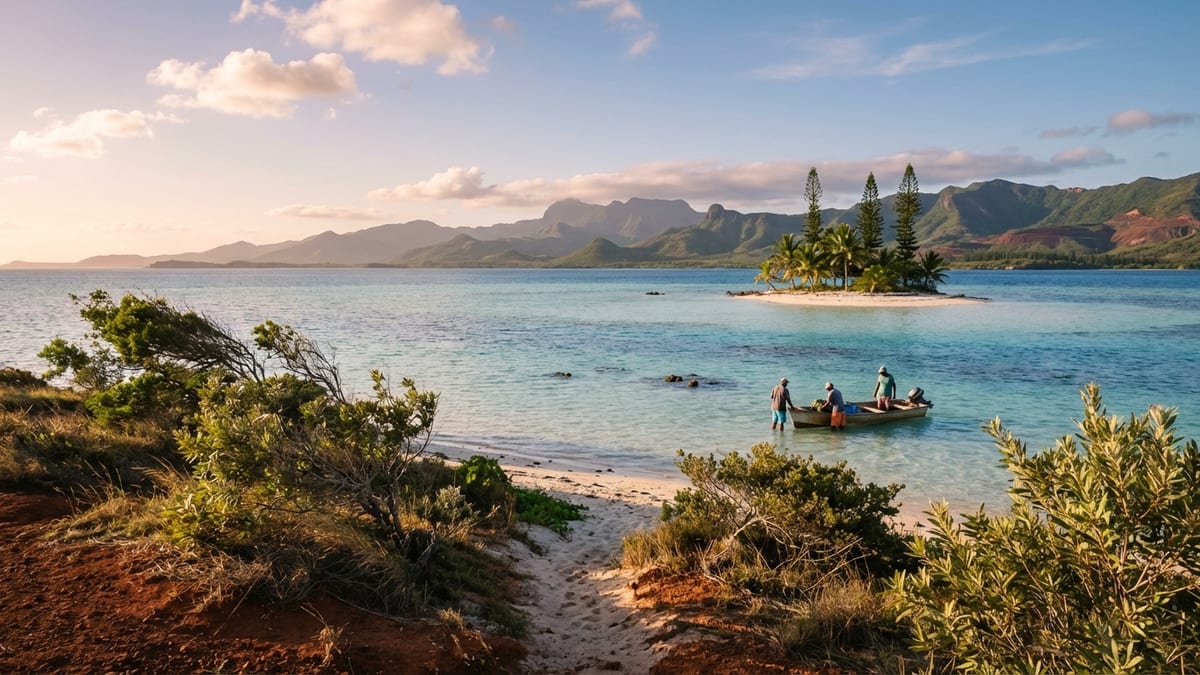
Ringed by one of the largest lagoon systems on Earth and threaded with mountain ridges, red-soil plains and palm-fringed atolls, New Caledonia is a Pacific destination that blends superlative nature with a distinct Kanak culture and a complex political identity.
This guide brings together the essential information travelers need right now, from understanding the UNESCO-listed lagoons and planning island-hopping routes to navigating the best seasons, budgets and cultural etiquette.
Understanding New Caledonia Today
New Caledonia is a French territory in the southwest Pacific, southeast of Vanuatu and north of New Zealand. It consists of the main island of Grande Terre, the nearby Isle of Pines, the Loyalty Islands archipelago and a scatter of smaller islets. The territory carries a dual identity: it remains part of the French Republic, yet it is also the historic homeland of the Indigenous Kanak people, whose culture and customary systems retain a central role in everyday life.
Politically, New Caledonia has been in a carefully managed process of greater autonomy under the Nouméa Accord. Several independence referendums were held in the 2010s and early 2020s, keeping questions of self-determination in the news and shaping local debates about land, language and symbols. For visitors, the main impact is a heightened need to treat political discussions with sensitivity and to understand that the blue lagoons and quiet villages are part of a much larger story about identity and decolonization.
The population is a blend of Kanak communities, people of European descent often called Caldoches, and other groups with roots in Asia and other Pacific islands. French is the official language and is widely spoken, but more than two dozen Kanak languages are still used, especially in rural and tribal areas. For travelers who are familiar with French Polynesia or other French overseas territories, New Caledonia feels both recognizable and distinct, with its own art forms, architecture and forms of customary authority.
Geographically, New Caledonia stands out for its nearly continuous barrier reef that runs around Grande Terre and protects vast interior lagoons. These lagoons shelter dugongs, sea turtles, sharks, manta rays, humpback whales in season and hundreds of coral species. Offshore, the smaller Loyalty Islands and remote atolls offer a very different sense of space and remoteness, where white-sand beaches run for kilometers and time moves more slowly than in the capital, Nouméa.
The World-Class Lagoons and Reefs
The lagoons and coral reefs of New Caledonia are among the most extensive and diverse on the planet, recognized as a UNESCO World Heritage site for their biological richness and striking natural beauty. Their barrier reefs form a nearly uninterrupted ring around Grande Terre, with passes, bommies and drop-offs that lure divers and snorkelers from around the world. Under the surface, you find forests of hard and soft corals, tunnels sliced through reef walls and massive coral formations that rival those of the Great Barrier Reef in both scale and variety.
These reef systems are globally significant because they are free-standing in the open ocean and span multiple oceanographic zones, which allows warm and cooler currents to mix. This creates a continuum of habitats, from mangroves and seagrass beds near shore to outer reef slopes and deep channels. For travelers, that variety translates into a spectrum of experiences: kayaking in calm turquoise shallows, drifting over shallow coral gardens, or taking boat trips out to remote sand cays where reef sharks patrol the drop-offs and seabirds nest in noisy colonies.
Different regions of the lagoon offer distinctive atmospheres. The Great South Lagoon, at the southern tip of Grande Terre, is known for its protected islets, marine reserves and seasonal visits from humpback whales, as well as the contrast between white-sand islets and the rust-red mainland soil. The Great North Lagoon, off the Belep Islands and the northwest coast, is more remote and lightly visited, with some of the clearest water and healthiest coral. Around the Loyalty Islands and the Isle of Pines, lagoons take on an almost surreal color, framed by columnar pines and wide, shallow bays that are ideal for relaxed swimming and paddleboarding.
In recent years, local authorities and customary councils have worked to strengthen marine protection measures, including no-take zones and restrictions on anchoring in sensitive areas. As a visitor, choosing operators that follow best environmental practices, using reef-safe sunscreen and respecting wildlife guidelines are not just ethical choices but practical ones that help sustain the very lagoons that drew you here in the first place.
Kanak Culture, Customary Life and Contemporary Identity
Kanak culture is at the heart of New Caledonia’s identity, and engaging with it thoughtfully can be one of the most rewarding dimensions of a trip. Traditional Kanak villages are typically organized around the “great house,” or chief’s house, whose peaked roof is crowned by a carved rooftop spear known in French as a flèche faîtière. This symbolic finial is believed to house ancestral spirits, with a central face motif and radiating spikes meant to keep malevolent forces away. You will see stylized versions of this form in carvings, monuments and even local flags.
Customary authority is structured through clans, tribes and larger customary areas that sit alongside French administrative systems. Matters such as marriage, adoption and certain land issues are often handled through customary channels rather than state courts. For travelers, this becomes visible in small but important ways: permission may be required to cross tribal land, to visit certain waterfalls or to camp on a beach, and local chiefs or councils may play a direct role in organizing community stays and cultural performances.
In Nouméa, the Jean-Marie Tjibaou Cultural Centre is the most visible cultural landmark and a meaningful starting point. Designed by architect Renzo Piano, its sequence of tall, curved pavilions evokes the form of traditional Kanak huts in a modern, sculptural way. Inside, exhibitions explore Kanak cosmology, ceremonial objects, music and the territory’s political history. Many guided tours and festivals use the centre as a bridge between visitors and communities in the islands and interior of Grande Terre.
Contemporary Kanak culture is also expressed through dance troupes, reggae and Kaneka music, carved totems, shell jewelry and increasingly visible language revitalization efforts in schools and universities. In some outer islands, such as Lifou and Ouvéa, you may find projects that are reviving traditional outrigger canoes and navigation, with launches of new canoes treated as major community events. Learning a few words of a local language, listening respectfully when elders speak during a welcome ceremony and approaching cultural activities as a guest rather than a consumer are key to a positive exchange.
Key Regions: Grande Terre, Isle of Pines and the Loyalty Islands
Most travelers will spend at least a few days on Grande Terre, the main island, which stretches more than 400 kilometers from north to south. The capital, Nouméa, sits on a peninsula in the southwest and combines French-style cafes, harborside promenades and beach suburbs with markets, museums and a distinctly Pacific atmosphere. Nearby bays like Anse Vata and Baie des Citrons are popular for swimming, windsurfing and sunset drinks, while the central city houses colonial-era buildings and the main municipal market for local produce and seafood.
Beyond Nouméa, Grande Terre offers three very different faces. The South Province is striking for its rust-red laterite soils, gnarled niaouli trees and reservoirs that shine turquoise against the ochre earth. The area around Yaté and the Blue River Provincial Park is rich in endemic plants and offers hiking, mountain biking and freshwater swimming in rivers. The west coast is drier and more open, dominated in parts by cattle stations and savanna, with long beaches and easier road access. The east coast is greener, with steep mountains dropping directly into the sea, waterfalls and more visible Kanak villages where travelers may arrange homestays.
Off the southern tip of Grande Terre lies the Isle of Pines, often dubbed the “Pacific Pearl” for its powdery beaches and translucent bays. The island is relatively compact but packed with highlights such as Kuto and Kanumera bays, the more secluded Oro Bay with its natural swimming pool and Upi Bay, where traditional outrigger boats glide between limestone outcrops. Despite a steady flow of cruise passengers and holidaymakers, the island retains a quiet, village feel, and many experiences are organized by local families under customary land rights.
To the east, the Loyalty Islands of Lifou, Ouvéa and Maré each offer their own character. Lifou is the largest and most diverse, with high cliffs, hidden grottoes, plateaus planted with vanilla and picture-book beaches. Ouvéa is often described as the most purely beautiful, an atoll with a near-continuous ribbon of white sand, coconut groves and a lagoon renowned for its clarity and manta rays. Maré feels more introspective and rugged, with dramatic coastal formations and small bays that reward those who like to explore. Because tourism volumes are lower than on Grande Terre, visiting the Loyalty Islands tends to involve more direct interaction with local tribes and a slightly slower, more traditional rhythm of life.
Planning Your Trip: When to Go, How Long and Budgeting
New Caledonia has a tropical climate moderated by trade winds, with generally pleasant temperatures year-round. The cooler, drier season runs from about May to September, when daytime temperatures usually sit in the low to mid 70s Fahrenheit and humidity drops. This period is popular for hiking and outdoor exploration, as well as for humpback whale watching in the southern lagoon, which typically peaks between July and September. The warmer, wetter season runs from roughly November to March, when temperatures and humidity rise and afternoon showers become more common.
The South Pacific cyclone season overlaps with the warmer months, particularly from January to March. While major storms do not hit every year, they are a real consideration when planning travel during this window. If you visit at this time, it is wise to build flexibility into your itinerary, keep abreast of weather forecasts and be prepared for potential flight or boat disruptions. Shoulder months such as April and October often offer a balance of warmth with fewer crowds and a lower risk of severe weather, making them attractive for divers and snorkelers.
For a first visit from North America or Europe, plan at least 10 to 14 days, recognizing that you will lose time to long-haul flights and jet lag. A classic itinerary might combine three to four nights in Nouméa, three or four exploring the south or east coast of Grande Terre by rental car, and another four to five nights divided between the Isle of Pines and one Loyalty Island. Shorter visits of a week are possible but will require you to focus on only one or two regions. Adding extra days is particularly valuable if you want to allow for weather-dependent activities such as whale watching, sailing or reef trips.
New Caledonia is not a budget destination by Pacific standards. Costs reflect both the French regulatory environment and the expense of importing goods to a remote archipelago. Accommodation ranges from simple tribal guesthouses and basic bungalows to full-service resorts. Dining can be relatively costly, but staying in self-catering apartments, picnicking with market produce and seeking out local snack bars can keep day-to-day spending under control. Domestic flights and boat transfers add significantly to the budget, especially if you are visiting multiple islands, so it is worth checking multi-island passes and booking early for peak season.
Getting There, Getting Around and Practical Essentials
International access to New Caledonia centers on La Tontouta International Airport, about a 45-minute drive from Nouméa. The territory’s main carrier, Aircalin, links Nouméa with cities such as Sydney, Brisbane, Auckland, Tokyo, Osaka, Singapore, Honolulu and Paris (via Asian or Pacific hubs), and there are also connections with nearby Pacific capitals. From the United States, travelers generally route through Honolulu, Tokyo, Singapore or an Australian or New Zealand city, depending on schedules and alliances.
Within the territory, domestic flights are largely handled by Air Calédonie, which operates from Nouméa’s Magenta Airport, conveniently located near the city center. Frequent services connect to the Isle of Pines, Lifou, Ouvéa, Maré and towns in the north of Grande Terre such as Koné. Flight times are short, often 30 to 45 minutes, but aircraft are small and loads can be heavy during school holidays and local festivals, so advance booking is important. For some southern islands and closer islets, high-speed catamarans such as the Betico ferries provide an alternative option, though schedules can be weather dependent.
On Grande Terre, renting a car is generally the best way to explore beyond Nouméa. Roads along the west and east coasts are sealed and straightforward, though distances can be longer than they look on a map and mountain segments are winding. Public buses are inexpensive but infrequent and are best suited to travelers with plenty of time and flexible plans. In Nouméa itself, local buses and taxis serve the main neighborhoods, and walking between central districts and waterfronts is easy enough in cooler months.
Practical essentials include bringing a passport with sufficient validity and checking current visa requirements well ahead of travel, as they depend on nationality and may be tied to French entry rules. The currency is the CFP franc, shared with some other French Pacific territories, and credit cards are widely accepted in urban areas and established accommodations. In smaller villages and tribal stays, cash is often preferred, so it is smart to withdraw funds in Nouméa before heading out. Power outlets follow European standards, and mobile coverage is good around Nouméa and many coastal areas but patchier in remote zones, making offline maps and downloaded travel information a useful backup.
Experiences on Land and Sea
The most obvious experiences in New Caledonia revolve around the sea, and with good reason. Snorkeling from the beaches of the Isle of Pines and Lifou offers easy access to coral gardens and schools of reef fish, while organized boat trips take you to outer reef slopes and sand cays where visibility often extends 30 meters or more. Divers can expect encounters with sharks, rays, large groupers and vibrant coral, as well as caves, passes and drop-offs that challenge experienced underwater photographers. Kayaking, stand-up paddleboarding and kitesurfing are popular in lagoons that combine reliable trade winds with generally protected conditions.
Whale watching in the Southern Lagoon has gained attention as a seasonal highlight. During the southern winter, humpback whales migrate through these waters to breed and calve, and regulated boat tours give travelers the chance to observe them breaching and tail-slapping against the backdrop of small islets and distant mountains. Guidelines limit how close boats can approach and how many vessels can be near whales at any one time, part of a broader push to balance tourism with conservation.
On land, hiking is an underappreciated asset. Trails in the Blue River Provincial Park showcase kaori and other ancient trees, with lookouts over reservoirs, nickel mines and wild forest. In the north, multi-day treks and mountain-bike routes cut across the central ranges, alternative ways to understand the topography that creates such varied microclimates and habitats. Coastal walks on the Isle of Pines and the Loyalty Islands, by contrast, tend to be shorter but punctuated by viewpoints over bays, caves filled with clear water and traditional fishing grounds.
Cultural experiences include village visits, where you might be welcomed with a small ceremony and share a meal of bougna, a traditional Kanak dish of root vegetables and meat or fish wrapped in banana leaves and slow-cooked in an earth oven. Handicraft markets sell woven pandanus mats, carved totems and shell necklaces, while urban venues in Nouméa host contemporary art exhibitions, live music and dance festivals. Many travelers find that their most enduring memories are not of one particular beach or lookout but of conversations with hosts and guides about land, language and the future of this multifaceted territory.
Respectful Travel, Safety and Sustainability
Traveling well in New Caledonia means paying attention to both cultural protocols and environmental limits. When you enter customary land, it is polite to present a small gift, such as cigarettes or a modest sum of money, to a local chief or representative, often through your guide or host. This gesture, known in various forms across Melanesia, symbolizes respect and opens the way for you to swim, walk or camp in the area. Always ask before photographing people, ceremonies or private property, and be prepared to remove your shoes when entering homes or certain buildings.
Dress codes are generally relaxed on beaches and in tourist centers, but more conservative clothing is appropriate in villages and at religious sites. Alcohol consumption is regulated in some municipalities, and it is wise to be discreet and informed about local rules. Conversations about politics, independence and recent unrest can be sensitive; listening more than speaking, and avoiding sweeping statements, helps maintain trust. When there are local demonstrations or political tensions, travelers should follow official advisories and avoid protest sites, not because tourists are usually targeted but because gatherings can change quickly.
In terms of personal safety, New Caledonia is relatively safe compared with many destinations, though petty theft can occur in urban areas. Standard precautions such as not leaving valuables in visible places in rental cars, securing travel documents and avoiding poorly lit areas late at night are sufficient for most visitors. On the water, heed local advice about currents, marine life and weather, and use life jackets for all boating trips. Some lagoons and reefs have strong tidal flows, and even experienced swimmers should be cautious when exploring unfamiliar passes.
Environmental sustainability is an increasing focus, especially as climate change and ocean warming put pressure on fragile reef systems. Travelers can contribute positively by minimizing single-use plastics, using reef-safe sun protection, staying on marked trails to protect vegetation and choosing tour operators and accommodations that participate in conservation initiatives. Many local communities and organizations are involved in monitoring turtle nesting sites, rehabilitating damaged reefs and managing marine protected areas, and visitors who support these efforts play a small but meaningful role in preserving New Caledonia’s defining landscapes.
The Takeaway
New Caledonia is more than a beautiful lagoon destination; it is a layered place where Indigenous traditions, French institutions and Pacific realities intersect. Its reefs and atolls are globally significant ecosystems, yet they are also food sources, spiritual spaces and everyday playgrounds for the people who live here. Its towns and villages are shaped by nickel mining, independence debates, cultural revival projects and a steady flow of visitors seeking sun and clear water.
Planning a successful trip means acknowledging that complexity while still giving yourself permission to enjoy the simple pleasures: floating in a quiet bay, tasting bougna prepared by your hosts, or standing on a headland and watching trade winds roughen the outer reef. Build time for weather changes and inter-island transfers, respect customary land and local sensitivities, and opt for experiences that give back to communities and ecosystems. If you do, New Caledonia will reward you with a sense of place that lingers long after the turquoise fades from your camera roll.
FAQ
Q1. Do I need a visa to visit New Caledonia?
Visa requirements depend on your nationality and are tied to French and European regulations. Many travelers from the European Union, some Pacific states and other partner countries can enter visa-free for short stays, while others must apply in advance. Check current entry rules with the nearest French consulate or official government source well before you travel, and ensure your passport remains valid for the required period beyond your intended departure date.
Q2. What is the best time of year to visit New Caledonia?
The cooler, drier months from around May to September are often considered the most comfortable, with lower humidity and pleasant temperatures ideal for hiking and exploring. July to September is also the main humpback whale season in the southern lagoon. The warmer, wetter months from November to March offer lush landscapes and warmer water but come with higher humidity, more frequent showers and an increased risk of tropical cyclones, especially between January and March.
Q3. Is New Caledonia suitable for families with children?
Yes, New Caledonia can be an excellent family destination, particularly for children who enjoy swimming, snorkeling and outdoor activities. Many beaches have gentle slopes and calm, lagoon-protected waters. Family-friendly accommodations and apartments are common in Nouméa and on the Isle of Pines. Parents should still observe normal safety precautions, including close supervision around water, sun protection and attention to local advice about currents and marine life.
Q4. Do people speak English, or do I need French?
French is the main language and is widely used in administration, schools and commerce. English is spoken in some hotels, dive centers and tour companies, but it is less prevalent in small towns and villages. Knowing basic French phrases for greetings, directions and dining will make daily interactions smoother and more enjoyable. In Kanak communities, Indigenous languages are often spoken among locals, but French is usually used when communicating with visitors.
Q5. How many days do I need to see the main highlights?
With a week, you can get a solid introduction by combining time in Nouméa with either the Isle of Pines or a short road trip on Grande Terre. For a more rounded experience that includes at least one Loyalty Island, time in the south or east of Grande Terre and a more relaxed pace, 10 to 14 days is preferable. Travel time to reach New Caledonia from Europe or North America is significant, so adding extra days helps offset jet lag and allows flexibility for weather or transport changes.
Q6. Is it expensive to travel in New Caledonia?
By Pacific standards, New Caledonia is relatively costly, reflecting its status as a French territory with imported goods and high transport costs. Accommodation, restaurant meals and domestic flights can be significant expenses. To manage budgets, travelers often mix hotel stays with self-catering apartments, eat at local snack bars or markets, and focus on a smaller number of islands rather than hopping constantly. Planning ahead and traveling outside peak local holiday periods can also help reduce costs.
Q7. What currency is used and how can I pay?
The currency is the CFP franc, which is also used in some other French Pacific territories. Credit and debit cards are widely accepted in Nouméa, larger towns and many resorts. However, smaller shops, markets and tribal guesthouses may prefer or require cash. It is wise to withdraw sufficient funds in Nouméa before traveling to more remote parts of Grande Terre or to the outer islands, where ATMs may be limited or unavailable.
Q8. How do I travel between the islands?
Most inter-island travel is by domestic flights, primarily operated from Nouméa’s Magenta Airport to the Isle of Pines, the Loyalty Islands and key towns on Grande Terre. Flights are short but should be booked in advance, particularly during school holidays and festival periods. Some routes, especially to closer southern islands, are also served by fast ferries, which can be more economical but are more exposed to weather-related delays. Check schedules carefully and build buffer time into your itinerary.
Q9. Are there any health or safety concerns I should know about?
General health standards are good, and medical facilities in Nouméa are modern for the region, though services in remote areas are more limited. Tap water is usually safe to drink in the capital and major towns; elsewhere, follow local advice or opt for treated water. Sun exposure, dehydration and minor cuts or coral scrapes are more common issues than serious illness. It is advisable to have comprehensive travel insurance that covers medical care, evacuation and activities such as diving. As with any coastal destination, be mindful of currents, weather and marine life, and respect local safety warnings.
Q10. How can I be respectful of Kanak customs during my visit?
Showing respect begins with small gestures: greeting people politely, dressing modestly in villages, and asking permission before entering tribal land, taking photos or visiting culturally significant sites. When staying in a village or using customary land, offering a small gift of thanks through your host or guide is often appropriate. Listen carefully during explanations of local rules, follow instructions about where you may or may not walk or swim, and treat cultural performances and ceremonies as shared experiences rather than staged entertainment. By approaching encounters with humility and curiosity, you help maintain a positive relationship between visitors and host communities.