

More news on this day
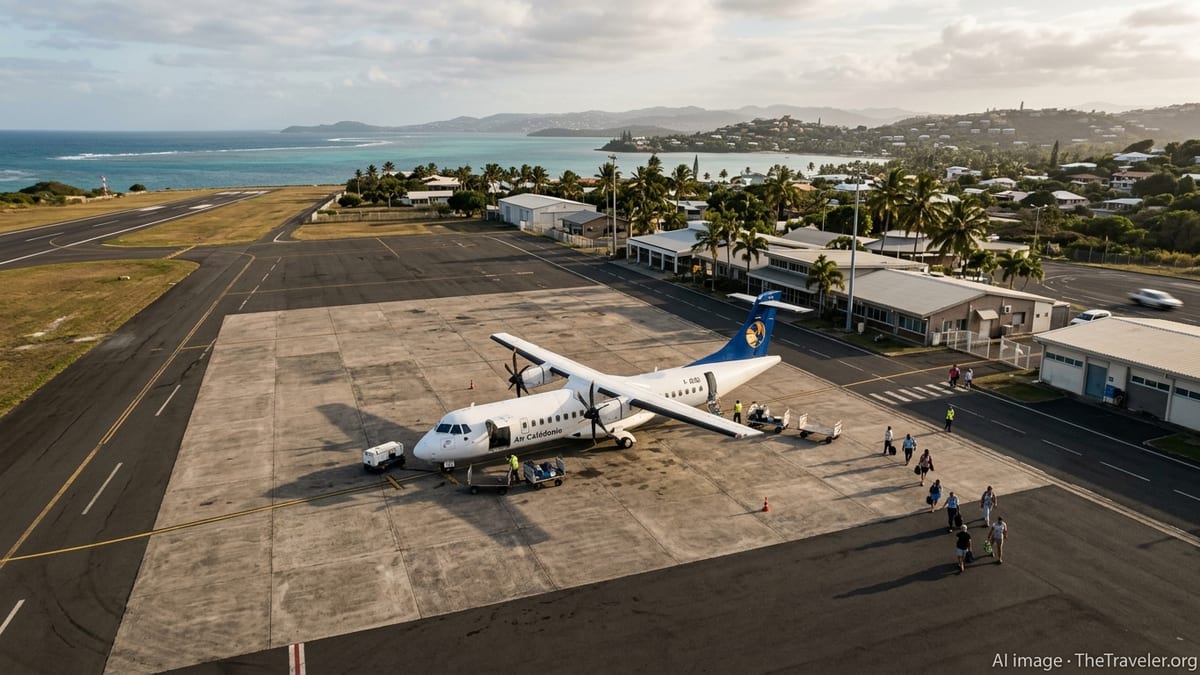
New Caledonia’s state-owned domestic carrier Air Calédonie has filed for bankruptcy protection, deepening a long-running financial crisis and triggering fresh uncertainty for island communities that rely on its lifeline routes across the French Pacific territory.
Get the latest news straight to your inbox!
A Lifeline Carrier Pushed to the Brink
Publicly available information indicates that Air Calédonie’s move into bankruptcy proceedings follows several years of mounting financial strain, marked by collapsing demand during New Caledonia’s civil unrest in 2024 and a slow tourism recovery. Reports show that the airline, known locally as Aircal, serves a network of short-haul routes linking Nouméa with the Loyalty Islands and the Isle of Pines, routes that are often the only practical way for residents to reach the capital for work, education and health care.
Government documents and recent coverage highlight that the carrier’s financial position deteriorated sharply after 2023, with operating losses deepening as passenger numbers fell and costs rose. Air Calédonie has relied on repeated cash injections and loans from New Caledonia’s government to stay in the air, but those measures have not been enough to restore long-term viability. Analysts following the territory’s aviation sector note that bankruptcy protection is intended to provide a legal framework for restructuring debt while keeping core services operating where possible.
The bankruptcy filing places Air Calédonie among a growing list of small regional airlines in the Pacific and beyond that have faced insolvency pressures in recent years. Observers point to the vulnerability of thin, socially important routes that generate limited commercial returns but carry high fixed costs for aircraft, crews and safety compliance.
Debt-Fuelled Rescue Efforts Hit a Wall
Published reporting and government statements show that New Caledonia’s authorities had already committed substantial public funds in an attempt to stabilise Air Calédonie before the bankruptcy move. The carrier reportedly received at least XPF1 billion in emergency lending in 2024, followed by additional support in 2025, as tourism collapsed and domestic demand slumped in the wake of violent unrest that caused extensive damage across the territory.
Budget documents for the 2026 financial year describe a wider fiscal squeeze on New Caledonia’s public finances, with record debt levels and lower tax revenues limiting scope for further bailouts. Coverage of local political debates indicates that policymakers viewed Air Calédonie’s situation as increasingly untenable without structural changes, including cost reductions and a rethink of how domestic air transport is organised.
Analysts note that the bankruptcy process is expected to test the government’s appetite for continued financial backing, particularly if creditors seek deeper cuts or asset sales. Earlier fleet decisions already reflected the pressure to generate cash, with reports indicating that Air Calédonie sold at least one ATR 72 turboprop to replenish its coffers while attempting to maintain a minimum schedule.
Airport Shift and Protests Collide With Financial Crisis
Even before the bankruptcy filing, Air Calédonie’s future had become entwined with a controversial plan to shift all domestic operations from Nouméa’s centrally located Magenta Airport to the more distant La Tontouta International Airport. Government announcements framed the transfer, scheduled for early March 2026, as a cost-saving reform designed to share infrastructure with international carrier Aircalin and reduce duplication across the small aviation market.
According to coverage from regional aviation outlets, the shift was projected to generate hundreds of millions of CFP francs in annual savings for Air Calédonie and avoid significant upcoming maintenance costs at Magenta. However, the proposal triggered strong pushback from island representatives and business groups, who argued that moving the domestic hub 40 kilometres from central Nouméa would make travel more expensive and less convenient for residents relying on frequent short flights.
Protests and blockades connected to the airport transfer plan and broader political tensions have repeatedly disrupted Air Calédonie’s operations. Recent reports describe rolling cancellations of services to the Loyalty Islands and the Isle of Pines, with the airline warning of significant operational and financial impacts. Commentators say the combination of structural deficits, chronic disruptions and contested infrastructure reforms created a highly unstable environment that made a bankruptcy filing increasingly likely.
Island Communities Face Renewed Connectivity Fears
The bankruptcy of New Caledonia’s main domestic carrier has immediate implications for communities spread across the archipelago, where roads and ferries are limited and weather-sensitive. Coverage from local and regional media emphasises concerns among island residents about access to essential services in Nouméa if flight frequencies are cut or fares rise as part of any restructuring plan.
Business organisations in New Caledonia have also warned of the broader economic fallout if domestic air links become less reliable. Tourism operators, in particular, depend on predictable connections between La Tontouta, Nouméa and outer islands to package holidays that combine international arrivals with beach and lagoon destinations. Any prolonged uncertainty around schedules or capacity at Air Calédonie is viewed as a potential drag on the territory’s efforts to rebuild visitor numbers after recent unrest.
At the same time, commentators note that alternative providers, including smaller private carrier Air Oceania and maritime operators, may seek to fill some gaps if Air Calédonie is forced to shrink. However, given the relatively small size of the market and high operating costs, observers caution that purely commercial solutions may not be sufficient to preserve the same level of connectivity without some form of continued public support or territorial continuity subsidies.
What Bankruptcy Could Mean for New Caledonia’s Aviation Map
For now, Air Calédonie’s bankruptcy protection is widely seen as a pivotal moment that will shape New Caledonia’s aviation system for years to come. Publicly available analyses suggest several possible outcomes, ranging from a court-supervised restructuring that keeps the airline flying under tighter financial controls, to asset sales, route rationalisation or even the emergence of a successor company if the current structure proves unviable.
Any restructuring is likely to focus on the most heavily used links between Nouméa, the Isle of Pines and the Loyalty Islands, while less profitable or marginal routes could face scrutiny. Industry observers expect that the proposed consolidation of operations at La Tontouta will remain central to attempts to reduce costs and better integrate domestic services with Aircalin’s international network, even as community groups continue to campaign for convenient access to the capital.
For travellers, the short-term picture is one of potential disruption alongside continued demand for seats on the archipelago’s limited air routes. Travel industry commentary advises passengers to monitor schedules closely, allow additional time for transfers between international and domestic flights, and consider flexible bookings as the bankruptcy process unfolds. The final shape of Air Calédonie’s future, and the wider domestic aviation map, will depend on negotiations between the airline’s administrators, creditors and New Caledonia’s government in the months ahead.