

More news on this day
One of Western Australia’s best-known heritage hotels, Caves House in Yallingup, is poised to enter a new phase under prominent Perth developer Adrian Fini, with reports indicating a deal has been struck for the storied coastal property.
Get the latest news straight to your inbox!
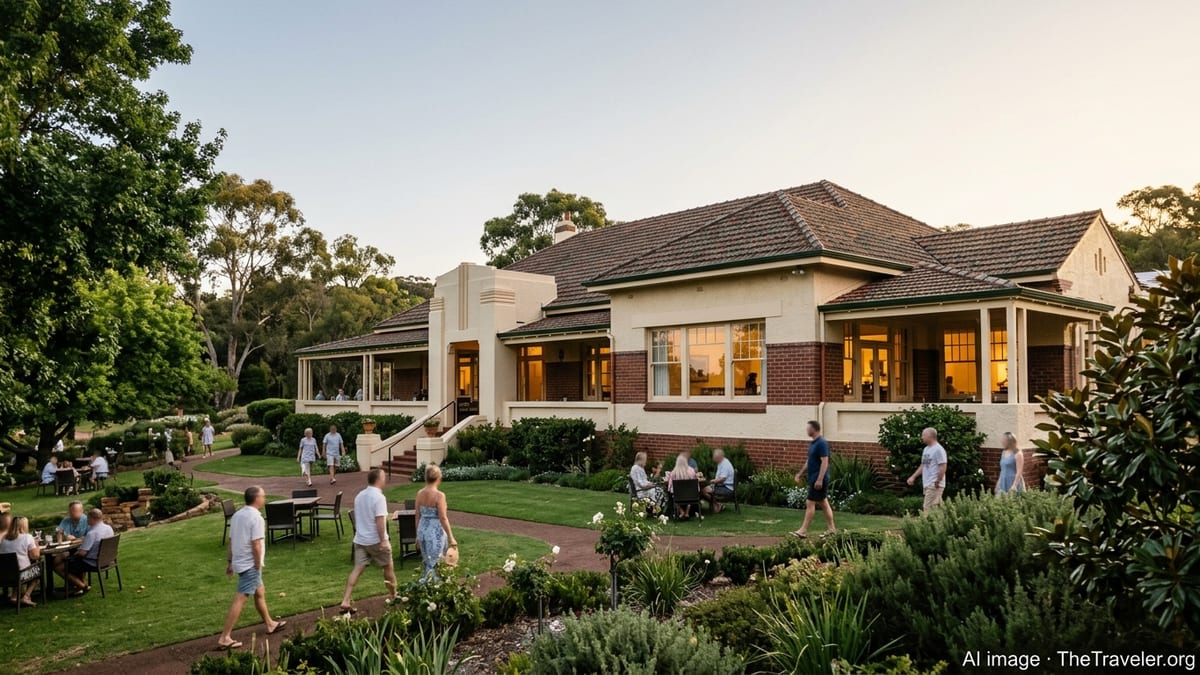
Heritage Landmark Poised for Ownership Change
Located a short walk from Yallingup Beach and the limestone chambers of Ngilgi Cave, Caves House Hotel has long been regarded as a cornerstone of tourism in Western Australia’s Margaret River region. Established in the early 1900s as a government-backed accommodation house for visitors to the caves, the property has since evolved into a popular hotel, restaurant and live music venue while retaining its historic character.
Publicly available information on the hotel’s history shows that the current iteration of Caves House, rebuilt in the late 1930s with distinctive art deco and Inter-War Old English influences, sits within expansive terraced gardens that are protected for their heritage value. The complex is listed within the state’s heritage inventory, reflecting its architectural significance and long association with Western Australia’s early tourism industry.
Property records and heritage documents indicate that Caves House has changed hands multiple times since it was first transferred out of government ownership in the 1960s, moving through a succession of private hotel operators and investment groups. The latest proposed transaction involving Adrian Fini signals another significant moment in that ownership timeline, with expectations that a new phase of investment and refurbishment could follow.
Adrian Fini’s Track Record in Heritage Hospitality
Adrian Fini is widely associated with large-scale redevelopment and adaptive reuse projects in Western Australia, particularly in and around Perth. Publicly available coverage highlights his involvement in restoring and repositioning several heritage and character properties, often blending contemporary hospitality concepts with careful conservation of original fabric.
Industry observers note that this approach has typically focused on enhancing the commercial performance of historic sites while preserving, and in some cases elevating, their cultural value. In previous projects, this has included sensitive upgrades to guest facilities, the addition of new food and beverage spaces, and landscape works that aim to make heritage assets more accessible to the public.
Reports about the Caves House transaction suggest that the Yallingup property’s layered history and well-established tourism profile would align closely with that portfolio. The combination of a protected garden setting, period architecture and proximity to major attractions such as Ngilgi Cave and regional wineries is seen as offering considerable scope for a refreshed hospitality concept under experienced local ownership.
Yallingup and the South-West Tourism Context
Caves House Hotel sits within one of Western Australia’s busiest leisure corridors, with Yallingup and nearby coastal settlements drawing visitors for surfing, walking trails, cellar-door touring and boutique accommodation. Tourism data for the Margaret River region in recent years has pointed to strong domestic visitation, particularly from Perth and other parts of the state, alongside a gradual rebuilding of international demand.
Within this context, the hotel functions as both a social hub for locals and a gateway for visitors arriving to explore the caves, beaches and vineyards of the surrounding Capes region. Its beer garden and terraces, which overlook lawns and mature trees, are frequently promoted in tourism marketing as emblematic of the relaxed, coastal character that has come to define Yallingup.
Any change in ownership at Caves House is therefore viewed as having implications beyond the boundaries of the property itself. Hospitality analysts suggest that renewed investment could further strengthen Yallingup’s appeal as a year-round destination, provided that the balance between heritage preservation, public access and commercial development is maintained.
Balancing Conservation and Redevelopment
Because Caves House is a heritage-listed complex, any future redevelopment is expected to operate within planning frameworks designed to protect its architectural and landscape significance. Heritage assessments available through state registers describe the hotel buildings, associated garden terraces and surrounding structures as having considerable cultural value, particularly in the way they illustrate early twentieth-century tourism development in the south-west.
In practical terms, this usually means that substantial alterations to facades, significant interiors and key garden elements require careful documentation and formal approvals. Developers of similar properties in Western Australia have often worked alongside heritage consultants and landscape architects to retain defining features while upgrading services, accessibility and guest amenities to contemporary standards.
Commentary from design and planning circles suggests that a project led by a locally based developer with a record in adaptive reuse may be well placed to navigate these constraints. For Caves House, that could translate into targeted refurbishments of guest rooms and public areas, discreet additions or reconfigurations to improve circulation, and landscape works that enhance the experience of the historic gardens without undermining their character.
Looking Ahead for Guests and the Local Community
For regular guests and nearby residents, the reported sale raises questions about how day-to-day operations at Caves House might change in the short to medium term. Publicly accessible information indicates that the venue currently offers a mix of hotel rooms, self-contained apartments and heritage-style accommodation, alongside a busy calendar of live music and community events.
In similar regional hotel transactions, it has been common for trading to continue while ownership and management transitions are finalised, with any significant building works staged to avoid peak tourism periods. Sector analysts note that operators are increasingly conscious of maintaining continuity for local patrons, particularly in smaller communities where a single pub or hotel can play an outsized social role.
While detailed redevelopment plans for Caves House under Adrian Fini have yet to be publicly outlined, expectations within the tourism and hospitality sector are that any future upgrades will seek to reinforce the property’s status as a landmark coastal hotel. For Yallingup and the broader Margaret River region, the prospect of a renewed and carefully managed Caves House is being watched closely as another indication of sustained confidence in the south-west’s long-term appeal.