

More news on this day
As cherry blossoms begin to open across East Asia in March 2026, new data on bloom timing, crowding and connectivity shows travelers quickly shifting from classic big-city hanami hotspots to rail-linked regions, cooler-climate late blooms and lesser-known sakura festivals from northern Japan to the Himalayas.
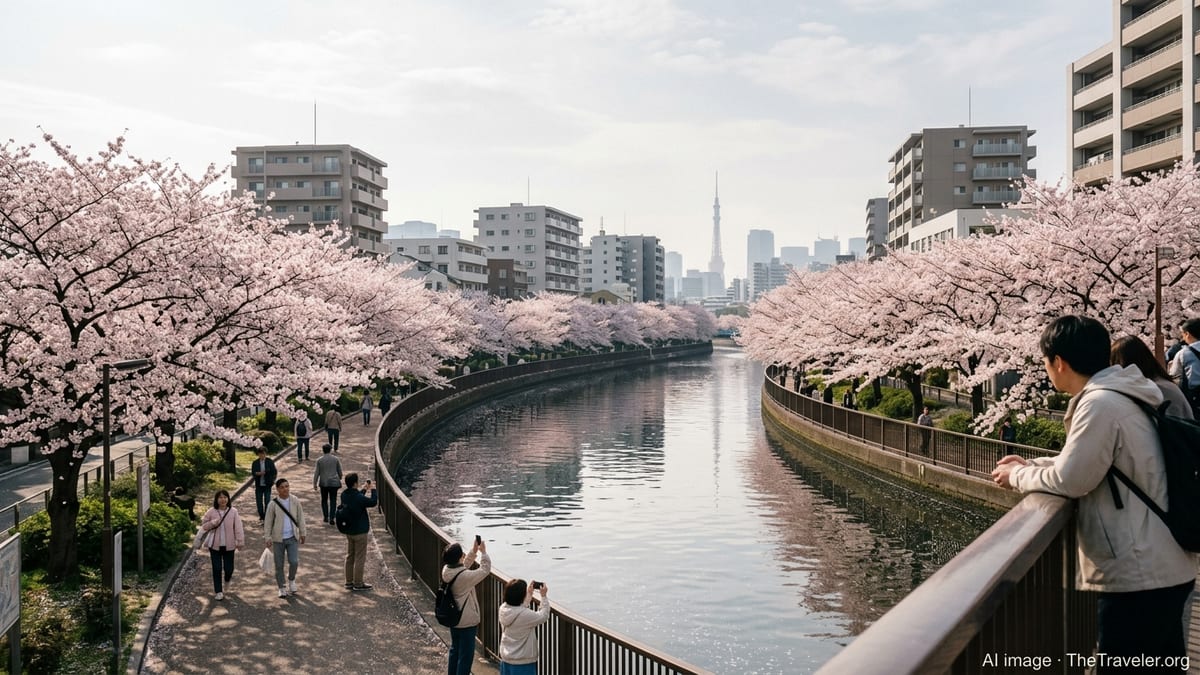
Earlier Blooms Push Travelers to Rethink Tokyo and Kyoto
Forecasts for 2026 indicate that Japan’s cherry blossoms are once again arriving slightly earlier than historical averages, compressing peak viewing into a tighter late March and early April window. The Japan Meteorological Corporation’s latest projections suggest flowering in Tokyo around March 19, with peak bloom expected in the final days of March, while Kyoto is predicted to follow just a few days behind. Travel advisories and destination guides note that warmer late winter conditions are driving this shift, prompting visitors to adjust flights and hotel bookings accordingly.
Publicly available guidance from Japanese and international travel outlets now emphasizes flexibility over fixed dates. Rather than planning trips around a single city during a presumed “safe” week in early April, 2026 itineraries increasingly recommend multi-stop routes that track the northward movement of the so-called cherry blossom front. Industry blogs and booking platforms highlight that the practical window to see full bloom across Tokyo, Kyoto and Osaka on one trip may be as narrow as March 29 to April 7 this year, putting extra pressure on late planners.
Local tourism boards and national travel organizations have also stepped up messaging around overtourism. Reports from previous seasons describe complaints about crowding, litter and noise around flagship parks such as Ueno Park and Shinjuku Gyoen in Tokyo, Maruyama Park and the Philosopher’s Path in Kyoto. In response, 2026 campaigns increasingly spotlight alternative viewing areas within the same prefectures and encourage visitors to stagger visits outside weekend peaks or shift to early-morning and evening hanami.
The result is a more mobile pattern of sakura tourism in and around Tokyo. Package itineraries promoted for March and early April now commonly link the capital with nearby regions such as Shizuoka and Yamanashi, where riverside rail lines, tea fields and mountain backdrops offer cherry blossoms in less congested environments, while still allowing travelers to dip into central Tokyo for one or two headline-viewing days.
Rail Routes and Regional Cities Gain Ground
One of the clearest 2026 trends is the rise of rail-based cherry blossom trips that combine major cities with regional hubs. Travel marketing reports tracking global demand for Japanese itineraries highlight growing interest in routes that pair Tokyo and Kyoto with smaller cities such as Kanazawa, Matsumoto and Nagano, or that push farther north into Tohoku and Hokkaido for late April and early May blossoms.
Regional travel guides note that places like Hirosaki in Aomori Prefecture, famed for its castle park and moat lined with cherry trees, are receiving increased attention from international travelers searching for a second wave of sakura after crowds thin in central Japan. Similar patterns are emerging around rail-linked riverside spots in Shizuoka, where vintage trains run through cherry-lined valleys against views of Mount Fuji, offering the kind of scenic photography opportunities that perform well on social media but remain relatively uncrowded compared to Tokyo.
Train operators and tour companies are responding by promoting point-to-point passes and themed excursions timed to forecast bloom periods. Schedules for late March through late April increasingly showcase combinations such as Tokyo to Kanazawa via the Hokuriku Shinkansen, then onward by limited express trains into cherry blossom valleys and castle towns. Travel agencies in key outbound markets, including Southeast Asia and Australia, are packaging these routes as slower, more immersive alternatives to traditional Tokyo–Kyoto–Osaka circuits.
Analysts following 2026 booking data describe this as part of a broader shift toward regional dispersal in Japanese tourism. Cherry blossom season, once concentrated in a handful of marquee sites, is now being leveraged to draw visitors into secondary cities, where hotel availability is higher and local authorities are keen to showcase lesser-known parks, canals and castle ruins framed by pink and white blossoms.
South Korea and Taiwan Emerge as Parallel Sakura Circuits
Beyond Japan, South Korea and Taiwan are strengthening their position as complementary cherry blossom destinations in 2026. The Korea Forest Service’s spring flower maps and bloom forecasts, widely shared across traveler forums and social media, point to slightly earlier flowering for many regions, with full bloom for major cherry tree varieties generally expected around the first week of April. This timing creates a natural follow-on circuit for visitors who begin their trips in Japan in late March and continue to Korea as blossoms peak there.
Seoul’s urban parks and lakeside promenades, including areas around Seokchon Lake, are featured in 2026 festival announcements, alongside regional sites such as Jeonju and Gyeongju where historic architecture is framed by rows of cherry trees. Korean tourism campaigns promoted in English emphasize easy access by high-speed rail and intercity buses, positioning cherry blossoms as part of a wider spring-flower calendar that includes azaleas and other blooms.
Taiwan, meanwhile, continues to attract attention with higher-altitude cherry blossom sites that bloom from late January through March, effectively extending the overall sakura season in East Asia. Mountain destinations such as Alishan and areas around Sun Moon Lake are being promoted by local travel agencies as quieter, cooler-weather options that combine forest railways, tea culture and temple stays with early-season blossoms. This laddered approach allows avid hanami travelers to begin their cherry blossom journeys weeks before Tokyo’s first blooms, then continue north as the season progresses.
Travel industry observers note that airlines and multi-destination booking platforms are capitalizing on this trend by promoting open-jaw tickets and regional passes that link Tokyo, Seoul and Taipei on a single itinerary. In 2026, this tri-city circuit is increasingly framed as a “pan-Asia sakura route,” giving travelers multiple chances to intersect with peak bloom even in a year of earlier-than-average flowering.
Hidden and Emerging Cherry Blossom Destinations Across Asia
Alongside well-known hubs, 2026 coverage highlights several emerging cherry blossom destinations across Asia that are drawing interest from travelers seeking less crowded hanami experiences. In northeastern India, the hill city of Shillong has gained regional recognition for its autumn cherry blossom festival, which features Himalayan cherry varieties that flower in November. Recent tourism reporting notes that the event, supported by local authorities, has become a showcase for music, culture and landscape photography, offering a rare off-season sakura experience far from the traditional March and April rush.
Other emerging locations include highland regions in northern Vietnam and parts of southwestern China, where ornamental cherry trees have been planted along lakes and in resort areas over the past decade. While these plantings are smaller in scale than those in Japan or Korea, destination marketing materials depict them as part of a broader springtime landscape that combines rice terraces, tea plantations and misty mountain views, attracting photographers and independent travelers.
In Central Asia, a handful of tour operators have begun highlighting wild cherry and almond blossoms in mountainous areas of Kyrgyzstan and Uzbekistan as a niche alternative for repeat visitors to the region. Though not identical to Japan’s cultivated sakura, these blossoms are framed as offering similar visual appeal in a dramatically different cultural and geographic context, broadening the definition of a “cherry blossom trip.”
These hidden and hybrid destinations reflect a growing willingness among travelers to decenter Tokyo and Kyoto in their sakura plans. Instead, cherry blossoms are increasingly treated as one seasonal highlight within wider thematic journeys focused on hiking, wellness, food or culture, dispersing tourism benefits and helping to relieve pressure on the most overstretched urban parks.
Technology, Sustainability and the Future of Sakura Travel
Technology is playing a pivotal role in shaping cherry blossom travel behavior in 2026. Forecast agencies in Japan now publicly describe the use of artificial intelligence and expanded observation networks to refine bloom predictions, allowing earlier and more granular updates. Travel platforms aggregate these forecasts into real-time maps, push notifications and itinerary tools that help visitors adjust day-by-day plans when warm spells or cold snaps shift local flowering by several days.
Mobile connectivity reports published this month show that telecommunications providers in Japan have increased temporary capacity around major sakura hotspots, anticipating surges in photo and video uploads. This improved coverage supports another defining feature of 2026 sakura travel: social sharing that influences on-the-fly decision-making. Travelers increasingly rely on live images and crowd estimates from social media and community forums to choose between sites, often diverting to less busy parks or riversides when flagship locations appear congested.
Sustainability concerns are also steering new policies and product design. Destination strategies outlined by Japanese tourism organizations and regional governments call for more even distribution of visitors across seasons and locations, as well as clearer guidance on etiquette for hanami picnics, waste disposal and drone photography. Some cities are trialing measures such as timed entry windows, temporary one-way walking routes and expanded night-time illuminations to spread peak loads.
Together, these developments are redefining cherry blossom travel across Asia. In 2026, the archetypal image of a single crowded day under Tokyo’s blossoms is being replaced by multi-country, rail-linked itineraries that follow the flowering wave from early-season mountain slopes in Taiwan to late-blooming castle parks in northern Japan, with new and often quieter sakura landscapes emerging along the way.