

More news on this day
Fresh passenger rail links from China and Russia into North Korea are reshaping the way travelers might one day reach one of the world’s most closed countries, signaling a cautious but notable shift that tourism analysts see as the first real infrastructure foundation for a future resurgence in visits.
Get the latest news straight to your inbox!
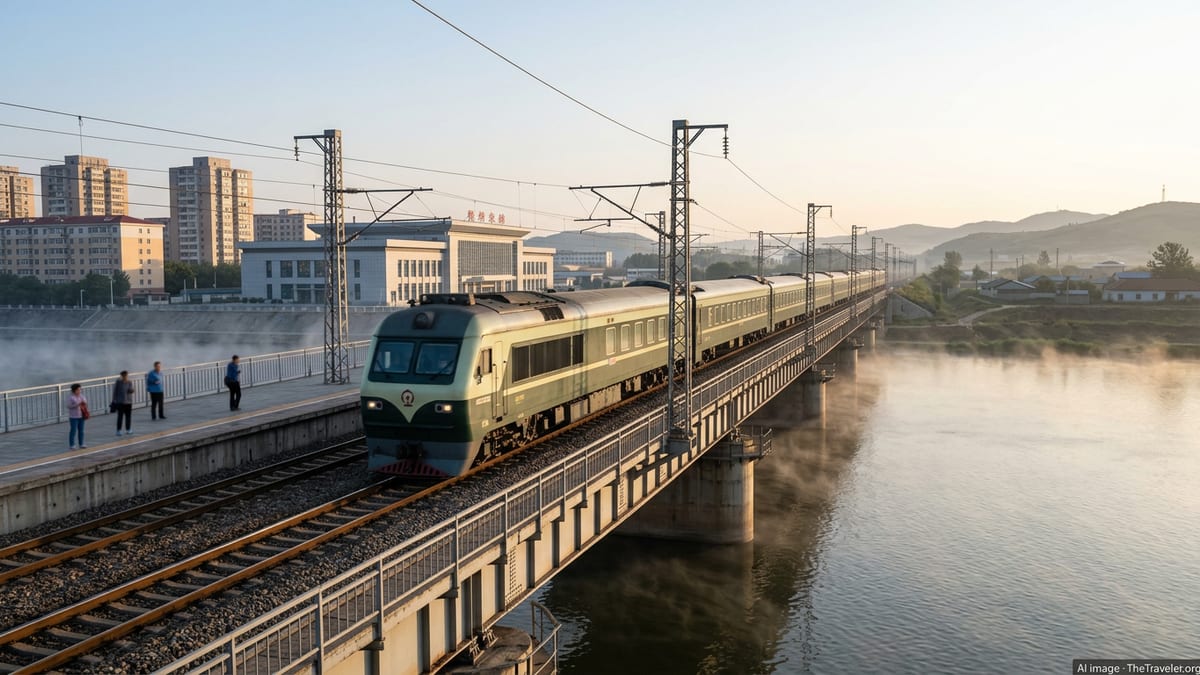
Passenger Trains Return to the Beijing–Pyongyang Corridor
China’s state railway operator has announced the resumption of international passenger services between Beijing and Pyongyang in March 2026, restoring a flagship route that had been suspended since early 2020. Publicly available schedules show trains running four times a week between the capitals, with a feeder service from the Chinese border hub of Dandong to Pyongyang operating on a daily basis. The move follows several months of speculation after North Korean tourism portals quietly published indicative timetables for cross-border services.
For now, booking rules and eligibility remain tightly controlled. Reports indicate that tickets are being sold offline inside China and that initial demand is expected to come from business travelers, officials and residents with family ties across the border. North Korea only began easing its stringent pandemic-era entry restrictions in 2024, and early reopening steps were focused overwhelmingly on Russian visitors rather than the large Chinese tour groups that dominated pre-2020 tourism flows.
Even in their early phase, the renewed rail links mark a practical alternative to limited and often costly flights into Pyongyang. Travel specialists note that the reactivation of through trains from Beijing and Dandong gives China a visible role in stabilizing North Korea’s post-pandemic connectivity, while creating the basic infrastructure that would be needed if mass tourism is later authorized again.
Russia Rebuilds One of the World’s Longest Rail Journeys
While China restores long-standing services, Russia is amplifying its rail diplomacy with North Korea through a series of recently revived and expanded routes. Russian Railways has brought back direct passenger services that connect Pyongyang with Moscow across more than 10,000 kilometers of track, in what is promoted as one of the world’s longest continuous rail journeys. International carriages now travel across a swath of Siberia, stopping at major cities such as Khabarovsk, Irkutsk, Novosibirsk and Yekaterinburg before reaching the Russian capital.
These long-haul services build on shorter cross-border operations that resumed earlier between Khasan in Russia’s Far East and Tumangang on the North Korean side. Those trains initially served a mostly symbolic role following years of pandemic closure, but recent satellite analysis and trade data suggest increasing use of the corridor for both freight and passenger traffic. Russian regional authorities and tourism bodies have promoted the rail connection as a new frontier for adventurous travelers, especially as traditional overseas options have narrowed for Russian citizens.
Russian government figures and local media coverage indicate that tourist arrivals to North Korea from Russia more than doubled in 2024 and 2025 compared with pre-pandemic levels, with estimates of around 4,000 visitors in 2024 and a projected 7,000 in 2025. Although those numbers remain modest in global tourism terms, they underscore how rail and air links from Russia are currently driving the limited international leisure traffic that North Korea is permitting.
Tourism Prospects: Between Ambition and Control
North Korea’s leadership has long framed tourism as a potential growth industry that can earn foreign currency without relinquishing political control, and recent transport developments appear closely aligned with that ambition. Large-scale projects such as the Wonsan Kalma Coastal Tourist Area on the country’s east coast, supported by new rail connections and local tram infrastructure, have been highlighted in state media as strategic investments designed to accommodate tens of thousands of visitors.
Analysts who track satellite imagery and official pronouncements note a pattern in which North Korea builds or upgrades transport nodes and tourist zones well in advance of any broad reopening to foreign travelers. The gradual restoration of rail links from both China and Russia fits this model, creating multiple overland entry points and dispersing potential tourist flows across different regions. That approach could allow Pyongyang to manage security and supervision more effectively while selectively expanding access.
At the same time, there is little sign that Western tourists will be welcomed back in large numbers in the near term. International tour operators that previously organized itineraries to Pyongyang and regional destinations report that permissions remain highly restrictive, and that North Korean authorities appear focused on deepening ties with neighboring markets rather than courting global tourism. The resumption of trains, therefore, is being interpreted less as an opening to the world and more as a targeted outreach to friendly partners.
Rail Diplomacy and the Geopolitics of Access
The reconstruction of passenger rail routes from Beijing and Moscow to Pyongyang is also reshaping the geopolitical map of how outsiders can enter North Korea. Transport links have become a visible element of closer strategic coordination between Pyongyang, Beijing and Moscow at a time of heightened tension with the United States, South Korea and Japan. Rail services, in particular, offer a relatively low-profile way to strengthen practical cooperation that can be justified domestically as economic or cultural exchange.
Observers of regional diplomacy describe the new and revived routes as part of a broader effort by China and Russia to anchor North Korea more firmly within a continental transport network spanning Northeast Asia and Eurasia. The symbolism of a continuous rail corridor from Pyongyang through the Russian Far East and across Siberia to Europe, and another from Pyongyang into China’s national network, reinforces narratives of alternative connectivity that bypass Western-aligned hubs.
For North Korea, these links provide leverage as well as lifelines. Reliable rail access to Chinese and Russian markets helps mitigate the impact of international sanctions and pandemic-era isolation, while giving Pyongyang the option to open or restrict tourist flows as a diplomatic tool. The careful calibration of train schedules, ticketing rules and passenger categories can signal favor or displeasure toward partner states without dramatic public declarations.
What a North Korea Tourism Resurgence Could Look Like
If North Korea moves beyond its current cautious stance, the restored railways suggest how a tourism revival might unfold in practice. Analysts expect that any broader reopening would likely start with expanded group tours from China and Russia, routed primarily through Dandong, Khasan and key hub cities on either side of the border. Trains could be used to move visitors directly to designated resort zones such as Wonsan or to curated itineraries in Pyongyang and nearby historical sites.
Rail-based tourism would offer several advantages for North Korean planners. Trains are relatively easy to segregate from domestic traffic, stations can be tightly controlled, and itineraries can be structured around fixed stops that limit unsupervised contact with the local population. For travelers, overland entry could make trips more affordable than charter flights and add a sense of novelty to visits that have historically been tightly choreographed.
For now, however, the new passenger train routes function primarily as infrastructure for potential change, not evidence of an imminent tourism boom. The combination of renewed Beijing and Moscow connections, enhanced local rail around emerging resort areas and a modest but growing stream of Russian visitors adds up to the most significant reconfiguration of access to North Korea since before the pandemic. Whether that evolves into a wider tourism resurgence will depend less on the timetable of trains and more on political calculations in Pyongyang and its closest partners.