

More news on this day
Travellers planning journeys between Malaysia and China in 2025 and 2026 will find a fast-changing flight map, as airlines on both sides add new routes, restore old links and ramp up capacity to capture surging two-way tourism.
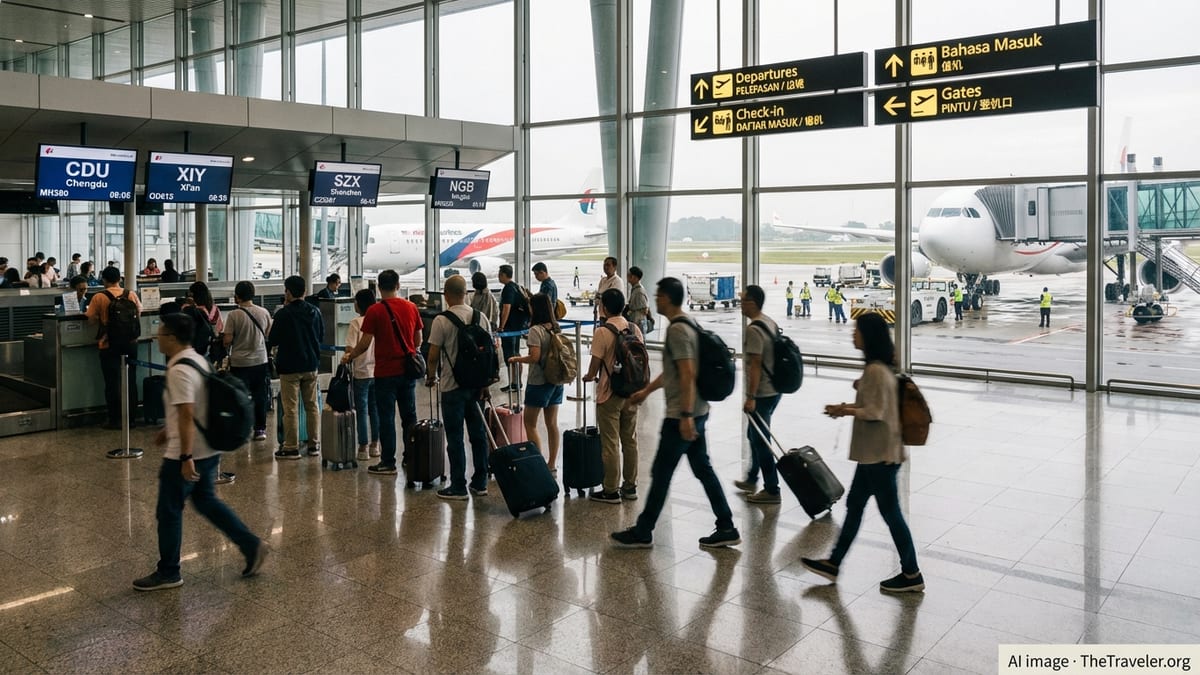
Surge in Routes as Airlines Chase Rebounding Demand
The air corridor between Malaysia and China has become one of Asia’s most dynamic, with flag carriers and low-cost airlines racing to rebuild and expand networks that were cut back during the pandemic years. Malaysian and Chinese operators are now unveiling new services, reviving suspended routes and increasing frequencies in response to strong tourism and business travel demand.
Malaysia Airlines, AirAsia and China Eastern are among the most active players. Malaysia Airlines has progressively rebuilt its mainland China footprint and in January 2026 resumed daily Kuala Lumpur–Chengdu flights after a nine-year pause, bringing its network in Greater China to seven destinations. The move signals renewed confidence that Chinese visitor numbers will keep climbing into Malaysia’s Visit Malaysia 2026 tourism campaign period.
Chinese carriers are also back in force. In February 2025, China Eastern launched a new daily route linking Xi’an and Kuala Lumpur via Kunming, using Airbus A320 aircraft and positioning the historic city of Xi’an as a fresh gateway for Malaysian travellers heading deeper into China. Aviation analysts say such additions from secondary Chinese cities are turning Kuala Lumpur into a more important transfer and tourism hub for the wider region.
Collectively, these launches and resumptions mean travellers now have dozens of point-to-point options connecting Malaysian and Chinese cities, many of them operating several times a week and timed to feed both leisure and business flows.
How Many New Flights Are Operating Between the Two Countries
While airlines do not publish a single combined tally, recent announcements provide a clear view of how much extra capacity has been added. AirAsia alone has committed to a sharp increase in its China flying, building on an earlier ramp-up that brought its China–Malaysia schedule to around 230 weekly flights in early 2024 across its short- and medium-haul affiliates. That expansion supported up to 5.2 million seats annually on China and India routes combined, with China a core focus.
Through 2024 and 2025 the low-cost group layered on new links. From August 2024 it opened Ningbo–Kuala Lumpur and Ningbo–Kota Kinabalu, each three times weekly, then added Penang–Shenzhen and Kota Kinabalu–Shantou with three to four weekly services. By late 2024 AirAsia was operating 33 routes to and from China, making it the largest foreign low-cost carrier in the market and giving Malaysian travellers an unprecedented choice of direct options beyond the traditional megacities.
On the full-service side, Malaysia Airlines’ resumption of daily Kuala Lumpur–Chengdu flights in January 2026 effectively adds seven round trips a week between the countries on that route alone. The new China Eastern service from Xi’an to Kuala Lumpur, launched in February 2025 as a daily flight with a Kunming stop on the outbound leg, contributes a further seven weekly round trips. Together with new and returning flights by carriers like Juneyao Airlines on the Kuala Lumpur–Shanghai and Shanghai–Penang sectors, the total number of weekly flights between Malaysia and China has climbed well beyond pre-pandemic levels on several city pairs.
For travellers, this translates into more than just seat numbers. The new services are spreading traffic across more departure times and origin cities, making it easier to find connections that fit specific itineraries, whether for a short visa-free city break or a multi-stop regional tour.
Key New Connections Travellers Should Know
Several of the latest routes are particularly relevant for leisure travellers mapping out trips. Malaysia Airlines’ daily Kuala Lumpur–Chengdu flights have re-established a direct link to one of western China’s most popular cultural and culinary destinations. The carrier is using the route to feed both Chinese inbound tourism and Malaysians heading to Sichuan’s panda reserves, hotpot restaurants and growing tech and services economy.
On the low-cost front, AirAsia’s network now links a string of Malaysian cities with emerging Chinese hubs. The Ningbo–Kuala Lumpur and Ningbo–Kota Kinabalu services opened direct access from Zhejiang Province to Malaysia’s capital and Sabah’s beach and diving destinations. Penang–Shenzhen and Kota Kinabalu–Shantou open alternatives for travellers who previously needed to connect through Guangzhou, Hong Kong or Kuala Lumpur, cutting travel time for coastal Guangdong and Fujian residents heading to Malaysia’s islands or heritage cities.
Chinese airlines have been equally busy. China Eastern’s Xi’an–Kunming–Kuala Lumpur route ties one of China’s best-known ancient capitals to both Malaysia and scenic Yunnan. For Malaysian tourists it creates a new single-ticket pathway to Xi’an’s Terracotta Warriors and Silk Road-era sights, while also supporting Chinese travellers using Kuala Lumpur as a springboard to Southeast Asia.
Within Malaysia, the growth in Chinese links has helped elevate airports beyond the capital. Aviation industry data shows Penang and Kota Kinabalu increasingly served by direct China flights, while Kuala Lumpur International Airport is positioning itself as a key China–Southeast Asia transfer hub, drawing in carriers from Shanghai, Xi’an and other cities.
Visa Policies and What They Mean for Your Itinerary
One of the biggest drivers of the current route boom is the shift in visa policy on both sides. Malaysia introduced visa-free entry for Chinese nationals for stays of up to 30 days from December 2023, and has committed to maintaining the waiver until at least the end of 2026. This has produced a surge in Chinese visitor arrivals and given airlines the confidence to add capacity, knowing that paperwork hurdles for tourists have been reduced.
China in turn has expanded its own visa-free arrangements, allowing Malaysian passport holders short-stay visits without a visa for tourism, business, family visits and transit. These reciprocal policies mean that many Malaysians and Chinese travellers can now plan short-notice trips without factoring in visa processing times, something airlines are capitalising on with more frequent services and sales-driven fares.
For passengers, the practical takeaway is straightforward. If you hold a Malaysian or Chinese passport, many itineraries between the two countries can now be completed on a visa-free basis, provided you stay within the permitted length of stay and meet standard entry requirements such as proof of onward travel and accommodation. Travellers from third countries using Kuala Lumpur or a Chinese hub as a connection point should check their own nationality’s eligibility, as China has widened its list of visa-free and transit-exempt countries for short visits.
These liberalised rules also underpin the growth of multi-country itineraries. With airlines using Kuala Lumpur as a bridge between China and the rest of Southeast Asia, travellers can more easily combine, for example, Shanghai or Xi’an with onward journeys to Bali, Bangkok or Singapore on a single ticket, all while benefiting from simplified visa regimes.
Practical Booking Tips in a Rapidly Expanding Market
The rush of new flights has tangible implications for how travellers should search and book. With multiple airlines often sharing the same route, prices and schedules can vary significantly by day and season. Low-cost carriers may offer very competitive base fares between secondary cities, but travellers should factor in baggage, seat selection and onboard fees, as well as the location and connectivity of secondary airports in large Chinese metros.
Full-service airlines such as Malaysia Airlines, China Eastern and Juneyao tend to provide more generous baggage allowances and through-checking for connecting journeys. For longer itineraries that combine China with other destinations, a full-service ticket via Kuala Lumpur or another hub can sometimes be more economical once ancillaries and connection guarantees are included.
With capacity still ramping up and schedules evolving, flexible travellers may benefit from monitoring fares over several weeks and considering alternate city pairs. For example, flying into Shenzhen or Hangzhou instead of Guangzhou or Shanghai can open up cheaper options, especially when combined with domestic high-speed rail within China. Likewise, Penang or Kota Kinabalu may provide more convenient gateways than Kuala Lumpur for certain Malaysian beach or heritage itineraries.
Finally, given the pace of change in both airline schedules and visa regimes, travellers should always reconfirm flight timings and entry requirements close to departure. The good news is that, for now, the trend is firmly towards more flights, more cities and more flexibility for those moving between Malaysia and China.