

More news on this day
A once far-flung tropical escape is about to feel much closer for Australian travelers, as new nonstop flights between Melbourne and Malé in 2026 compress journey times to the Maldives and reshape how holidaymakers plan their Indian Ocean getaways.
Get the latest news straight to your inbox!
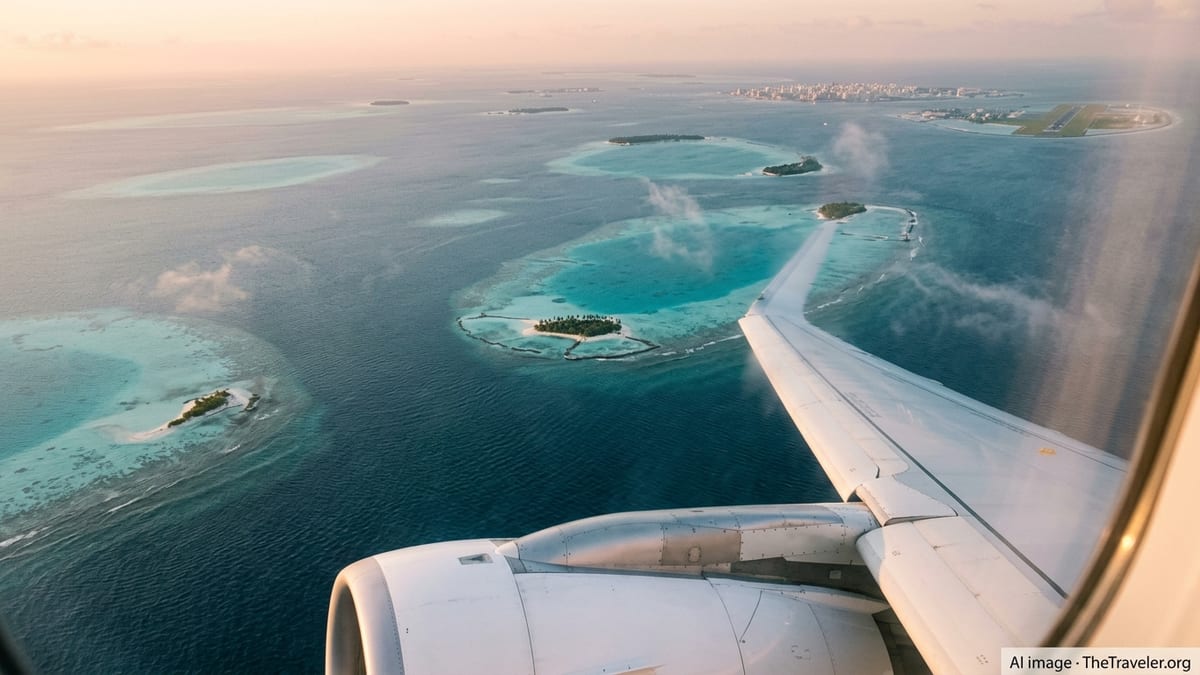
A First-Ever Nonstop Link Between Australia and the Maldives
For the first time, Australians will be able to fly directly to the Maldives without changing planes en route. Maldivian, the national carrier of the Maldives, has announced seasonal nonstop services between Melbourne and Malé from 17 May 2026, operated in partnership with Australian travel company Luxury Escapes. Publicly available information indicates the route will run weekly and is subject to final regulatory approvals.
Until now, reaching the Maldives from Australia has typically required at least one stop in hubs such as Singapore, Doha, Colombo or Dubai, often stretching total journey times beyond 20 hours. Reports from Australian travel media note that the new charter-style operation will cut the flight to around 11 hours outbound and just over 10 hours on the return sector, effectively halving time spent in transit for many passengers.
The launch marks the first non-stop air link between the two countries and Maldivian’s debut in the Australian market. Aviation and tourism outlets describe it as a significant step in connecting one of the Indian Ocean’s most high-profile luxury destinations with one of its fastest‑growing long-haul source markets.
While the initial operation focuses on a single city pair, industry coverage frames the Melbourne–Malé link as a proof of concept that could pave the way for a broader network of direct or semi-direct options between Australia and the Maldives in future seasons.
A Wider Bilateral Aviation Shift Behind the Headline Route
Behind the eye-catching promise of an 11-hour beach escape lies a broader realignment in air services between Australia and the Maldives. Australian government documents updated in January 2026 show that the two countries have a standing air services framework that allows designated airlines to mount scheduled services, providing the regulatory scaffolding for carriers such as Maldivian to enter the market.
In parallel, Australian and regional airlines are steadily expanding codeshare and partnership arrangements that funnel passengers through key Asian and Middle Eastern hubs. Recent announcements involving Qantas and partner airlines in Southeast Asia demonstrate how Australian carriers are using joint networks and shared flight codes to extend their reach into secondary leisure markets, including island destinations dotted across the Indian Ocean.
In this context, Maldivian’s planned direct link is not an isolated move but part of a pattern in which smaller national airlines tap into established Australian demand via tailored agreements with local travel brands. Reports on the Melbourne–Malé service highlight that the flights will be sold as part of package holidays, tying air capacity directly to resort inventory and reducing the commercial risk of operating a long-haul route into a new market.
Analysts commenting in regional trade publications suggest that if the 2026 season performs strongly, additional capacity or broader cooperation, including potential interline or marketing tie-ups with Australian or regional carriers, could follow. That would deepen the integration of Maldivian tourism into Australia’s outbound travel ecosystem.
What Changes for Australian Holidaymakers in 2026
For travelers, the most immediate change is the shift from complex multi-stop itineraries to a straightforward point-to-point journey. Current online flight searches for 2026 show most Sydney and Melbourne itineraries to Malé built around at least one stop and elapsed travel times typically in the high teens or low twenties in hours. By contrast, the new nonstop Melbourne flight compresses the journey into a single overnight segment with a morning arrival in the Maldives.
This reduction in time and hassle is especially significant for travelers with limited annual leave. Reports from Luxury Escapes indicate that Australians visiting the Maldives commonly stay five to six nights, meaning that shaving nearly a day off travel can substantially increase time spent in-resort without extending the overall trip.
Pricing dynamics are also expected to evolve. While charter-style nonstop services tied to holiday packages do not always produce the lowest standalone airfares, they can unlock sharper value when bundled with accommodation, transfers and inclusions that are typically costly when booked separately in the Maldives. Travel trade coverage suggests that Australian demand for high-end yet convenient tropical getaways has been robust, with consumers often willing to pay a modest premium for direct services.
Importantly, the new flights may influence when and how Australians choose to travel. With the inaugural season aligned to the period when Australian visitor numbers traditionally peak, more travelers may consider shoulder-season departures that coincide with the direct operation, rather than building itineraries around connection-heavy routes at other times of year.
Tourism Boon for the Maldives’ Resort Islands
For the Maldives, the new route arrives as the destination posts record visitor numbers. Tourism-focused outlets report that arrivals exceeded two million in 2025, with Australia featuring among the markets delivering steady growth. Direct connectivity from Melbourne is positioned as a way to deepen that trend by removing friction in the booking and travel process for Australian guests.
Industry commentary notes that Australian visitors tend to book longer stays than many regional travelers, often splitting time between multiple islands or upgrading into premium villa categories. Nonstop flights that eliminate intermediary hubs may encourage even more ambitious itineraries, as travelers feel less drained on arrival and are perhaps more inclined to combine resort stays with activities such as diving safaris or multi-island excursions.
Resort operators are also expected to benefit from more predictable arrival patterns. A dedicated weekly direct service consolidates demand into a well-defined arrival window, simplifying logistics for boat and seaplane transfers from Malé to outer atolls. Some observers suggest that tighter coordination between flight schedules and onward transfers could enhance the overall visitor experience and reduce waiting times on arrival, an important factor in a market that trades heavily on a sense of exclusivity and seamlessness.
On a strategic level, greater access from Australia diversifies the Maldives’ long-haul visitor base at a time when global tourism flows are still rebalancing. Travel industry analysis points out that a broader geographic mix of guests can help insulate resort markets from economic or political shifts in any single source country.
What This Means for Future Tropical Travel From Australia
The Melbourne–Malé launch in May 2026 is being watched closely across the wider Asia Pacific aviation and tourism sector. If the seasonal operation proves successful, observers expect it to strengthen the case for additional direct or near-direct leisure routes from Australia to other island destinations that have traditionally relied on hub connections.
Recent developments, including new or resumed nonstops from Australia to destinations such as South Africa and the South Pacific, underline an appetite among airlines and tourism partners to reduce reliance on intermediary hubs for select long-haul leisure markets. In that sense, Australia–Maldives nonstop services form part of a broader “direct sunshine route” trend in which carriers test point-to-point demand on routes once considered too niche for dedicated aircraft.
For Australian travelers planning 2026 and 2027 holidays, the new agreement effectively changes the mental map of what is feasible within a single overnight flight. The Maldives, long regarded as a special-occasion trip demanding complex planning and extended leave, is being repositioned as a more accessible counterpart to closer beach destinations in Southeast Asia or the South Pacific, at least for those departing from Melbourne.
As booking channels adjust and awareness grows, travel planners will be watching whether nonstop connections expand beyond a single weekly charter. The answer will help determine whether 2026 is remembered as the year of a one-off Maldives experiment, or the beginning of a more permanent direct-flight era reshaping how Australians reach some of the world’s most coveted tropical islands.