

New England rewards travelers who like variety. Within a day’s drive you can move from Atlantic surf and granite headlands to white-steepled villages, Revolutionary War streets, and quiet lakes backed by fiery autumn hillsides. This compact region of six northeastern states offers four distinct seasons, each with a different character, and an unusually rich blend of maritime culture, early American history, and protected landscapes. Whether you are planning a first loop through the highlights or returning to dig deeper into a favorite corner, understanding New England’s coastlines, historic layers, and changing seasons will help you shape a memorable trip.
Understanding New England’s Geography and Seasons
New England is made up of Maine, New Hampshire, Vermont, Massachusetts, Rhode Island, and Connecticut. Together they form a triangle of land bordered by the Atlantic Ocean to the east and south and by Canada and New York State to the north and west. Distances are short by American standards. Boston to Portland, Maine is roughly a two-hour drive, while Boston to Burlington, Vermont is often reached in under four. That compact footprint allows travelers to combine seacoast, mountain, and small-city experiences in a single itinerary without exhausting days on the road.
The region experiences a classic four-season climate. Winters are cold and often snowy, particularly away from the immediate coast and at higher elevations in northern New England. Spring wanders in gradually, with coastal areas greening earlier and mountain valleys often holding on to snowpack into April in some years. Summers are generally warm and humid but not extreme, with cooler nights in the mountains and along the open ocean. Autumn is the marquee season, when hardwood forests shift through a spectrum of yellow, orange, and red, usually between late September and late October depending on latitude and elevation.
Travel planning in New England should be shaped around these seasonal swings. Coastal trips focused on beaches and sailing are most appealing from late June through early September, when water temperatures are warmest and seasonal businesses operate on full schedules. Mountain hikes and lake escapes are at their best from late spring through mid-fall. Foliage trips require more precise timing: in northern Maine, New Hampshire, and Vermont, color often peaks in late September or early October, while southern New England and coastal areas typically see their brightest leaves one to two weeks later. Because exact timing varies with weather, it is wise to keep plans flexible within a window rather than aim for a specific day.
Winter brings its own rewards. Northern New England supports a dense network of ski areas, cross-country ski centers, snowshoeing trails, and snowmobiling corridors. December through March can be a magical time in villages where white church spires rise above snow-draped greens and frozen rivers. However, short daylight, icy roads, and periodic storms require more cautious driving and backup plans. If you are unfamiliar with winter driving, consider basing in a compact town with walkable lodging, dining, and museum options and joining guided excursions rather than tackling remote mountain roads on your own.
Coastal New England: From Granite Headlands to Sand Dunes
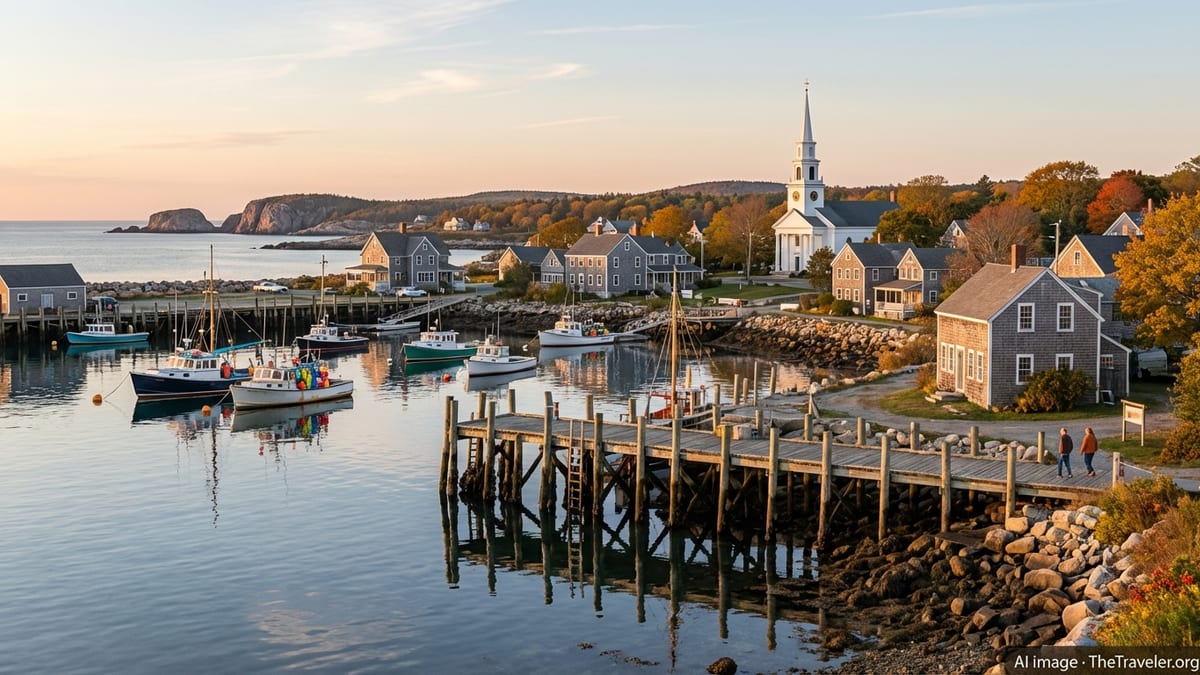
New England’s coastline stretches for hundreds of rugged, indented miles, from the cliff-backed bays of downeast Maine to the broad sandy beaches of Rhode Island and Connecticut. Each state presents a different face to the Atlantic. In Maine, the shore is a maze of peninsulas and islands, with harbors crowded by lobster boats and spruce-topped headlands dropping sharply into cold, slate-blue water. South of Cape Ann in Massachusetts, barrier beaches, dunes, and salt marshes become more common, especially around Cape Cod, Narragansett Bay in Rhode Island, and Long Island Sound along Connecticut’s southern edge.
Acadia National Park on Maine’s Mount Desert Island is one of the most concentrated coastal experiences in the region. The 27-mile Park Loop Road carries visitors past ocean cliffs, sheltered coves, and interior lakes and mountains, with access to trailheads for both casual strolls and more rugged hikes. Much of the road is typically closed to cars in winter, though a short section near Sand Beach stays open, and sections convert to routes for walking and cross-country skiing when snow covers the ground. In peak season, from roughly late June through mid-October, traffic and parking can be intense, and the National Park Service periodically requires timed vehicle reservations for Cadillac Mountain Road, the spur to the park’s high viewpoint. Planning early morning or late-afternoon drives and using the seasonal Island Explorer shuttle can make the experience less congested.
Farther south, Cape Cod hooks into the Atlantic like a bent arm, enclosing calm bays and broad ocean beaches. Much of the outer arm is protected as Cape Cod National Seashore, preserving dunes, kettle ponds, and historic lighthouses. Even in high summer it is possible to find quieter stretches by arriving early, walking beyond the initial beach entrances, or visiting on weekdays. Shoulder seasons in June and September can be ideal, when water temperatures are tolerable for swimming but crowds are leaner and lodging rates often lower. Ferry routes from mainland ports connect the Cape to offshore islands such as Martha’s Vineyard and Nantucket, which add wind-swept bluffs, shingle-style houses, and small harbors to the coastal mix.
Rhode Island and Connecticut offer still another tone along the water. Narragansett Bay, the Newport area, and the South County beaches in Rhode Island combine yachting culture, historic seaside mansions, and long strands of sand with surf that can be lively on stormy days. In Connecticut, seaside towns along Long Island Sound such as Mystic blend maritime museums, working shipyards, and sheltered beaches suited to families. These southern coasts see milder winters and longer shoulder seasons than Maine and northern Massachusetts, making them good choices for spring or late autumn trips when more northerly destinations may still feel wintry or have already shut down seasonal services.
Historic New England: Freedom Trail Towns and Village Greens
New England’s deep historical roots are most visible in its cities and villages, where 17th and 18th century buildings stand alongside modern skylines. Boston remains the most concentrated introduction to this past. The Freedom Trail, a roughly 2.5-mile marked walking route across the city, links sixteen key sites ranging from Boston Common, established as a public pasture in the 1630s, to churches, meeting houses, burying grounds, and the Bunker Hill Monument in Charlestown. The trail’s brick line underfoot helps visitors follow the path, and many sites welcome visitors free of charge or for modest admission, making it possible to absorb several chapters of early American history in a single day.
Highlights along the Freedom Trail include the Massachusetts State House overlooking the Common, historic churches such as Park Street Church, graveyards like Granary Burying Ground and King’s Chapel Burying Ground, and the Old Corner Bookstore building, a former publishing hub. Crossing into the North End, narrow streets pass the Paul Revere House and lead toward the Old North Church, associated with the famous signal lanterns lit on the eve of the Revolutionary War’s opening battles. Continuing across the Charles River to Charlestown brings travelers to the USS Constitution, a wooden frigate launched in 1797 and still in commission, and finally to the Bunker Hill Monument, a granite obelisk commemorating one of the war’s earliest major battles.
Outside Boston, history takes a quieter form in town greens, mill villages, and maritime districts. In Massachusetts, Concord and Lexington preserve battlefields and meeting houses tied to the first conflicts of the Revolutionary War. In coastal towns like Salem, Newburyport, and Marblehead, rows of 18th and 19th century houses and warehouse buildings reflect the era when New England merchants traded actively across the Atlantic. Rhode Island’s Newport, beyond its later Gilded Age mansions, also contains a compact historic district of colonial-era homes and one of the country’s oldest synagogues, reflecting the port’s early role in global trade.
Inland, smaller towns throughout Vermont, New Hampshire, and western Massachusetts feature central greens bordered by white clapboard churches, brick schools, and modest historic homes. Many grew up along rivers that powered textile mills and factories in the 19th century. Today, former mill complexes often house museums, galleries, or lofts. Walking a town common and reading local plaques can be as revealing as visiting a larger museum. Because New England history is layered rather than confined to a few famous locations, even short detours off major highways can turn up covered bridges, stone walls reclaiming old farm boundaries, and small historical societies preserving local stories.
Scenic Drives, Small Towns, and Mountain Landscapes
Beyond the coasts and cities, New England’s appeal lies in the network of scenic roads that wind through river valleys, farm country, and mountain passes. Northern New Hampshire and Vermont are home to some of the region’s most celebrated drives. Roads through the White Mountains, including the Kancamagus Highway between Lincoln and Conway, climb to high viewpoints and trailheads that open onto day hikes ranging from easy waterfall walks to exposed alpine ridges. In Vermont, routes along the spine of the Green Mountains and along the Lake Champlain shore pass dairy farms, sugarhouses, and roadside stands selling local cheese, maple products, and seasonal produce.
Fall intensifies the impact of these routes, as hillsides turn to dense color and low sun brings out contrast in the landscape. Because foliage season is short and intensely popular, lodging in mountain towns can fill well in advance for prime October weekends. Weekday stays or shoulder windows in late September and mid-October can offer similar scenery with more availability. Scenic byways in western Maine, such as those around Rangeley and Bethel, and in northern New Hampshire near Franconia Notch, are especially prized by photographers for their mix of lakes, peaks, and forests mirrored in still water on calm mornings.
Small towns offer anchoring points amid these drives. Places such as Stowe and Woodstock in Vermont, North Conway and Littleton in New Hampshire, and numerous villages in the Berkshires of western Massachusetts combine traditional main streets with contemporary inns, coffee shops, and galleries. Many organize seasonal festivals, from summer music and theater to autumn harvest and winter holiday celebrations. Walking these towns at dusk, when streetlights come up and church bells mark the hour, provides a quieter yet vivid sense of New England identity.
Travelers who prefer slower days can use these towns as bases for short, looping drives. A morning might involve a short hike to a waterfall, followed by a midday stop at a local diner and an afternoon wandering a covered bridge and a small historical museum. Because local roads can be narrow and winding, especially in winter and mud season, it pays to allow generous time between stops and to travel at a pace suited to conditions rather than to the posted speed limit.
Planning Around New England’s Changing Seasons
Choosing when to visit New England is as important as choosing where to go. Summer, from roughly late June through early September, is the broadest season, with most attractions, ferries, and seasonal eateries fully open. It is particularly appealing for coastal trips, island visits, and lake stays, with long daylight and comfortable evening temperatures. However, this is also when crowds and prices climb, especially in iconic destinations like coastal Maine, Cape Cod, Martha’s Vineyard, and the White Mountains. Booking lodging and ferry reservations well in advance is essential for popular July and August weeks.
Spring, especially May and early June, can be a good compromise for travelers who prefer cooler temperatures and fewer visitors. The tradeoff is that weather is more changeable, with a greater chance of rain and lingering snow patches at higher elevations. Trees and gardens leaf out earlier along the southern coast and later in the north and mountains, so a late spring trip to Rhode Island or Connecticut may feel summery while higher ground in Vermont and New Hampshire is just waking up. This shoulder season often brings lower room rates and more flexibility, making it attractive for independent travelers willing to pack layers and adapt daily plans to conditions.
Autumn, while visually stunning, requires the most strategic planning. Peak color typically moves from north to south and from high to low elevations over several weeks. Travelers seeking the richest foliage views often track regional updates from tourism bureaus in Maine, New Hampshire, and Vermont, which publish approximate progression of color. Because these reports describe natural processes influenced by temperature, rainfall, and summer weather, timing varies year to year. A practical strategy is to plan a loop that spans a range of elevations and latitudes over a week, allowing you to drive into areas approaching peak color rather than pinning all hopes on a single location and weekend.
Winter from December through March brings skiing, snowboarding, and other cold-weather sports to the forefront. Major ski areas in Vermont, New Hampshire, and Maine operate extensive trail networks and snowmaking systems, while smaller community hills offer family-friendly slopes. Off the mountains, cross-country skiers and snowshoers explore forest roads, rail trails, and fields. Coastal towns, though quieter, sometimes hold holiday events, and cities like Boston and Providence feel less crowded in museums and restaurants. Travelers should be prepared for shorter days, possible flight delays or road closures during storms, and the need for warm clothing and proper footwear for icy sidewalks.
Practical Itineraries: Classic New England Routes
First-time visitors often find it helpful to think in terms of regional loops. One classic route focuses on coastal New England. Starting in Boston, travelers might spend a day or two exploring the Freedom Trail and nearby neighborhoods, then head north along the rocky Massachusetts and New Hampshire coasts toward Portland, Maine. From there, continuing downeast toward Camden, Rockland, and ultimately Acadia National Park offers a steadily wilder shoreline, with time to hike Park Loop Road overlooks, kayak sheltered bays, and sample seafood along the way. Returning inland through New Hampshire or back down the Maine Turnpike completes the loop.
Another popular itinerary centers on mountains and villages. From Boston or another gateway city, you can drive west to the Berkshires in Massachusetts, then north into southern Vermont. A stretch through towns such as Manchester, Woodstock, or Stowe allows for hiking, cycling, and farm visits in warm months or skiing and snowshoeing in winter. Continuing across into New Hampshire and returning via the White Mountains rounds out a circuit that emphasizes rural landscapes and small-town culture over coastal scenes.
Travelers with more time can combine both themes. One option is a triangular route that links Boston, Acadia, and the Green or White Mountains before returning to the starting point. For example, a two-week summer trip might begin with two days in Boston’s historic core, followed by three to four days in coastal Maine including Acadia, then several days in a Vermont village base before looping back through New Hampshire. Public transportation connects some of these points, but having a car or renting one provides far greater flexibility, especially for reaching trailheads, smaller towns, and scenic detours.
Shorter stays can be equally rewarding if you narrow focus. A long weekend in Providence and Newport, Rhode Island might mix historic districts, waterfront walks, and mansion tours, while a three-day escape to Cape Cod could balance biking along converted rail trails with afternoons on protected beaches and evenings in harbor towns. Because distances are modest, even city stays in Boston, Hartford, or Portland can accommodate day trips into nearby countryside or along the coast without packing and unpacking multiple times.
Culture, Food, and Responsible Travel
New England’s culture reflects its seafaring, agricultural, and industrial past. Contemporary art museums in small towns sit beside working fishing piers where lobstermen and groundfish crews still head out before dawn. College towns such as Cambridge, Providence, and Burlington add youthful energy, while older mill cities like Lowell and Pawtucket maintain strong immigrant communities that shape local food and festivals. Visitors interested in culture will find a dense calendar of music, theater, and literary events, particularly in summer when seasonal festivals bloom in resort towns and university communities alike.
Food is one of the most accessible expressions of place in New England. Coastal areas are known for lobster, clams, scallops, and oysters, often served in simple shacks and wharf-side restaurants. Inland, menus feature maple syrup, dairy, apples, and root vegetables, with a growing emphasis on farm-to-table sourcing. In nearly every state you will encounter variations on regional staples such as clam chowder, blueberry pies, cider doughnuts, and cream-based ice creams. Breweries and cideries are especially common in Vermont, Maine, and Massachusetts, while Connecticut and Rhode Island have strong traditions in pizza and Italian-influenced cuisine.
Responsible travel is increasingly important in a region where many communities balance tourism with year-round livelihoods. Simple steps help reduce impact: park once and walk when exploring village centers, respect posted rules on dunes and sensitive natural areas, and avoid disturbing working harbors by keeping clear of active wharves and gear piles. In national and state parks, staying on marked trails protects fragile vegetation, and packing out all trash keeps wildlife from becoming dependent on human food. Supporting locally owned inns, restaurants, and shops spreads tourism benefits more evenly and often leads to more meaningful conversations and recommendations.
Travelers should also be aware of seasonal pressures. In midsummer and during peak foliage, some small towns and coastal roads experience heavy congestion. Visiting at off-peak times, using public transit where available, and accepting that popular viewpoints may be shared with others can help keep stress low. The reward for this patience is participation in a living landscape rather than a stage set. New England remains a place where people work, study, and raise families, and approaching it with curiosity and respect tends to be returned with warm, if sometimes understated, hospitality.
FAQ
Q1. When is the best time of year to visit New England for a first trip?
The best all-round time is usually late June to early October, when most attractions are open, weather is generally mild, and you can combine coast, cities, and countryside.
Q2. How many days do I need to see both Boston and coastal Maine?
A week gives a comfortable pace, with two or three days in Boston for the Freedom Trail and museums and four or five days divided among Portland, smaller coastal towns, and Acadia National Park.
Q3. Do I need a car to explore New England?
You can visit major cities like Boston and Providence without a car, but a car or rental is very helpful for reaching coastal villages, parks, and mountain towns where public transit is limited.
Q4. How far in advance should I book lodging for peak fall foliage?
For popular foliage areas in northern Vermont, New Hampshire, and Maine, booking several months ahead for late September and early October weekends is wise, especially for small inns and B&Bs.
Q5. Is New England expensive compared with other U.S. regions?
Some areas, particularly coastal resorts, islands, and well-known mountain towns, can be pricey in peak season, but costs drop in shoulder seasons and in less famous inland communities.
Q6. What should I pack for a fall road trip in New England?
Pack layers, including a warm sweater or fleece, a waterproof jacket, comfortable walking shoes, a hat and gloves for cooler evenings, and a small daypack for short hikes and town walks.
Q7. Can I visit popular coastal areas in winter?
Yes, but expect a quieter experience with limited seasonal dining and lodging. Winter coastal trips can be atmospheric, with stormy seas and empty beaches, but require warm clothing and flexible plans.
Q8. Are New England’s historic sites suitable for children?
Many are, especially interactive museums, ship tours, and outdoor sites like the Freedom Trail, which can be turned into a scavenger hunt or story-based walk for younger travelers.
Q9. How busy is Acadia National Park in summer?
Acadia is very popular from late June through October. Expect busy parking areas and scenic overlooks during midday, and consider visiting early or late, using the park shuttle, and reserving lodging nearby well ahead.
Q10. Is it realistic to combine the coast, mountains, and cities in one trip?
Yes, the region’s compact size makes it feasible. With 10 to 14 days you can comfortably include time in Boston or another city, several days on the coast, and a few days in the mountains.