

More news on this day
British travellers heading to popular European destinations such as Greece and Italy are being urged to prepare for new border procedures, after updated UK Foreign Office guidance reflected the full roll-out of the European Union’s Entry/Exit System across 29 countries.
Get the latest news straight to your inbox!
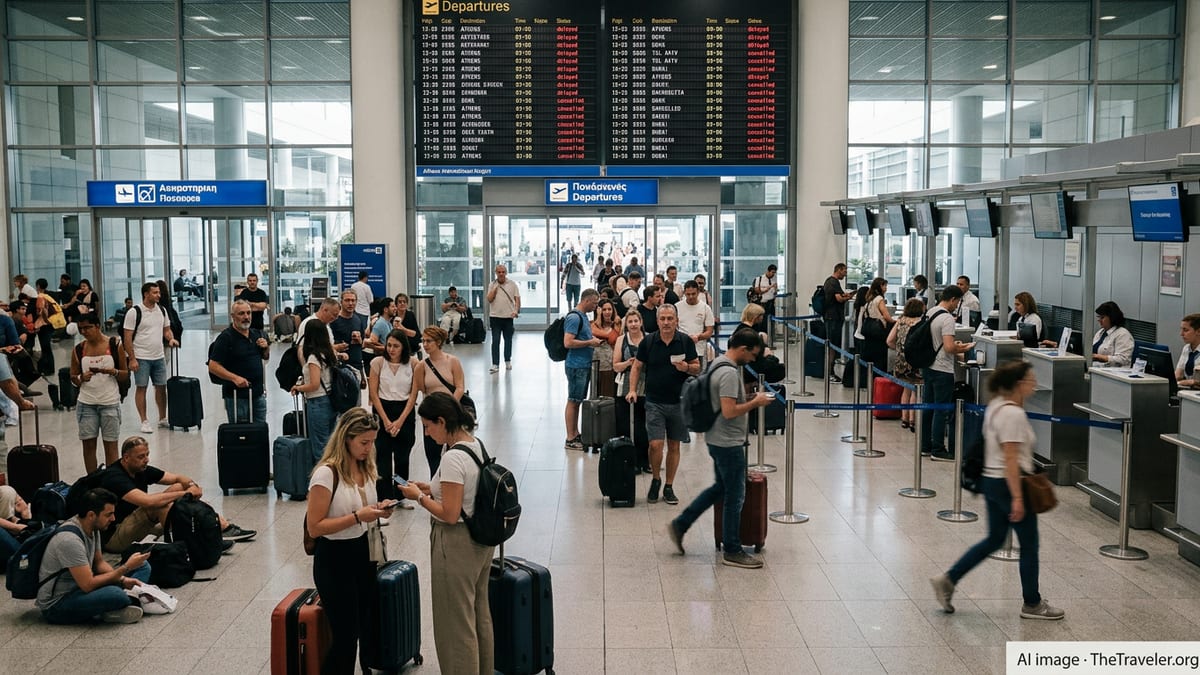
EU’s Entry/Exit System Fully Operational Across 29 Countries
The European Union’s digital Entry/Exit System, known as EES, has now moved from phased introduction to full operation at all external Schengen border crossing points, replacing the stamping of passports with electronic records of each arrival and departure. The system applies to non-EU and non-Schengen nationals making short stays, including British citizens travelling for tourism, business, or family visits.
Under the new model, travellers’ passport details, biometric data and records of border crossings are stored in a central database when they enter or leave countries participating in the scheme. Publicly available information indicates that the 29 participating states include 25 EU members within the Schengen area alongside Iceland, Norway, Switzerland and Liechtenstein, all of which now use the shared digital checks.
The change is one of the most significant shifts in European border management in decades and is intended to modernise controls while enforcing existing rules on permitted stays. It also prepares the ground for the separate ETIAS travel authorisation, which is expected to follow for visa-exempt visitors in the coming months.
Foreign Office Updates Travel Advice for Greece, Italy and 27 Other States
As the new system takes full effect, the UK Foreign, Commonwealth & Development Office has revised its country-by-country travel advice for all 29 EES states, including key holiday destinations such as Greece, Italy, Spain, France and Portugal. According to published coverage of the update, the advisories now highlight the need for extra time at border control, the possibility of queues during the early months of implementation and the requirement to complete biometric registration when first entering the Schengen area.
The amended guidance explains that first-time registration under EES typically involves fingerprinting and a facial image, taken at automated kiosks or staffed booths before travellers are cleared to enter. Once this is completed, subsequent crossings should be quicker, with border guards checking the digital record rather than stamping passports.
The Foreign Office advice also reminds visitors that the long-standing 90-days-in-any-180-day-period rule for short stays in the Schengen area still applies. For many leisure trips, the underlying rules have not changed, but the new technology is expected to make it easier for border authorities to track how long travellers have spent in Schengen countries.
What British Travellers Can Expect at Airports, Ports and Rail Terminals
For most holidaymakers, the practical impact will be felt at the first point of entry to the Schengen zone. Reports indicate that travellers arriving at busy Mediterranean hubs in Greece and Italy, as well as major airports in Spain, France, Germany and the Netherlands, may be directed to new EES kiosks before proceeding to passport inspection. Families and groups are being advised to keep passports together, follow local signage and allow additional time, especially during school holidays.
At key UK departure points where French border checks take place before boarding, such as the Port of Dover, the Eurotunnel terminal in Folkestone and London St Pancras for Eurostar services, EES registration will occur on UK soil before passengers embark. Travel industry guidance notes that this could lengthen processing times at peak periods while staff and systems adjust, even though the physical journey time across the Channel remains unchanged.
Ferry, coach and rail operators have begun sharing information about the new procedures in updated travel documentation, booking confirmations and terminal signage. Passengers are being encouraged to arrive earlier than usual, have travel documents ready and pay close attention to any instructions from transport staff and border officials during the transition phase.
Concerns Over Queues and Disruption as System Beds In
Industry bodies and travel organisations have welcomed the move to a modern, digital border but have also warned of possible short-term disruption. Prior assessments by travel associations and transport operators suggested that initial biometric registration could take longer than traditional passport stamping, particularly for large volumes of first-time users arriving in a short window.
Trial operations and early roll-out phases at selected border points have already produced reports of congestion at certain land crossings and busy terminals, prompting renewed calls for clear communication with passengers. While the new Foreign Office advice does not predict specific waiting times, it acknowledges that queues may lengthen where infrastructure or staffing is still being scaled up to meet demand.
Travel companies are responding by recommending that customers schedule longer connection times, avoid extremely tight transfers between flights or trains, and monitor real-time updates from airports or ports on the day of travel. Some operators are also reviewing boarding and check-in cut-off times to reflect the new reality at border control.
Planning Ahead: Documents, Timing and Future Changes
For now, British passport holders visiting Greece, Italy or any of the other EES countries are not required to complete any online pre-registration specifically for the Entry/Exit System. The checks take place at the border on arrival or departure, and there is currently no separate fee for EES registration.
However, travellers are being strongly advised to check the latest Foreign Office travel advice for their destination before departure, pay attention to any airline or tour operator messages, and confirm that their passport meets Schengen validity rules. This includes ensuring that documents are not close to expiry and that previous trips have not already used up the permitted 90 days within the current 180-day reference period.
Looking ahead, the EU is preparing to introduce ETIAS, a separate electronic travel authorisation that will require many visa-exempt visitors, including most British tourists, to obtain approval online before travelling. While ETIAS is not yet in force, public information suggests it will work alongside EES, with the new border system used to verify that travellers respect the conditions attached to their authorisation.
For frequent visitors to Europe, including those returning regularly to Greece and Italy, the combination of the updated Foreign Office guidance and the new EU systems marks a shift towards more data-driven border management. Planning ahead, allowing extra time at crossings and keeping up to date with evolving requirements will be central to smooth trips across the continent in the coming seasons.