

More news on this day
San Francisco International Airport is bracing for a sharp rise in arrival delays after federal regulators imposed new landing limits that significantly cut the number of flights allowed to touch down each hour.
Get the latest news straight to your inbox!
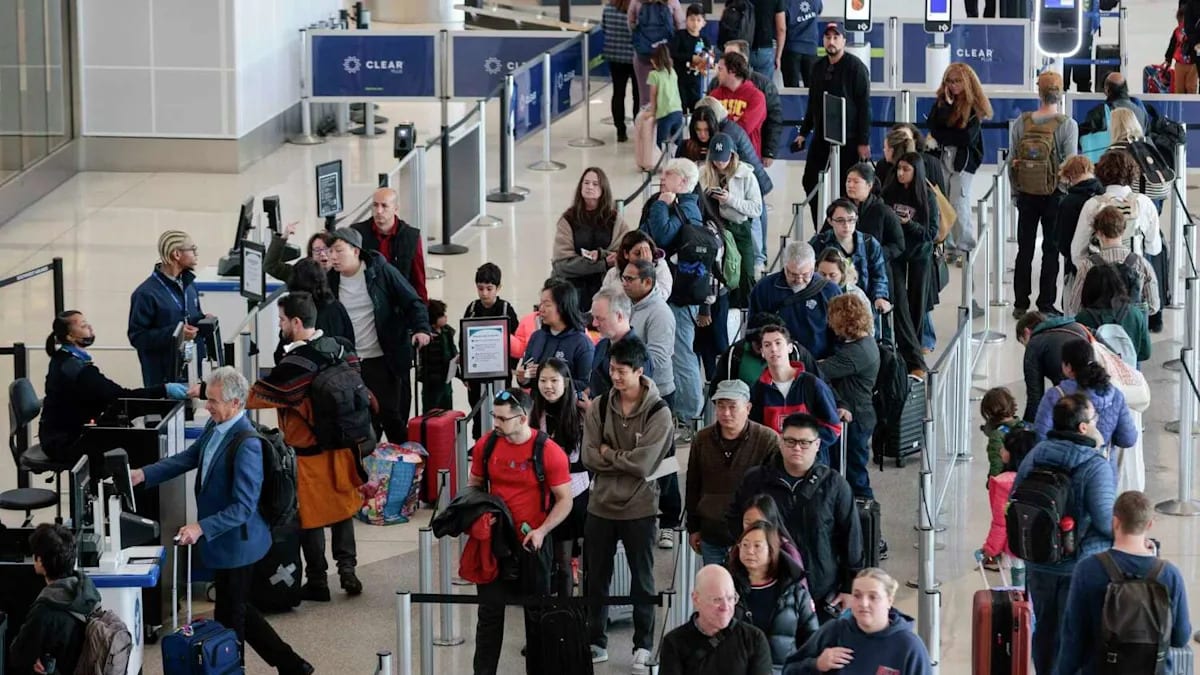
Image by Yahoo
New rules slash SFO’s hourly arrival capacity
Publicly available information shows that the Federal Aviation Administration has reduced San Francisco International Airport’s maximum arrival rate from about 54 flights an hour to roughly 36. The change reflects a permanent tightening of landing rules combined with a temporary construction project that has closed one of the airport’s key runways for repaving.
The lower cap represents approximately a one third cut in scheduled arrivals during peak periods. Aviation coverage indicates that the new constraints are tied to long running concerns about SFO’s closely spaced parallel runways, which historically allowed two jets to land side by side in good visibility. Regulators have now moved to restrict those operations, effectively slowing the pace at which aircraft can be sequenced onto final approach.
Airport briefings referenced in regional news reports indicate that the construction work is expected to last about six months. During that window, the combination of the closed runway and the stricter federal rules is expected to keep the arrival rate at the new lower ceiling, particularly during the busy morning and evening banks favored by major airlines.
Delay forecasts jump as peak banks feel the squeeze
Before the latest federal action, SFO’s own forecasts around the runway project suggested that roughly 10 to 15 percent of flights might see delays, generally concentrated around the heaviest banks of arrivals. According to updated statements cited in local transportation coverage, the airport now anticipates that about 25 percent of arriving flights could experience delays of at least 30 minutes under the tighter landing limits.
That shift represents a substantial deterioration in on time performance relative to the airport’s expectations just a few months earlier. Travel and aviation outlets note that the revised outlook reflects how sensitive SFO operations are to even small changes in declared arrival capacity, especially given the dense schedule of hub flights operated by its largest carriers.
Analysts tracking national delay patterns point out that when an airport’s planned schedule exceeds the FAA’s real time acceptance rate, federal traffic managers typically respond with ground delay programs and other flow control tools. At SFO, those measures are expected to become more frequent as the new landing limits push more peak hours over the threshold where scheduled demand no longer fits within the reduced hourly cap.
Safety concerns focus on parallel runway operations
Reports on the policy shift indicate that the FAA’s decision is rooted in safety modeling around SFO’s side by side runway operations and the complexity of Bay Area airspace. The airport relies on two sets of parallel runways that sit unusually close together by modern standards, a design that has long allowed visually separated simultaneous approaches in good weather but has also drawn scrutiny from safety specialists.
Regulators have been reexamining runway layouts and approach procedures nationwide in light of recent serious runway incursions and high profile near misses. In that context, SFO’s heavy schedule of parallel arrivals, combined with intersecting traffic flows to nearby Oakland and San José airports, has emerged as a particular focus. The new landing limits are being framed in coverage as a targeted response to those local conditions rather than a nationwide policy shift.
Industry observers note that while the change reduces operational flexibility and increases the risk of delay, it also creates additional margin for controllers managing converging streams of traffic in busy terminal airspace. The policy effectively trades some capacity for what regulators describe, in general terms, as a higher safety buffer in complex arrival environments.
Airlines weigh schedule adjustments and passenger impact
Major carriers that rely on SFO as a West Coast gateway are now reviewing their schedules to determine how to absorb the tighter arrival cap. Public statements referenced in airline and business press suggest that operators are evaluating options that include retiming flights into less congested periods, consolidating some frequencies, and relying more heavily on connections through other hubs when possible.
Because the FAA’s limit is expressed as an hourly cap rather than specific flight cancellations, how the pain is felt by travelers will depend on how individual airlines restructure their operations. Aviation analysts expect that some peak hour flights could be pushed into off peak windows, while others may become more vulnerable to rolling delays as ground delay programs space out arrivals at their points of origin.
Consumer travel outlets are advising passengers to build in additional buffer time for connections at SFO, especially for itineraries involving tight layovers or last flights of the day. Early morning and late evening arrivals, which already face compressed operating windows, may be particularly exposed if disruptions ripple across the network.
Looking ahead to the construction end date and longer term changes
The runway resurfacing project that is contributing to the current squeeze is expected to wrap up in early October, based on airport timelines cited in regional news coverage. Once the affected north south runway reopens, some of the temporary reduction in capacity should ease. However, the new federal landing limits tied to parallel operations are described as an ongoing policy, suggesting that SFO’s historic peak arrival rates may not fully return.
Airport planning documents and public presentations have highlighted efforts to offset the impact through improved coordination and technology. SFO has been investing in an integrated operations center and participating in broader FAA modernization initiatives intended to smooth flows of traffic and make better use of available capacity. While these measures cannot fully replace a closed runway, they may help reduce the severity of future bottlenecks once the construction phase is complete.
For now, the combination of long planned construction and newly tightened federal rules is setting up a challenging period for one of the country’s busiest international gateways. With arrival capacity constrained for months and safety policy pointing toward more conservative landing practices, travelers using San Francisco International Airport are being warned to expect slower, less predictable flight operations throughout much of 2026.