

More news on this day
San Francisco International Airport is entering one of its most constrained operating periods in years, as a new Federal Aviation Administration arrival cap combines with a long planned runway project to sharply reduce how many flights can land each hour and raise the prospect of significant delays for travelers.
Get the latest news straight to your inbox!
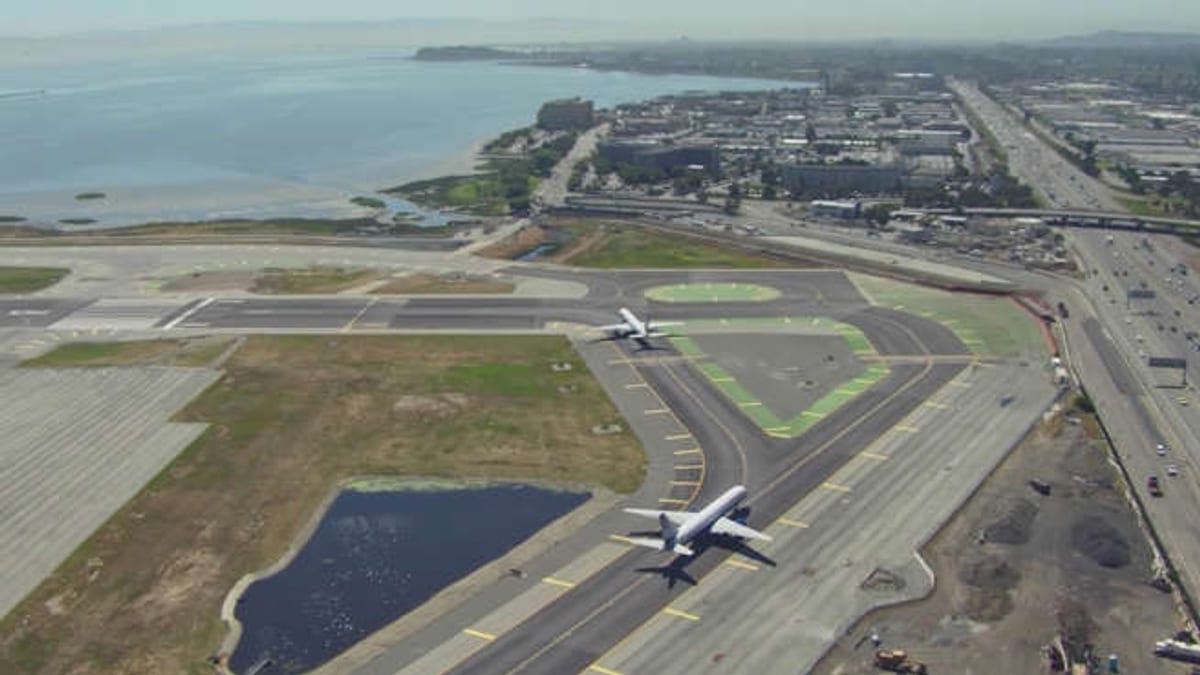
FAA Limits Parallel Landings and Cuts Arrival Rate
Publicly available information from federal regulators shows that the FAA has ended SFO’s longstanding practice of allowing most simultaneous landings on its closely spaced parallel runways, citing updated interpretations of separation standards and safety margins for arriving aircraft. The move effectively removes one of the airport’s most important tools for handling heavy traffic during peak periods and in good weather.
According to recent coverage in national and local outlets, the new rules reduce SFO’s peak arrival capacity from about 54 landings per hour to 36, a cut of roughly one third. Previous FAA guidance had allowed paired arrivals on the 28L and 28R runways under specific conditions, even though the centerlines are only around 750 feet apart, far below the typical spacing used at many other major U.S. hubs. The revised approach procedures now treat that configuration more conservatively.
Reports indicate that the change is framed as airport specific rather than part of a nationwide overhaul of landing procedures. SFO’s runway layout, the complexity of Bay Area airspace, and the mix of nearby airports are all described as factors in the decision. Aviation analysts note that the airport has long lived on the edge of its runway capacity during busy hours, relying on parallel operations to keep arrival queues manageable.
The timing of the rule change is especially sensitive because it arrives just as airlines move into the spring and summer schedule ramp up, when leisure and international travel typically surge. With demand remaining strong on key domestic routes and long haul services across the Pacific, any sustained reduction in arrival rates risks rippling through daily operations.
Runway Repaving Reduces Flexibility for Six Months
At the same time as the new FAA restrictions, SFO has taken one of its north south runways out of service for an extended repaving and infrastructure upgrade, an effort that airport documents describe as a multi month project. That closure further reduces the number of configurations available to air traffic controllers, shrinking the margin for handling surges in traffic or sudden changes in weather.
Airport projections cited in regional coverage suggest that construction alone was originally expected to cause delays primarily during peak morning and evening banks, with a smaller share of flights affected and average holdups under half an hour. The new federal arrival cap, layered on top of that work, changes the equation. Updated estimates now indicate that roughly a quarter of arriving flights could face delays of 30 minutes or more at certain times of day.
The runway project is scheduled to last for roughly six months, with a planned reopening date in early October if work proceeds on time. Until then, SFO will have fewer operational options when fog rolls in, winds shift, or traffic patterns spike, making it more difficult to recover once delays begin to build. Historical FAA capacity profiles for the airport have already highlighted how quickly queues can form when even one runway is constrained.
Industry observers point out that runway maintenance of this scale is infrequent but unavoidable, particularly at a hub that handles heavy wide body traffic. The challenge in 2026 is that the timing coincides with both the new FAA landing rules and strong travel demand, creating a convergence of factors that could test the resilience of the airport’s operation.
What Travelers Can Expect in the Months Ahead
Based on recent delay data and modeling cited in aviation and local travel reporting, travelers connecting through SFO should be prepared for a noticeable uptick in schedule disruptions, especially between now and early fall. Periods of low clouds, summer coastal fog, and the busiest morning and late afternoon banks are seen as the most vulnerable to longer holding patterns and late arrivals.
Airport forecasts indicate that not every day will see severe disruption and that many flights will continue to operate close to schedule, particularly outside the busiest periods. However, the combination of reduced arrival capacity and limited runway flexibility means that once delays start to accumulate, they may be harder to unwind. Missed connections and tighter turn times for aircraft could, in turn, lead to knock on effects across airline networks.
Travel industry coverage recommends that passengers with time sensitive itineraries build in additional buffers, choose longer connection windows when routing through SFO, and monitor flight status closely on the day of travel. Early morning departures that leave before the largest arrival banks and late night flights outside peak congestion are being highlighted as options that may be slightly less exposed to compounding delays.
For now, publicly available flight status boards show a mix of on time operations and growing pockets of delay during the busiest waves, rather than uniform disruption across the schedule. How that balance evolves will depend on day to day weather, the pace of runway work, and whether airlines adjust schedules, swap aircraft, or shift some flying to other Bay Area airports in response to the new constraints.
Impact on Airlines and the Wider Bay Area Air Network
United Airlines, SFO’s largest carrier, and other major operators are reviewing their schedules in light of the new FAA rules and ongoing construction, according to recent reporting from business and travel outlets. While no broad wave of cancellations has been announced, the reduced hourly arrival cap gives airlines less room to pad operations, particularly when building dense banks of connecting flights.
Aviation analysts note that carriers may respond by thinning schedules slightly at the margins, retiming some flights to less congested periods, or shifting selected services to Oakland or San Jose where feasible. However, SFO’s status as an international gateway and core long haul hub limits how much traffic can realistically be moved elsewhere in the short term, especially for wide body routes that depend on SFO’s facilities and connectivity.
The Bay Area’s overall air travel ecosystem could feel the effects as travelers and airlines adjust. Regional airports may see incremental gains in point to point demand if passengers choose to avoid the risk of longer delays at SFO, while ground transportation providers may experience shifts in peak flows as more travelers aim to arrive at the airport earlier than usual.
Local business groups and tourism interests are watching closely, as the prospect of sustained delays throughout the busy summer travel season raises concerns about visitor experience and the reliability of corporate travel. At the same time, commentary in aviation circles underscores that the underlying goal of the FAA changes is to keep safety margins firmly ahead of the region’s growth in air traffic.
Safety Context Behind the New Restrictions
The FAA’s decision to pull back from simultaneous parallel approaches at SFO is emerging against a broader backdrop of heightened scrutiny of runway safety and near misses across the U.S. Reports in national media have detailed a series of close call incidents in recent years involving runway incursions and approach path conflicts at various airports, prompting regulators to revisit how risk is managed in complex operating environments.
At SFO specifically, the narrow separation between parallel runways has long been flagged in technical documents and simulation studies as a limiting factor on capacity, particularly when visibility drops or traffic volumes spike. Past incidents, including high profile approach errors, have fed an ongoing discussion in the aviation community about how aggressively the airport should push parallel operations.
Recent FAA communications indicate that the current restrictions at SFO are intended as a permanent safety measure rather than a temporary step linked to any single event. While that stance is prompting debate among pilots and air traffic specialists about the trade off between capacity and risk tolerance, the practical effect for travelers is straightforward: fewer arrivals per hour and less leeway to absorb disruptions.
How long the new procedures will remain in their present form is not yet clear. Any future adjustments would likely depend on additional safety analysis, technological changes in navigation and surveillance, or longer term infrastructure decisions. For now, SFO is preparing for a prolonged period in which safety driven limits on arrival rates are expected to shape the travel experience as much as the region’s famously fickle weather.