

More news on this day
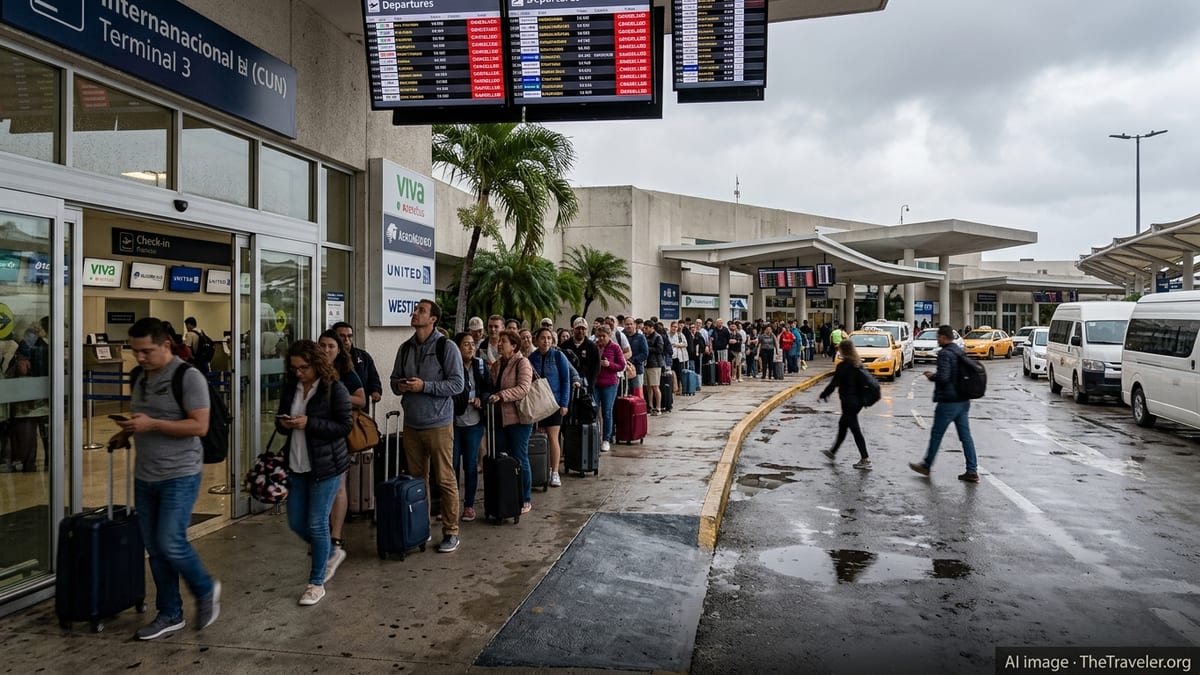
Air travelers across Mexico are facing fresh disruption as a wave of new flight cancellations from Cancún and other major airports affects routes operated by Viva Aerobus, United, AeroMexico, WestJet, and additional carriers to cities including Bogotá, Monterrey, Dallas, Vancouver, San Francisco, and Chicago.
Get the latest news straight to your inbox!
New Disruptions Hit Key Mexican Gateways
Recent operational issues and adverse weather across North America have triggered a new round of flight cancellations and schedule changes involving major Mexican gateways, with Cancún once again at the center. Publicly available data from airline schedules and airport departure boards show more than a dozen newly canceled or heavily delayed services in the last 24 hours, affecting routes to major hubs such as Dallas, Chicago, San Francisco, Vancouver, Monterrey, and Bogotá.
Flights operated by low cost carrier Viva Aerobus, as well as services from United, AeroMexico, WestJet, and other airlines, have been among those impacted. Some departures from Cancún and other Mexican airports have disappeared from live departure screens shortly before scheduled takeoff, while others have been retimed or rerouted, adding to uncertainty for travelers already in transit.
The latest cancellations come at a time when Mexico’s leisure and business markets remain in high demand. Popular routes connecting resort areas like Cancún and Puerto Vallarta with major cities in Canada, the United States, and South America are particularly sensitive to even minor schedule changes, since many operate only a few times per week.
Reports from affected passengers indicate that rebooking options have in some cases been limited to later dates or different connection points, especially on northbound flights feeding long haul services. Travelers connecting onward through hubs such as Mexico City, Monterrey, Dallas, Chicago, and Vancouver have reported needing to adjust hotel bookings and ground transport plans at short notice.
Weather, Congestion, and Operational Strain Combine
The disruption is unfolding against a backdrop of challenging weather conditions in parts of North America and continued congestion at several large airports. A powerful March winter system in the United States and Canada has recently led to thousands of cancellations and delays across the wider region, constraining aircraft and crew positioning and increasing pressure on already tight schedules.
When storms reduce capacity at major hubs such as Chicago, Dallas, San Francisco, and Vancouver, knock on effects are often felt quickly in Mexico’s main international gateways. Aircraft that are delayed or diverted in the United States and Canada may arrive late into Cancún or Mexico City, creating turnaround challenges and forcing crews up against duty time limits.
Publicly available flight tracking information and airport status updates show that some services linking Mexico with northern destinations have been especially vulnerable. Routes from resort airports into snow affected hubs have seen schedule changes ripple back southward, producing cancellations on both outbound and return legs.
In addition to weather, ongoing infrastructure work and high seasonal traffic at major Mexican airports have contributed to congestion. Remodeling projects at large hubs and runway or taxiway works at certain fields have occasionally reduced flexibility to absorb irregular operations, making it harder for airlines to recover when a series of flights are disrupted within a short time frame.
Viva Aerobus, United, AeroMexico, and WestJet Among Affected Carriers
Low cost carrier Viva Aerobus, which links Mexican cities including Cancún and Monterrey with destinations across the Americas, has been one of the airlines navigating significant schedule adjustments. Travelers monitoring the airline’s digital tools have reported inconsistencies between initial itineraries and updated departure times, with some flights to and from Mexico’s northern industrial centers and resort areas reportedly canceled or retimed on short notice.
United, AeroMexico, and WestJet, all of which operate key routes between Mexico and major North American hubs, have also seen selected services disrupted. According to airline advisories and travel waiver information made public in recent weeks, carriers have been offering more flexible rebooking options on certain Mexico routes in response to operational challenges and regional unrest in specific states.
From Cancún, disruptions have impacted connectivity to large hub airports used for onward international journeys. Canceled or heavily delayed flights to cities such as Dallas, Chicago, San Francisco, and Vancouver have in some cases broken carefully timed itineraries, leaving travelers with missed connections or enforced overnight stays at intermediate points.
Southbound and cross border travel has not been spared. Routes between Mexico and South American destinations, including flights toward Bogotá, have faced periodic schedule changes when equipment and crew have been reassigned to stabilize core North American operations, adding a further layer of complexity for travelers linking Mexico’s Caribbean coast with Colombia and beyond.
Impact on Travelers Heading to Bogotá, Monterrey, Dallas, Vancouver, and Beyond
The immediate impact for travelers has been a mix of airport waits, last minute rebookings, and unexpected layovers. Passengers heading from Mexican resorts and business centers to Bogotá, Monterrey, Dallas, Vancouver, San Francisco, Chicago, and other international hubs have reported having to reroute via alternative cities or accept flights several days later than planned.
In some cases, itineraries that originally relied on single stop connections have been converted into multi stop journeys, with travelers crossing through alternate hubs within Mexico or the United States. This can increase exposure to further delays, particularly when connecting through airports still working through backlogs caused by recent storms or operational constraints.
Changes have also had financial implications. Travelers with nonrefundable hotel bookings, prepaid tours, or time sensitive business appointments at their destinations have faced additional costs when forced to extend stays in transit cities or adjust arrival dates. Travel insurance policies vary in the level of disruption coverage offered, and not all passengers are eligible for compensation, depending on the cause of the cancellation and the jurisdiction of the operating carrier.
Those bound for regional business centers such as Monterrey have experienced particular strain where flights feed into peak weekday schedules. With some services curtailed or rescheduled, short duration trips built around tightly planned meetings have become more difficult to execute, prompting some companies to shift appointments or move to virtual formats at short notice.
What Passengers Can Expect in the Coming Days
Airport and airline operations data suggest that irregular operations linked to the latest wave of disruptions may continue to affect select Mexico routes in the short term, even after the most severe weather has passed. When aircraft and crews are out of position, it can take several days to rebalance networks and restore normal frequency on all city pairs.
Travelers with upcoming flights from Mexican airports to Bogotá, Monterrey, Dallas, Vancouver, San Francisco, Chicago, and other long haul hubs are likely to encounter evolving schedules as airlines adjust. Carriers typically prioritize restoring core trunk routes and highest demand flights first, which can mean that less frequent seasonal or leisure oriented services remain vulnerable until operations are fully stabilized.
Passengers are being encouraged, through publicly available advisories and travel alerts, to monitor their bookings closely in the 24 to 48 hours before departure, use airline apps where available, and allow extra time at the airport in case of gate or time changes. Checking the status of both the departing and returning legs can provide early warning of possible equipment swaps or timing shifts.
As northern winter conditions gradually ease and operational pressures moderate, analysts expect Mexican airports to regain more stable schedules on transborder routes. However, the recent cancellations underscore how quickly weather patterns and network constraints in the wider region can reverberate through Mexico’s tourism and business corridors, temporarily hindering cross border travel even during otherwise peak travel periods.