

More news on this day
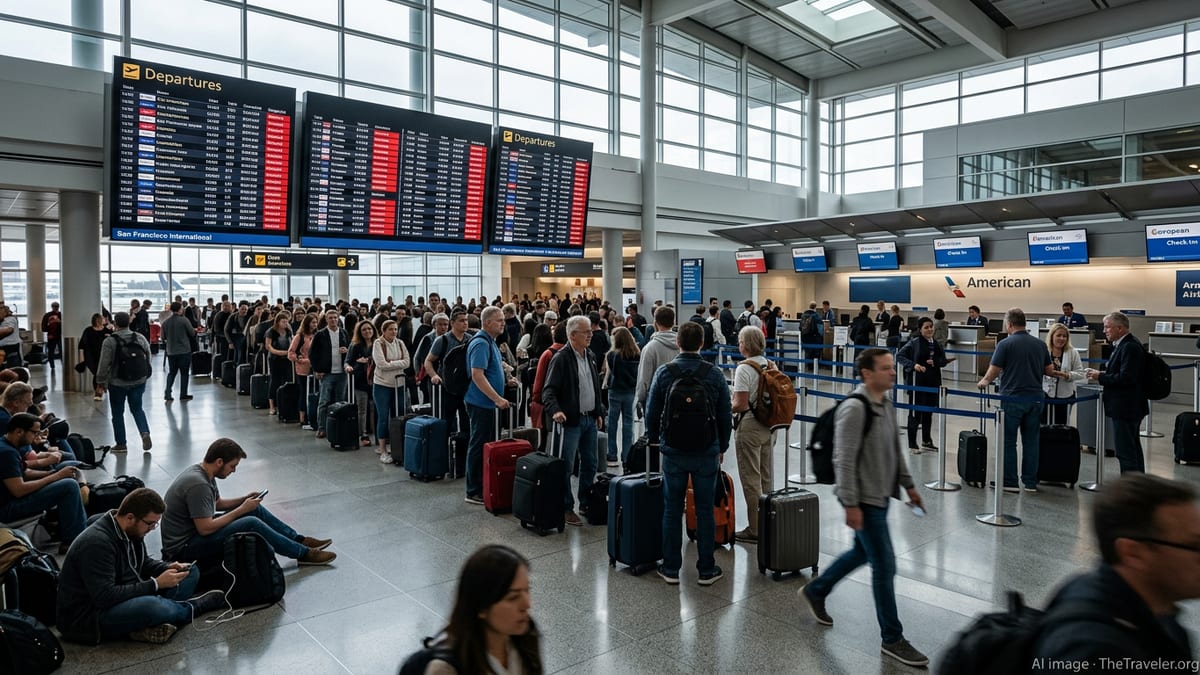
Thousands of air travelers across the United States and Denmark faced a day of mounting confusion on March 8 as rolling delays and cancellations at Fort Lauderdale-Hollywood International Airport and San Francisco International Airport rippled outward to major hubs including Chicago, Los Angeles and Copenhagen, disrupting carefully planned trips and leaving terminals packed with weary passengers watching departure boards turn red.
346 Delays and 120 Cancellations Snarl Two Key U.S. Gateways
According to flight-tracking and industry operations data reviewed on March 8, a combined total of roughly 346 delays and 120 cancellations at Fort Lauderdale-Hollywood International Airport in Florida and San Francisco International Airport in California set off a wave of disruption across domestic and international networks. While each airport has been grappling with elevated disruption in recent weeks, Saturday’s figures pushed pressure on airlines and ground teams to new levels at the height of a busy late-winter travel period.
At Fort Lauderdale, which serves as a critical gateway for low-cost and leisure-focused carriers, weather-related congestion in the broader South Florida region combined with traffic-management initiatives to slow arrivals and departures. Those measures, introduced to maintain safe spacing in crowded airspace, translated into dozens of late departures and a growing tally of scrubbed flights. Travelers bound for Chicago, Los Angeles and a string of East Coast and Caribbean destinations found themselves funneled into long customer-service lines in terminals already busy with weekend holidaymakers.
On the West Coast, San Francisco International battled its own mix of operational strains, including low cloud ceilings that triggered spacing restrictions on arriving aircraft and knock-on delays across transcontinental and transpacific routes. As the day progressed, delayed turnarounds meant that aircraft and crews fell increasingly out of position, forcing airlines to cancel additional departures to reset their schedules and avoid allowing delays to stretch deep into the night.
Aviation analysts noted that while the raw number of disrupted flights at each airport is modest compared with the worst days of historic winter storms, the concentration at two large coastal gateways at the same time meant the impact was amplified. Passengers on multi-leg itineraries that connected through both Fort Lauderdale and San Francisco were particularly vulnerable, often finding that a single delay on a first segment made a carefully timed onward connection impossible.
Confusion Spreads From Chicago and Los Angeles to Copenhagen
The disruption did not remain confined to Florida and Northern California. Airlines that rely on Fort Lauderdale and San Francisco as important nodes in their network reported cascading issues at other hubs, notably Chicago and Los Angeles in the United States and Copenhagen in Denmark. In practical terms, that meant travelers who had never planned to set foot in South Florida or the Bay Area still felt the impact of the disruption there.
At Chicago’s airports, where winter weather and congestion routinely complicate operations, Saturday’s schedule started to show mounting knock-on effects as aircraft arriving late from disrupted routes were forced into compressed turnaround windows. Some services were delayed while awaiting inbound aircraft that had been held on the ground in Fort Lauderdale or San Francisco, while others faced crew-availability issues when staff went out of hours because of earlier delays.
Los Angeles International Airport, already handling its own elevated level of delays and cancellations over the weekend, saw pressure intensify as additional passengers misconnected from flights routed through Fort Lauderdale and San Francisco. Terminals grew increasingly crowded as travelers sought rebooking options, and customer-service desks were tasked with juggling limited seat availability on later services to key destinations including San Francisco, Chicago and international leisure markets.
Across the Atlantic, Copenhagen Airport also registered the effects of the disruption. Several transatlantic and connecting services rely on inbound aircraft and passenger flows from the United States, and when departures out of San Francisco and other American gateways slipped, schedules in Denmark had to adjust. Longer connection times, last-minute gate changes and isolated cancellations added to the sense of uncertainty for European passengers heading to or through the United States.
Airlines Under Strain as Operational Fragility Exposed
Industry experts say the events of March 8 underline how fragile airline operations can become when several pressure points develop at once. Many carriers are running tight schedules as they seek to meet robust demand with finite aircraft and crew resources, especially on popular sun and city-break routes linking Florida, California and major Midwest and East Coast cities.
Because aircraft are often assigned to fly multiple sectors in a single day, a disruption on one early leg rapidly propagates through the remainder of that aircraft’s schedule. When compounded by air traffic control restrictions, adverse weather in one region or even small technical issues requiring extra checks, planners must choose between operating increasingly late flights or canceling entire rotations to keep the rest of the network viable. On Saturday, that calculation tipped toward more cancellations as the day wore on at both Fort Lauderdale and San Francisco.
Airlines also face a growing expectation from regulators and consumer advocates that they communicate clearly and compensate passengers fairly when plans go wrong. Authorities in both the United States and Europe have in recent years urged carriers to make it easier for affected customers to secure refunds or alternative transport after severe disruption. The latest wave of delays and cancellations is likely to add fresh scrutiny to how airlines handle rebooking queues, hotel vouchers and meal support when thousands of travelers are stranded far from home.
For ground staff and crew, the strain is equally evident. Check-in agents, gate staff and call-center teams reported sustained surges in workload as passengers sought real-time updates, alternative connections and reassurance. Several unions have warned that chronic understaffing in customer-facing roles leaves workers vulnerable to verbal abuse when irregular operations unfold, and say recurring disruption days highlight the need for better staffing buffers and training for handling large-scale breakdowns in the schedule.
Travelers Face Long Queues, Frayed Tempers and Limited Options
For passengers, the operational complexity played out as simple, tangible frustration. Across Fort Lauderdale, San Francisco, Chicago, Los Angeles and Copenhagen, departure boards filled with yellow and red status updates, while public-address announcements urged travelers to seek out airline apps and email notifications for the latest information. Families en route to cruises from South Florida, business travelers aiming for same-day meetings on the West Coast and long-haul passengers connecting between Europe and the United States all reported hours-long waits in terminals.
Many stranded travelers scrambled to rebook via alternative hubs, but seats on later departures quickly became scarce. Where same-day options were not available, some passengers turned to nearby airports, hoping to secure a flight from Miami instead of Fort Lauderdale, or from Oakland and San Jose rather than San Francisco. Others abandoned air travel altogether and shifted to long-distance rail or car journeys to make urgent appointments or return home.
Airport concessions, from coffee shops to full-service restaurants, experienced an uptick in foot traffic as travelers settled in for unexpectedly long waits. Charging points became prized real estate as passengers attempted to keep phones and laptops powered while tracking rolling schedule changes. In several terminals, airport volunteers and information-desk staff stepped in to help direct crowds and provide basic advice on where to find quiet spaces, children’s play areas and accommodation desks.
Seasoned travelers noted that those with airline apps and text alerts enabled appeared better positioned to react, often receiving rebooking options digitally before long physical queues at service counters had moved far. Less frequent flyers and international visitors unfamiliar with local regulations and typical airline practices, by contrast, were more likely to find themselves stuck in lines without clear information about their rights or available alternatives.
What Passengers Can Do as Disruptions Continue
With weather patterns, congested airspace and tight airline schedules likely to keep pressure on operations through the coming weeks, travel advisers say passengers should treat the events of March 8 as a reminder to build resilience into their plans. That begins with checking the status of flights repeatedly in the 24 hours before departure and allowing extra time for connections, especially when traveling through known congestion points such as Chicago, Los Angeles, South Florida and major transatlantic hubs.
Experts also recommend booking longer layovers when connecting between domestic and international flights, choosing early-day departures where possible to minimize exposure to rolling delays, and considering travel insurance that specifically covers disruption-related costs. Keeping all receipts for meals, ground transport and emergency accommodation is important if travelers later seek reimbursement from airlines or insurers.
At the airport, having essential items such as medications, chargers, a change of clothes and basic toiletries in carry-on bags can make an unplanned overnight stay or extended delay more manageable. Passengers are further encouraged to familiarize themselves in advance with their airline’s policies on rebooking and refunds, which are typically outlined in customer-service plans and conditions of carriage, and to use official airline communication channels rather than relying solely on third-party travel apps.
Ultimately, while the precise combination of factors that led to 346 delays and 120 cancellations at Fort Lauderdale and San Francisco on March 8 may not repeat exactly, the pattern of cascading disruption across multiple hubs is likely to be a recurring feature of busy travel seasons. For travelers moving through Chicago, Los Angeles, Copenhagen and beyond, staying informed and flexible will remain essential tools for navigating an increasingly complex air travel landscape.