

More news on this day
New long-haul routes and regional links into Ethiopia are rapidly redrawing the country’s tourism map, transforming once-remote cultural sites and wild landscapes into realistic additions to global travelers’ itineraries.
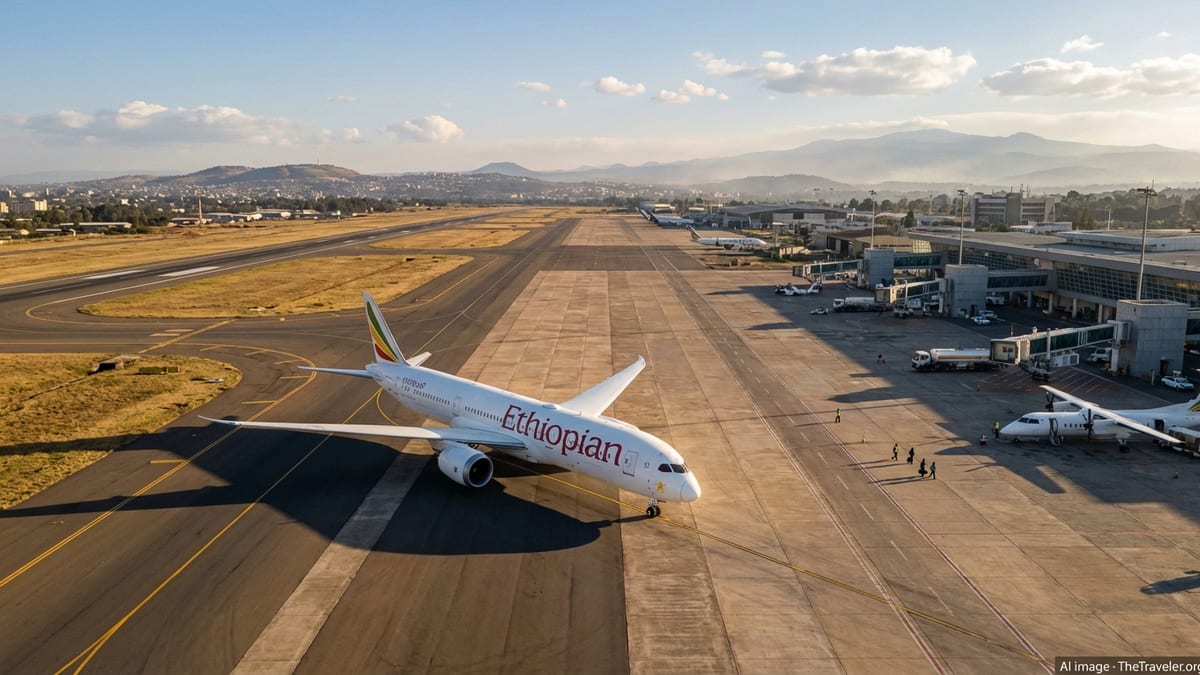
African Hub on the Rise as Routes Multiply
Ethiopia’s aviation network is expanding at a pace that is beginning to rival far larger markets, and the ripple effects for tourism are profound. Ethiopian Airlines, already Africa’s largest carrier by destinations, has spent the past two years adding new routes across Europe, Asia and the Middle East while increasing frequencies on existing services. Recent additions such as Warsaw and Maun joined the network in mid-2024, giving European safari-goers and Central European travelers faster, single-connection access to Addis Ababa and beyond.
The acceleration has not slowed. In 2025 the airline announced or launched new passenger services from Addis Ababa to Porto in Portugal, Hyderabad in India, Hanoi in Vietnam, Yaoundé in Cameroon and Perth in Australia, with most coming online between June and July 2025. For travelers in these catchment areas, Ethiopia shifts from a niche, multi-stop adventure to a one-connection proposition, often using widebody Boeing 787-9 aircraft that improve comfort on overnight sectors.
At the same time, Ethiopian has been steadily increasing frequencies to major European gateways including London, Paris and Manchester, consolidating Addis Ababa’s role as a transfer hub as well as a destination in its own right. More flights mean better onward connections to domestic points such as Lalibela, Gondar, Dire Dawa and Bahir Dar, all key tourism gateways that once required long layovers or overnight stops.
This route development strategy amounts to a deliberate tourism play. By enabling seamless connections from secondary cities in Europe, the Middle East and Asia into Ethiopia’s interior, the new flights are lowering both the cost and the perceived risk of discovering little-known corners of the Horn of Africa.
Gulf Carriers Unlock the Middle East and Asia
The expansion is not driven by Ethiopian Airlines alone. Gulf carriers are moving back into the Ethiopian market, creating new two-way tourism flows. Etihad Airways has relaunched daily flights between Abu Dhabi and Addis Ababa, a move announced in late 2025 that restores a direct link between the Emirati capital and Ethiopia’s highland hub. Aviation analysts expect the service to feed both leisure and religious tourism, as Ethiopian travelers connect through Abu Dhabi to Southeast Asia while visitors from the Gulf gain easier access to Ethiopia’s historical circuits and highland retreats.
In parallel, Ethiopian Airlines and Etihad have signed a strategic joint venture that includes a codeshare between Addis Ababa and Abu Dhabi. That arrangement effectively turns the two hubs into complementary gateways, offering one-ticket itineraries that link Ethiopian cities with destinations across the Middle East, India and East Asia. For tourists eyeing a combined Gulf city break and highland trekking holiday, the logistics have never been simpler.
These developments sit alongside Ethiopian’s own push in the Gulf. The carrier has opened a new route to Sharjah in the United Arab Emirates and is adding Jizan on Saudi Arabia’s Red Sea coast from February 2026. While Sharjah strengthens inbound access from the Emirates, Jizan improves connectivity for religious pilgrims and Red Sea leisure travelers, who can combine island-hopping and coastal stays with cultural trips into northern Ethiopia via Addis Ababa.
The net effect is a denser mesh of flights that tie Ethiopia into the wider Middle East and Asian travel ecosystem. For tour operators in places like Dubai, Abu Dhabi and Jeddah, the country’s rock-hewn churches, coffee forests and volcanic landscapes are suddenly viable week-long packages rather than aspirational once-in-a-lifetime expeditions.
Europe and Australia: New Gateways to an Old Civilization
For European travelers, Ethiopia’s new routes reflect a subtle but important shift. The Addis Ababa to Porto service, scheduled to begin in July 2025 with a stop in Madrid, offers four weekly flights into northern Portugal, tapping a catchment area that extends into Spain’s Galicia and beyond. This opens Ethiopia to a region with a strong culture of pilgrimage and heritage tourism, a natural match for Ethiopia’s own religious festivals in Lalibela and the monasteries around Lake Tana.
Similarly, Ethiopian Airlines is ramping up its presence in France with a planned thrice-weekly service to Lyon from July 2026, routed via Geneva. Lyon and Geneva together serve a concentration of outbound skiers, hikers and food-focused travelers, groups likely to be intrigued by Ethiopia’s mix of high-altitude trekking in the Bale and Simien Mountains and a distinctive culinary tradition centered on injera and spiced stews.
Perhaps the most significant psychological breakthrough, however, lies to the east. The launch of flights from Addis Ababa to Perth in April 2025, even at two weekly frequencies, is Ethiopia’s first direct passenger bridge to Australia. For Australians accustomed to routing African trips through the Gulf or Johannesburg, a new option that pairs East Africa’s cultural heartland with Indian Ocean beaches and wildlife is an attractive alternative.
These routes tie into a broader European expansion that began in 2024, when Warsaw joined Ethiopian’s network as its 24th European destination. While Poland itself is a growing outbound tourism market, the symbolism is broader: Addis Ababa is no longer a niche African hub; it is a central node in intercontinental travel, with onward links to some of the continent’s least-known yet most compelling attractions.
Domestic Links to Hidden Highlands and Sacred Cities
International flights are only part of the story. Within Ethiopia, a series of domestic route launches and aircraft investments is shrinking the distance between Addis Ababa and outlying regions that hold some of the country’s most alluring but least-visited attractions. In mid-2024 Ethiopian Airlines restored scheduled services to Axum and introduced flights to Nekemte, improving access to both an ancient archaeological center and the green western highlands.
The airline is also upgrading its domestic fleet, including plans to enhance operations with new Twin Otter Classic 300-G turboprops optimized for short runways and rugged conditions. These aircraft are particularly well suited to serving high-altitude airstrips and secondary cities whose tourism potential has long been constrained by challenging road journeys.
For visitors, this means that classic stops such as Lalibela’s rock-hewn churches, the castles of Gondar and the monasteries of Lake Tana can now be stitched together more fluidly with emerging destinations. Communities in coffee-growing regions, hot spring towns and lesser-known Rift Valley lakes are beginning to appear in itineraries that previously focused on just one or two flagship sites.
This growing mesh of domestic flights is crucial to unlocking longer-stay, higher-value tourism. Instead of flying into Addis Ababa for a conference or overnight stop en route elsewhere in Africa, international travelers can use the capital as a springboard for multi-center journeys that combine culture, trekking, birdwatching and community-based tourism in regions that have seen little foreign traffic.
Lake Tana and the North: Ferries, Pilgrimage and Island Monasteries
Nowhere is this transformation more visible than around Lake Tana, the source of the Blue Nile and a spiritual heartland of Ethiopian Orthodoxy. The city of Bahir Dar, reached via a short flight from Addis Ababa, has long been a domestic holiday spot; new aviation links are now feeding more international visitors into the region. Once there, a quiet transport revolution is under way on the water itself.
In 2025 a modern passenger ferry known as Tananesh II began service on Lake Tana after a complex overland journey from Djibouti. Designed to carry close to 190 passengers, the vessel provides faster and safer crossings between lakeshore towns and monastic islands, reducing reliance on small wooden boats and seasonal services. For tourists, this opens the possibility of day trips and multi-day circuits to remote monasteries that were once the preserve of determined pilgrims and researchers.
This new maritime connectivity dovetails with air access via Bahir Dar airport, creating a multimodal link between Addis Ababa, the lake and the Blue Nile Falls. Tour operators report growing interest in combining cultural visits to island monasteries with birdwatching, coffee-farm homestays and side trips to the Simien Mountains, now more easily reachable thanks to improved road and air connections from Gondar.
The result is that northern Ethiopia’s once-fragmented tourism assets are gradually being packaged together as a coherent circuit, with new flight routes acting as the scaffolding. As security conditions stabilize in parts of the north, industry observers expect demand to rebound quickly, especially from European and North American travelers eager for off-the-beaten-path experiences with strong cultural depth.
Red Sea Gateways and the New Jizan Connection
To the north and west, the launch of flights to Jizan in Saudi Arabia in February 2026 creates a new aerial bridge between Ethiopia and the Red Sea coast. Jizan is marketed as a coastal gateway to the Farasan Islands and other emerging Saudi tourism developments. For Ethiopian travelers, the route offers a short hop to beach resorts and island dives; for Saudis and residents of the wider Gulf, it opens a convenient back door into the Ethiopian highlands and beyond.
Industry analysts note that these services are likely to appeal particularly to family groups and religious travelers. The ability to pair pilgrimage or heritage-focused stays in Ethiopia with beach breaks or shopping trips in the Gulf adds flexibility to itineraries. The Jizan connection also enhances resilience in a region where occasional volcanic activity in Ethiopia and shifting security dynamics around the Red Sea can disrupt traditional air corridors; additional route options give airlines and passengers more ways to reroute when conditions demand.
On the Ethiopian side, the Jizan link underscores a broader strategy to position the country as both a gateway and a destination for Red Sea tourism. From Addis Ababa, domestic flights and road links extend onward to the Danakil Depression, Afar region and other landscapes that, while still requiring careful planning, are drawing interest from adventure travelers seeking active volcanoes, salt flats and Afar cultural encounters.
Crucially, this influx is starting to be managed with a stronger emphasis on sustainability and community benefit. Local authorities and tour operators are working to ensure that visitor numbers remain compatible with fragile desert ecosystems and that income from tourism supports education, conservation and resilience projects in host communities.
New Airport Ambitions and the Future of Ethiopia as a Tourism Hub
All of these route announcements are unfolding against the backdrop of a huge infrastructure bet: the construction of Bishoftu International Airport, a new hub being developed about 45 kilometers from Addis Ababa. Backed by Ethiopian Airlines and international financiers, the project broke ground in January 2026 and is designed to eventually handle up to 60 million passengers a year, eclipsing the current capacity of Addis Ababa Bole International Airport.
The first phase of Bishoftu is expected to be completed before the end of the decade, with capacity for around 17 million travelers and multiple runways capable of handling a dense wave of long-haul arrivals and departures. For tourism, this promises smoother transfers, more departure banks timed for early-morning arrivals into Europe and Asia, and the ability to schedule additional flights into secondary cities within Ethiopia and across Africa.
Industry specialists say the airport project is inseparable from the recent burst of route launches. Airlines are more willing to commit aircraft to new destinations when they can see that hub capacity and passenger experience will keep up with demand. For tour operators and hotel developers, the combination of a growing global network and a new mega-hub signals that Ethiopia’s rise as a tourism center is not a short-term experiment but a long-term structural shift.
For travelers, the impact will be felt less in the architecture of the new terminals than in the small details of trip planning. More direct and near-direct flights from cities like Porto, Lyon, Warsaw, Abu Dhabi, Jeddah and Perth will make it easier to spend a long weekend in Addis Ababa’s jazz bars and museums or to tack on a week exploring monasteries, mountains and coffee-growing villages that, until recently, were all but inaccessible from most of the world’s major cities.