

A fresh wave of route expansions by Air Astana, Flydubai and Singapore Airlines’ low cost arm Scoot is tightening the air links between Central Asia, the Gulf and Southeast Asia, in a move industry analysts say will stimulate tourism flows and turbocharge hotel demand from Baku to Bangkok and the emerging mountain getaway of Chiang Rai.
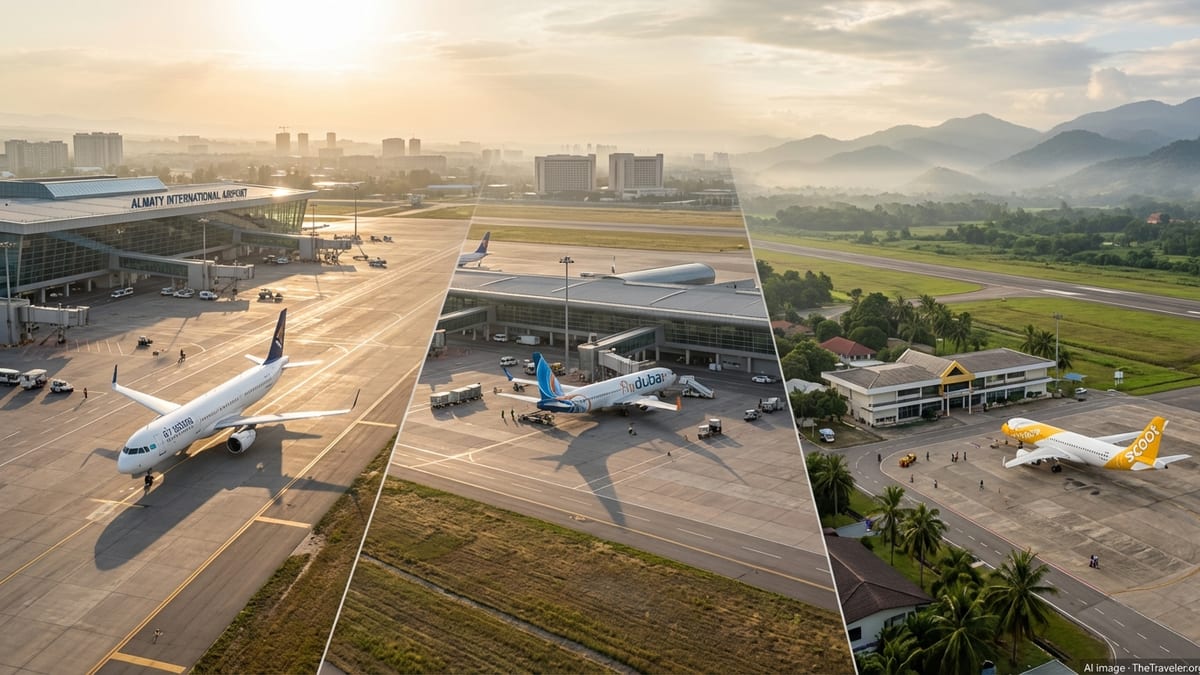
Air Astana Ramps Up Thailand Capacity as Kazakh Tourism Rebounds
Kazakhstan’s flag carrier Air Astana is sharpening its focus on Thailand just as the Central Asian nation’s tourism sector records some of its strongest growth since the pandemic. In late 2025, the airline increased frequencies on several sun and beach routes out of Almaty, lifting flights to Bangkok to daily service and adding capacity to Phuket and Vietnam’s Phu Quoc to capture rising outbound demand for winter escapes.
The frequency boost coincides with a rapid rebound in Kazakhstan’s broader tourism economy. Official data for 2024 show the country welcomed more than 15 million foreign visitors and logged over 10 million domestic trips, with spending and hotel revenues climbing at double digit rates year on year. New resorts along the Caspian coast, ski areas near Almaty and large-scale projects such as the Astana Tourism District are drawing both local and international investors, adding hundreds of new rooms to the national hotel inventory.
For Thai destinations, Air Astana’s additional flights represent a valuable pipeline of middle class travelers from a still underpenetrated source market. Tour operators in Bangkok report growing interest in combined city and beach itineraries from Kazakhstan, particularly during the Northern Hemisphere winter when temperatures at home plunge and direct connections to Thailand offer a warm, relatively affordable alternative to long haul trips to Europe or the Americas.
Industry observers expect the airline to keep fine tuning its Thailand schedule as demand patterns become clearer, with the increased Bangkok capacity serving as a bellwether for how quickly Kazakhstan’s outbound leisure segment can scale. The more consistent the service, hotel executives say, the more confidently they can plan room inventory, staffing and rate strategies tailored to guests from Central Asia.
Flydubai and Gulf Carriers Deepen Connectivity to Baku
In parallel with Air Astana’s Thailand push, Flydubai and other Gulf carriers are reinforcing their presence in the South Caucasus, with Baku emerging as a key beneficiary. Flydubai has steadily grown its network of routes into Azerbaijan’s capital over the past decade, turning Dubai into a major one stop gateway between Baku, the wider Middle East and long haul markets in Asia and Europe served by partner airlines.
Azerbaijani officials and hotel groups see this deepening connectivity as central to Baku’s positioning as a short break and events city. Enhanced schedules between Dubai and Baku have supported a steady rise in visitor numbers from the Gulf states, who are attracted by the city’s waterfront promenade on the Caspian Sea, its UNESCO listed Old City and a rapidly expanding stock of international branded hotels. With more frequencies and better timed connections, Flydubai is effectively widening the funnel of travelers who can reach Baku in a single day from markets such as Saudi Arabia, India and Southeast Asia.
Travel agents note that Flydubai’s hybrid low cost model helps keep fares competitive while still offering business class seating and connectivity to the broader Emirates network. This combination is encouraging more weekend city break travelers, families and small corporate groups to add Baku to their rotation of accessible regional destinations. In turn, local hoteliers say they are seeing healthier midweek occupancy and stronger demand for serviced apartments that cater to extended stays and medical tourism.
As visa rules ease and marketing campaigns highlight Azerbaijan’s food, culture and proximity to both the Middle East and Central Asia, analysts expect Flydubai’s role to grow further. Additional flights to Baku strengthen its hub position in Dubai while giving Azerbaijani tourism officials more levers to pull in their effort to lengthen stays and increase per-visitor spending.
Singapore Airlines’ Scoot Opens a New Gateway to Northern Thailand
While Central Asia and the Gulf strengthen their ties, Southeast Asia is witnessing its own connectivity milestone with the launch of direct services between Singapore and Chiang Rai, operated by Scoot, the low cost subsidiary of Singapore Airlines. The inaugural flight on 1 January 2026 marked the resumption of international scheduled service to Chiang Rai for the first time since 2020 and created a long awaited nonstop link between Singapore and one of northern Thailand’s most scenic provinces.
Scoot is operating the route five times a week with a 112 seat Embraer E190 E2, offering both morning and late afternoon departures from Singapore. The initial flights have reported load factors in the mid 90 percent range, a strong sign of pent up demand among Singaporean residents, expatriates and regional travelers looking for a shorter, more relaxed alternative to the busier tourist hub of Chiang Mai. Crucially, the direct service eliminates the need to transit through Bangkok, cutting total journey times and simplifying itineraries for families and older travelers.
For Singapore Airlines Group, the route showcases how its full service and low cost brands can work in tandem to expand the network into high potential secondary cities. Passengers can connect onto Scoot’s Chiang Rai service from long haul Singapore Airlines flights arriving from Europe, Australia and North Asia, turning Chiang Rai into a viable add on destination for regional stopover packages. Travel planners say this will be particularly attractive to repeat visitors to Thailand seeking new landscapes, cooler weather and quieter cultural experiences.
The Tourism Authority of Thailand has moved quickly to support the new connection with joint marketing, influencer trips and trade campaigns in Singapore, framing Chiang Rai as a complement to Bangkok, Phuket and Chiang Mai. This coordinated push aims to translate strong early load factors into sustained year round demand that can support further capacity increases or additional city pairs in the region.
Chiang Rai’s Hotel Sector Braces for an Influx of Regional Visitors
Local tourism businesses in Chiang Rai are already feeling the impact of Scoot’s arrival. Hoteliers in the provincial capital and surrounding mountain districts report a noticeable uptick in forward bookings from Singapore and third country markets whose travelers prefer to route through Changi. Boutique resorts around Mae Salong and the Golden Triangle are fielding more inquiries from small groups and independent travelers who now see the province as practical for a long weekend stay rather than a once in a lifetime trek.
The structure of the Chiang Rai hotel market gives it room to scale quickly. In contrast to Phuket and central Bangkok, where international chains dominate, Chiang Rai’s accommodation landscape is led by midscale hotels, family run guesthouses and eco lodges. These operators are well placed to capture incremental traffic at relatively low cost, adjusting rates and room allocation dynamically in response to Scoot’s schedule and promotional waves in Singapore and beyond.
Market analysts say the province’s relatively modest room base means even a few hundred additional arrivals a week can shift occupancy materially. Sustained high load factors on Scoot’s flights could therefore push average daily rates higher across the high season, particularly in riverside properties and resorts close to headline attractions such as the White Temple and Doi Tung. This revenue uplift may in turn unlock financing for upgrades, new inventory and higher quality tourism infrastructure in rural areas.
Local authorities are also watching for any signs of strain. While overtourism is not yet a concern in Chiang Rai, officials in Bangkok have flagged the need to manage growth carefully, drawing lessons from more crowded destinations. Efforts are under way to disperse visitors more evenly across the province, promote off peak travel and encourage operators to adopt sustainable practices that protect the region’s forests, tea plantations and hill tribe communities.
Baku’s Evolving Hotel Landscape Underpins Its Bid for More Tourists
Similar dynamics are at play in Baku, where aviation growth is intertwining with a broader transformation of the city’s hospitality sector. Over the past decade, the Azerbaijani capital has attracted a roster of international hotel brands along its waterfront and central business district, adding hundreds of rooms targeting corporate travelers, conference delegates and high spending leisure visitors. These properties now stand to benefit directly from Flydubai’s sustained commitment to the route and the potential for further seasonal increases in capacity.
Tour operators say passengers arriving on Flydubai and other Gulf carriers often bundle Baku with nearby nature destinations such as Gabala, Sheki and the mud volcano fields south of the capital, creating multi night itineraries that lift occupancy not just in city center hotels but also in regional resorts and guesthouses. Extended weekend packages combining spa stays, cultural tours and shopping have gained traction in markets like the United Arab Emirates and Saudi Arabia, where short haul travelers are familiar with Baku’s skyline and Formula 1 street circuit from televised coverage.
As with Kazakhstan and Thailand, authorities in Azerbaijan are keen to ensure that growing visitor numbers translate into sustainable economic benefits. Industry briefings highlight goals to diversify the country’s source markets, extend stays beyond two or three nights and encourage more visitors outside the peak summer and events calendar. Improved airlift from Dubai and other Gulf hubs is seen as essential to achieving these objectives, with airlines like Flydubai acting as both transport providers and marketing partners for Baku’s evolving brand.
Hoteliers, in turn, are calibrating their offerings to target the mid to upper midscale segment that most frequently travels on low cost or hybrid carriers. This includes flexible check in policies for late arriving flights, Arabic language services, tailored food options and value added packages that combine accommodation with city tours or spa access. Such adjustments are designed to lock in loyalty as competition for short break travelers intensifies across the wider region.
Kazakhstan’s Hotel Investors Eye Gains From Stronger Links With Thailand
Back in Kazakhstan, the interplay between new air links and tourism investment is reshaping expectations for hotel performance in both primary and secondary cities. Government data for 2024 and 2025 show accommodation revenues rising by more than a quarter year on year, buoyed by domestic travel incentives, infrastructure spending and the launch of new visas targeting remote workers and long stay visitors. Increased international air connectivity, including Air Astana’s bolstered Thailand schedule and new services by other regional carriers, is amplifying this trend.
Developers in Astana and Almaty say outbound leisure demand has knock on effects at home. When airlines open new routes to beach and city destinations abroad, it builds confidence among consumers and lenders alike that travel is once again an integral part of middle class life. That sentiment supports investment in local hotels, resorts and entertainment districts designed to capture both domestic tourism and inbound travelers connecting through Kazakhstan on their way to other destinations.
Industry forecasts suggest that if visitor growth continues at recent rates, Kazakhstan’s hotel capacity will need to expand substantially by the end of the decade. Projects such as the Caspian Riviera resort complex and upgraded airports in key regions are expected to come online just as additional regional flights bed in, positioning the country as a dual hub for adventure tourism and business travel in Central Asia. Air Astana’s enhanced Thailand routes, by feeding traffic through Almaty and connecting with services to Europe and the Caucasus, play a strategic role in that vision.
Hotel operators are therefore watching booking data closely for signs of correlation between outbound Thailand traffic and inbound stays in Kazakhstan’s main cities. Early indications point to rising pre and post trip nights among travelers who choose to spend a day in Almaty or Astana before heading onward, a pattern that could be strengthened if schedule coordination and marketing partnerships deepen further.
How Expanded Air Networks Could Reshape Regional Travel Patterns
Taken together, the route moves by Air Astana, Flydubai and Singapore Airlines’ Scoot highlight how relatively modest adjustments in capacity and routing can have outsized effects on regional tourism flows. By adding flights to Bangkok and reinforcing access to Baku and Chiang Rai, the carriers are reducing the friction of multi country itineraries that link Central Asia, the Gulf and Southeast Asia. Travelers who once needed long layovers or complex transfers can now reach secondary cities more directly, encouraging experimentation and repeat visits.
Travel economists note that secondary destinations often feel the impact of new air services more acutely than established hubs. A few additional planeloads of visitors each week can lift occupancy rates, support the opening of new hotels and justify investments in attractions and transport infrastructure. The pattern is evident in Chiang Rai, where hoteliers are already adjusting strategies to the new Singapore link, and in Kazakhstan’s resort regions, which are banking on continued growth in outbound and domestic tourism to validate ambitious development plans.
The interplay between these aviation changes also has implications for competition within Southeast Asia and beyond. As Scoot opens up Chiang Rai and strengthens Singapore’s role as a gateway, airlines based in Bangkok, Kuala Lumpur and Hanoi will face pressure to defend their own regional networks and potentially launch new services to emerging cities. Likewise, Flydubai’s deepening ties with Baku raise the stakes for rival carriers seeking to channel Caucasus and Central Asian traffic through their hubs.
For travelers, the outcome is a richer set of options: more direct routes, a wider range of price points and the chance to pair destinations like Baku, Bangkok and Chiang Rai in a single journey. For hotels and tourism boards from Kazakhstan to northern Thailand, the challenge will be to convert this new accessibility into sustainable growth, ensuring that increased arrivals translate into long term value for local communities as well as the region’s increasingly interconnected aviation and hospitality industries.