

More news on this day
Las Vegas is preparing for a record-breaking year in the skies as Southwest Airlines, Qantas, Air France and other carriers unveil a wave of new nonstop routes for 2026 that will tighten the city’s links with key markets across North America, Europe and the Asia-Pacific region.
Get the latest news straight to your inbox!
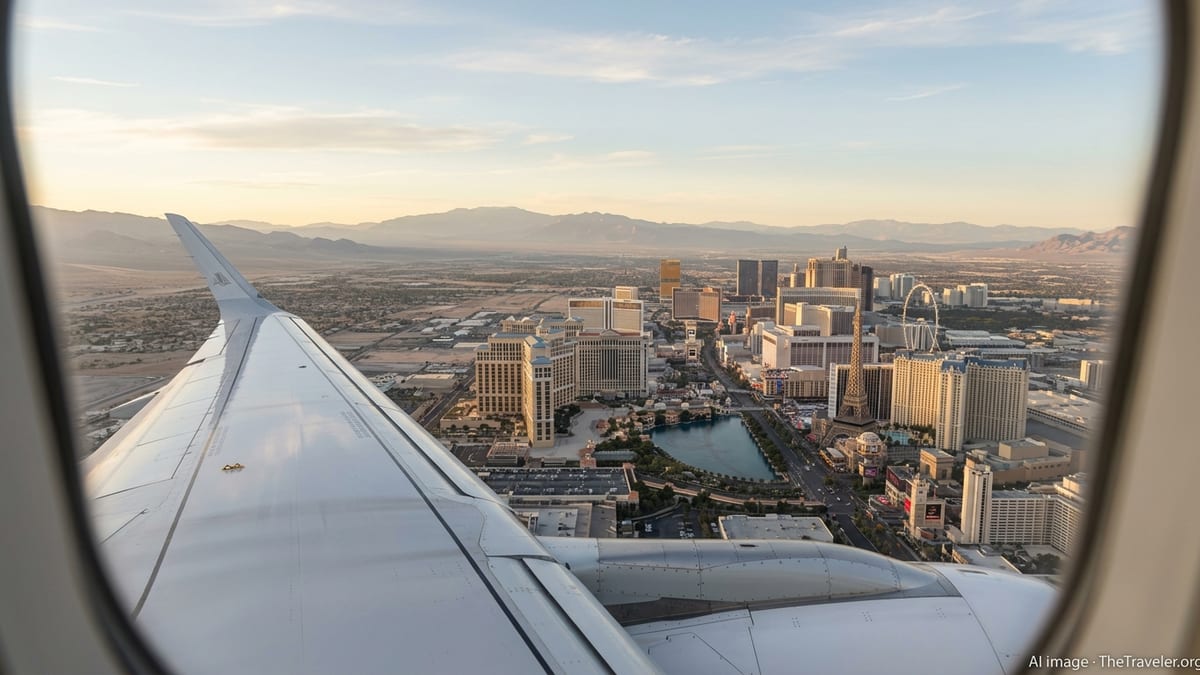
Southwest Leads New International Push From Las Vegas
Southwest Airlines, long a dominant domestic carrier at Harry Reid International Airport, is now positioning Las Vegas as one of its primary gateways for international connectivity in 2026. Publicly available information on the carrier’s evolving partnerships indicates that Las Vegas is among a select group of “shared gateway” airports where Southwest is linking its expansive U.S. network with long-haul partners that specialize in overseas flying. That strategy aligns with newly publicized plans for nonstop service that will take Las Vegas beyond its traditional role as a domestic leisure hub.
Alongside its broader schedule growth for late summer 2026, Southwest is adding more point-to-point flying that connects secondary U.S. cities directly to Las Vegas. Recent schedule extensions highlighted new or expanded nonstop links involving Las Vegas and markets such as Albany and Austin, underscoring the airline’s continued emphasis on feeding traffic from fast-growing inland regions straight into Nevada’s tourism engine. For travelers, that means fewer connections and greater access to the city during peak convention and events season.
Industry coverage also points to Las Vegas surfacing in Southwest’s next wave of international expansion. Travel trade reporting indicates that a new daily nonstop between Las Vegas and San José in Costa Rica is targeted for launch in October 2026, creating a direct link between the Nevada desert and Central America’s eco-tourism gateway. While the carrier’s primary international focus remains Mexico and the Caribbean, the addition of Costa Rica from Las Vegas signals an ambition to draw a broader mix of leisure travelers through the city.
Taken together, these moves suggest that Las Vegas is shifting from being primarily a destination at the end of Southwest’s route map to a more versatile connecting point where domestic and international networks intersect. That repositioning could prove particularly significant as the airline leans on its high-frequency short-haul model to feed longer-haul flights operated either by Southwest or its partners.
Qantas Brings First Ever Australia–Las Vegas Nonstops
On the long-haul front, one of the most notable developments for 2026 is Qantas’ decision to launch the first-ever scheduled nonstop flights between Australia and Las Vegas. According to recent route announcements summarized in travel industry coverage, the Australian flag carrier will begin a seasonal three-times-weekly service between Sydney and Las Vegas on Boeing 787-9 aircraft starting December 29, 2026 and running into March 2027. The flights are designed to capture both peak holiday demand and major event traffic in Southern Nevada.
For Australians, the new route removes at least one connection that has traditionally been required to reach Las Vegas via U.S. hubs such as Los Angeles. For Las Vegas, the launch delivers a direct pipeline to one of the world’s highest-spending outbound markets. Tourism analysts note that Australia has been a key source of visitors for major sporting events and entertainment residencies, and a nonstop link is likely to amplify that demand, especially around marquee dates on both sides of the Pacific.
The Qantas service also dovetails with broader Australian interest in Las Vegas as an events destination. The airline has already been operating charter flights to the city tied to high-profile sporting fixtures, and the scheduled nonstop marks a shift from one-off operations to a consistent presence in the market. By promoting Las Vegas as a dedicated U.S. gateway for Australian travelers, Qantas is signaling confidence that demand will be strong enough to fill a long-haul aircraft across the peak southern summer.
Travel planners are characterizing the new service as a potential game-changer for multi-stop itineraries that combine Las Vegas with other North American destinations. With Sydney passengers able to arrive in Nevada nonstop, connect to Southwest and other U.S. carriers, and then continue onward without backtracking to a coastal hub, Las Vegas is set to function as both a destination and a through-point in an emerging Australia–USA travel corridor.
Air France Links Paris and Las Vegas Nonstop From April 2026
Across the Atlantic, Air France is preparing to connect Paris and Las Vegas directly as part of its summer 2026 schedule. A company press release issued in late 2025 confirmed that the carrier will begin three-times-weekly nonstop flights between Paris Charles de Gaulle and Las Vegas on April 15, 2026. The service is planned for the April to October window, coinciding with both Europe’s peak travel season and Las Vegas’ packed calendar of trade fairs and entertainment events.
The route is being billed in European travel media as a strategic addition that strengthens Paris’ role as a global hub while giving French and wider European travelers one-stop access to Nevada via onward connections. For business and convention traffic, the nonstop is expected to be particularly attractive for exhibitors and delegates attending major shows, reducing total travel time and simplifying logistics for European companies.
In Las Vegas, tourism observers have pointed out that a direct link to Paris has the potential to draw higher-spending leisure visitors interested in luxury hospitality, fine dining and entertainment. Air France’s premium cabins, which the airline has been upgrading on long-haul aircraft, are expected to appeal to travelers combining Las Vegas with other high-end itineraries in the United States. The route also offers a straightforward option for Americans in the Southwest to reach Paris by connecting in Las Vegas rather than routing through crowded coastal gateways.
The addition of Air France builds on an already diverse slate of transatlantic and transborder services into Las Vegas and reflects a broader movement among European carriers to capture North American leisure demand. With more widebody capacity scheduled into Harry Reid International Airport for the 2026 summer season, local tourism bodies are preparing for a marked uptick in visitors from key European markets.
Other International Carriers Target Las Vegas for 2026 Growth
Beyond Southwest, Qantas and Air France, several other airlines are quietly building Las Vegas into their 2026 growth strategies. Industry route trackers show that European leisure carrier Condor has flagged Las Vegas as part of a wider long-haul expansion plan from Germany for the summer 2026 season, alongside additions to destinations such as Bangkok and Mauritius. These flights are designed to tap into rising demand for long-haul holidays from continental Europe and to connect secondary European cities with U.S. leisure centers.
Additional carriers, including niche and regional operators, are also setting up new services that touch Las Vegas directly or bolster its feeder network. Recent schedule filings indicate that Las Vegas is gaining more nonstop links from mid-sized U.S. cities, while airport announcements highlight new airlines planning to enter the market for the first time. Each incremental route helps diversify the city’s catchment area and reduces reliance on a small set of coastal gateways.
Route development specialists note that Las Vegas’ strong year-round demand profile, anchored by conventions, sports and entertainment, makes it particularly attractive for airlines looking to deploy aircraft efficiently. With global fleets still being optimized after the disruptions of the early 2020s, the ability to fill seats outside traditional summer peaks is a significant draw. Las Vegas’ mix of midweek convention traffic and weekend leisure demand fits that requirement, allowing carriers to test new long-haul markets with relatively favorable risk profiles.
As more airlines announce schedules for late 2026 and early 2027, analysts expect additional intercontinental links to emerge, possibly including new services from other Asia-Pacific or Latin American carriers eager to tap into the Las Vegas brand. The pattern so far suggests a pivot from purely domestic growth to a balanced model in which Las Vegas serves as a central node in a global leisure and events network.
Las Vegas Reinforces Its Status as a Global Travel Gateway
The surge of nonstop flights scheduled for 2026 arrives as Las Vegas continues to evolve from a traditional gaming destination into a diversified global city anchored by sports, entertainment and large-scale meetings. Major events, from international sports fixtures to high-profile concert residencies, are drawing visitors who are willing to travel farther and stay longer, prompting airlines to reassess the city’s role on their route maps.
Harry Reid International Airport has spent recent years expanding its capacity and upgrading passenger facilities to accommodate larger aircraft and higher passenger volumes. As more long-haul services arrive, the airport’s ability to process international travelers efficiently will be tested, but local planning documents suggest that operators are preparing for sustained growth in overseas arrivals. The prospect of a supplemental airport serving Southern Nevada in the longer term is also shaping how airlines and planners think about future connectivity.
For travelers, the impact of these 2026 route launches will be felt in shorter journey times, fewer connections and a wider range of price points and onboard experiences. High-frequency domestic links from Southwest intersecting with new long-haul flights from Qantas, Air France and others will allow passengers to build complex itineraries around a single Las Vegas touchpoint. That combination enhances the city’s appeal not only as an endpoint, but as a strategic gateway linking multiple regions.
With airlines across continents now committing aircraft and marketing budgets to Las Vegas, the city appears poised to enter a new phase in its aviation story. The record-breaking wave of nonstop routes planned for 2026 signals that, in the competition among global leisure and convention hubs, Las Vegas aims to secure a runway-length head start.