

More news on this day
Qatar has moved to the center of a fast-forming regional coalition linking Oman, the United Arab Emirates, Saudi Arabia, Bahrain, Kuwait, Jordan, Iraq, Israel and other partners, as governments and aviation authorities scramble to keep people and goods moving through a Middle East airspace that has been partially shut down by the escalating Iran–Israel conflict.
Coordinated Response to an Unprecedented Airspace Shutdown
Since coordinated United States and Israeli strikes on Iran on February 28, 2026, much of the Middle East’s normally busy airspace has been closed or heavily restricted, triggering thousands of flight cancellations and leaving hundreds of thousands of travelers stranded from Dubai to Doha and beyond. Civil aviation regulators in Qatar, the UAE, Saudi Arabia, Bahrain, Kuwait, Jordan, Iraq and Israel have been forced into emergency collaboration to manage closures, carve out safe corridors and prioritize evacuation flights.
Regional aviation officials describe the situation as the most serious shock to Middle East air transport in decades, affecting not only local travel but also the crucial Europe–Asia trunk routes that rely on Gulf hubs. With Iranian, Iraqi and Israeli skies largely off-limits and Qatari and Bahraini airspace only gradually reopening in tightly controlled phases, the traditional web of east–west connections has been severed, exposing just how dependent global aviation has become on this corridor.
Against this backdrop, Qatar has joined a growing coalition of states working through civil aviation authorities, air navigation service providers and airlines to share radar data, coordinate temporary routes and synchronize slot allocations at the few airports that remain fully operational. Officials say these mechanisms, many of them built informally in the first days of the crisis, are now being formalized into standing structures designed to outlast the current emergency.
For travelers, the impact is immediate: longer detours, rolling cancellations and complex rebookings that span multiple carriers and jurisdictions. For governments, the coalition offers a way to pool scarce air traffic control capacity and present a unified interface to international airlines seeking clarity on where and when they can safely fly.
Qatar’s Pivotal Role in Rewiring Regional Air Routes
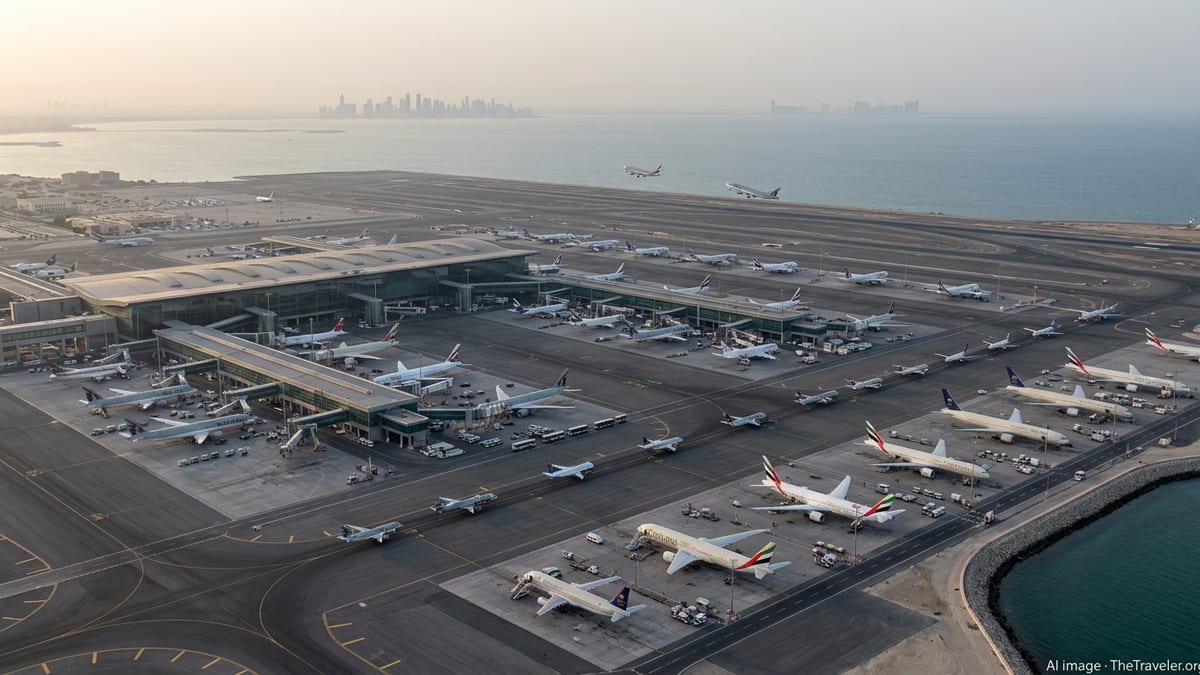
Doha’s Hamad International Airport, normally one of the world’s busiest long-haul hubs, saw its operations suspended after Qatari airspace was closed in the first wave of defensive measures, forcing Qatar Airways to ground or reroute the bulk of its network. In the days that followed, the Qatar Civil Aviation Authority began negotiating limited emergency corridors for evacuation and essential cargo, working in parallel with neighboring regulators to prevent dangerous congestion in the few remaining open skies.
Those talks, according to aviation sources in the Gulf, have evolved into a more structured coalition process bringing together Qatar, Oman, the UAE, Saudi Arabia, Bahrain and Kuwait, alongside Jordan and Iraq, with Israeli technical participation focused on deconfliction and safety rather than politics. The goal is to stitch together a patchwork of safe lanes that can relieve pressure on Saudi and Omani airspace, which have become heavily used detour corridors for Europe–Asia flights.
Qatar’s earlier work on route optimization and free-route airspace concepts in partnership with regional and international bodies has given it valuable technical experience as states look for ways to shorten lengthy diversions and increase capacity without compromising safety. Officials involved in the talks say that expertise is now being repurposed to design temporary shortcuts through Egyptian, Saudi and Omani airspace, streamlining what have become multi-hour detours for many long-haul passengers.
In practical terms, the new coalition means closer real-time coordination between control centers in Doha, Muscat, Dubai, Abu Dhabi, Riyadh and other capitals. Joint crisis cells are monitoring missile and drone activity, dynamically closing and reopening segments of airspace, and pushing updated routing guidance to airlines several times a day as the security picture shifts.
Saudi, UAE and Oman Shoulder Overflow as Israel, Iraq and Kuwait Stay Shut
With Israel, Iraq and Kuwait keeping civil airspace largely closed except for rare humanitarian or repatriation flights, Saudi Arabia, the UAE and Oman have emerged as the backbone of what remains of the Middle East’s transit system. Saudi skies in particular have become a vital corridor as carriers thread flights between Europe, the Indian subcontinent and Southeast Asia via more southerly or northerly arcs that avoid the most volatile zones.
In the UAE, Dubai and Abu Dhabi initially halted most commercial operations, while Sharjah has begun limited departures under tightly controlled schedules. Authorities there are working with Qatari and Omani counterparts to balance the flow of evacuation flights with the need to maintain minimal connectivity for residents and essential workers. Air traffic controllers are managing levels of congestion rarely seen in the region, even during peak holiday seasons.
Oman, whose airspace remained technically open but heavily affected by diversions and earlier temporary shutdowns, has effectively become a pressure valve for the wider system. By absorbing rerouted traffic that would normally overfly Iran or Iraq, and coordinating closely with Qatar and the UAE on entry and exit points, Muscat is helping to smooth chokepoints that have caused marathon delays and unexpected diversions for travelers bound for Asia and Africa.
Yet capacity remains severely constrained. Aviation consultancies estimate that thousands of flights have either been canceled outright or forced into two to five hour detours, with ripple effects on crew scheduling, aircraft maintenance and airport ground operations across three continents. The coalition’s immediate task is simply to keep that reduced network stable enough to support evacuation efforts and priority cargo.
Stranded Travelers, Emergency Corridors and New Passenger Playbooks
For passengers on the ground, the coalition’s work is most visible in the slow trickle of evacuation flights leaving Gulf and Levant airports that were previously at a standstill. Governments including Qatar, the UAE, Jordan and Saudi Arabia have been coordinating special services to move their own citizens, as well as foreign nationals, out of high-risk areas whenever short security windows allow flights to depart.
Commercial airlines, led by carriers such as Qatar Airways, Emirates, Etihad and key national airlines in Jordan and Saudi Arabia, are operating skeletal schedules focused on repatriation and critical connectivity. Seats on these services are being prioritized for those whose earlier flights were canceled, leaving many tourists and business travelers waiting in hotels and temporary accommodation for days with only limited clarity on when they might leave.
Travel industry guidance has shifted accordingly. Agencies and corporate travel managers now advise passengers to treat the entire Middle East as a high-disruption zone and to avoid nonessential transit through Gulf and Levant hubs until normal capacity resumes. For those who must travel, flexible tickets, generous layovers and the willingness to route via Istanbul, European gateways or South Asian hubs rather than the usual Gulf connections have become essential strategies.
The regional coalition’s communications teams are working to standardize messaging to travelers, aiming to reduce confusion created by conflicting airline updates and fast-changing advisories. Centralized bulletins are being shared with major global distribution systems and travel platforms, giving passengers and agents a clearer, if still sobering, picture of what to expect over the coming days and weeks.
From Emergency Alliance to Long-Term Aviation Security Framework
While the coalition is rooted in the immediacy of the current crisis, aviation experts say its broader significance lies in the precedent it sets for regional cooperation in a politically fractured part of the world. Bringing together states that often find themselves on opposite sides of diplomatic disputes, including Israel and several Arab neighbors, under a shared technical umbrella focused on route safety and continuity marks a notable shift.
Officials involved in the discussions indicate that once the worst of the disruption has passed, participating countries intend to formalize joint mechanisms for risk assessment, airspace contingency planning and rapid crisis communication. That could include shared regional routing centers, pre-agreed detour corridors and harmonized protocols for closing and reopening airspace in response to missile, drone or cyber threats.
For global travelers, a more integrated Middle East aviation framework could ultimately mean greater resilience when shocks occur, whether from conflict, natural disasters or other emergencies. However, any long-term benefits will depend on sustained political will once the immediate pressure eases, as well as significant investment in air traffic control infrastructure and cross-border training.
For now, Qatar’s decision to align closely with Oman, the UAE, Saudi Arabia, Bahrain, Kuwait, Jordan, Iraq, Israel and additional partners underscores how the urgency of keeping people and goods moving can, at least temporarily, override entrenched divisions. As flights slowly resume along painstakingly negotiated corridors, the region is road-testing a new model of aviation cooperation forged in crisis, with profound implications for how the world will cross its skies in the years ahead.