

More news on this day
High above Grenoble and the valleys of southeastern France, Isère is quietly transforming how visitors reach its summits, pairing next-generation mountain lifts with panoramic walkways and car-free access to some of the Alps’ most dramatic viewpoints.
Get the latest news straight to your inbox!
Next-Generation Lift Infrastructure in Les Deux Alpes
In the Oisans range, Les Deux Alpes is presenting one of the most significant lift upgrades in the French Alps, reshaping access to high-altitude terrain. A new tri-cable Jandri installation has replaced the long-serving Jandri Express, reducing journey times from the resort to the glacier and substantially increasing capacity. Publicly available information shows that the uplift volume has been designed to move several thousand people per hour, positioning the line as a backbone for both winter skiing and summer glacier access.
According to recent resort and industry coverage, the December 2024 inauguration of the new Jandri marked the start of a new chapter for Les Deux Alpes, with the modern cabins engineered to be more stable in wind and more comfortable for passengers. The upgrade also consolidates infrastructure along an existing corridor, an approach that observers note can help reduce the overall footprint of pylons and cables on sensitive high-mountain terrain.
For visitors, the change is expected to be felt in everyday logistics. Shorter queues, a faster ride and direct access to glacier slopes and panoramic terraces should make it easier to link early-morning descents with long lunches on south-facing decks. The line is also open to pedestrians in summer, turning a once-lengthy ascent into a brief aerial journey from village streets to a landscape of crevasses, ridges and 3,000-metre summits.
The new Jandri sits within a broader pattern of French Alpine investment in high-capacity, multi-season lifts. For Isère, where Les Deux Alpes is one of the flagship resorts, the project signals that the department intends to keep its high-mountain offer competitive while adapting infrastructure for year-round tourism rather than purely winter sports.
Chamrousse and the Rise of Panoramic Parks
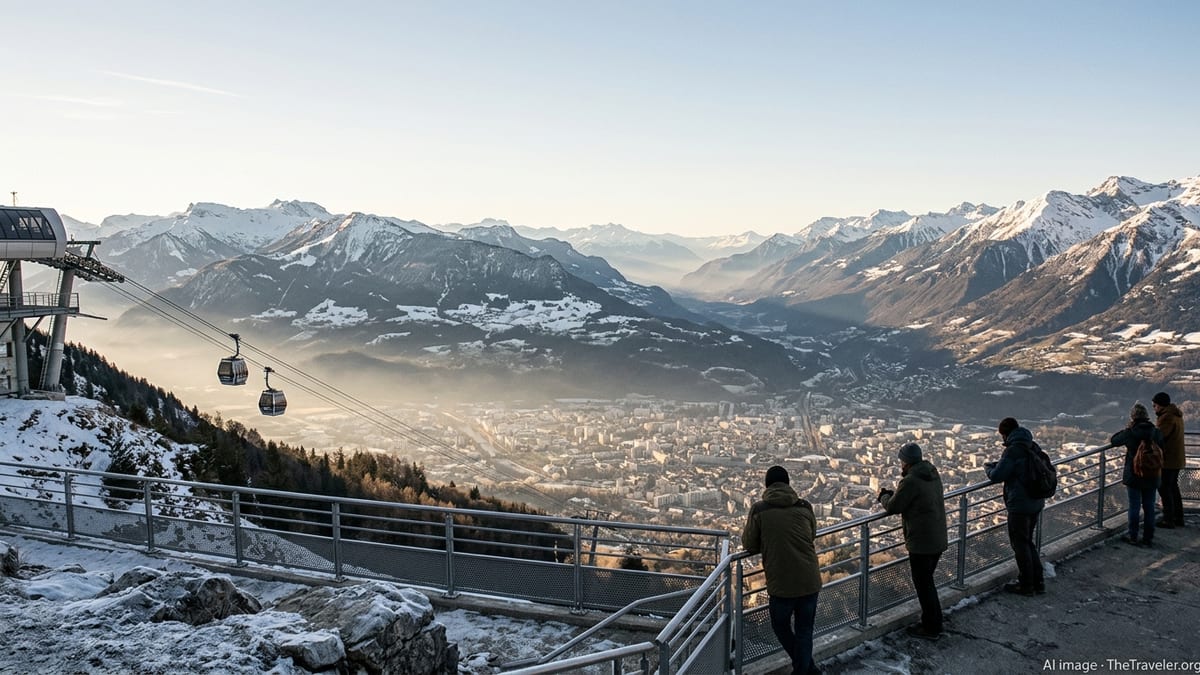
Closer to Grenoble, Chamrousse is leaning into a different kind of altitude experience, with developments at the Croix de Chamrousse turning the summit into a dedicated panoramic park. Regional tourism information highlights a network of lookouts, a Himalayan-style footbridge and a giant zipline at the top station, where visitors step directly from gondola cabins onto a ridge with open views over the city and surrounding massifs.
The concept shifts the focus from skiing alone to a broader mountain adventure park that runs in both winter and summer. In the colder months, the Croix remains the departure point for downhill skiing, ski touring and snowshoe itineraries, while in summer it anchors mountain bike trails, classic hikes, via ferrata routes and paragliding launches. The same lift that carries skiers in January can be used by sightseers and families in July, reducing the need for separate infrastructures.
Pedestrian access is central to the project. The Croix gondola from Chamrousse 1650 provides a straightforward, ticketed ascent to the summit area, avoiding the need for private vehicles on mountain roads. At the top, visitors find a monumental cross that has long symbolised the resort’s high point, as well as a restaurant with a panoramic terrace overlooking the Belledonne range and the valleys below.
Reports indicate that these developments are part of a wider move within Isère to create high-altitude viewpoints that can be reached without technical skills. From walkways that extend over steep drops to interpretive panels that identify distant ridgelines, the new facilities are intended to give non-skiers a reason to travel up, stay longer and return outside the traditional winter peak.
Grenoble’s Cable Cars and Car-Free Access to Altitude
Down in the valley, Grenoble continues to serve as the primary entry point to Isère’s mountains, with its urban cable car and regional transport network offering car-free routes to higher ground. The Grenoble–Bastille cable car, long recognised for its spherical cabins known locally as “bubbles,” links the city centre to a historic fortress overlooking the Isère River. Reference material on the site notes that hundreds of thousands of passengers ride the system each year to reach terraces with sweeping views of the surrounding Chartreuse, Vercors and Belledonne ranges.
For visitors arriving by train, this urban lift effectively acts as a first step into the mountains. Within a few minutes of leaving the riverbank, cabins rise above rooftops and wooded slopes to a balcony-like ridge, where walking paths fan out along the cliffs and signposted viewpoints frame the city against a backdrop of peaks. The experience offers a preview of the altitude landscapes that await deeper in the department, without the need for a hire car or lengthy road approach.
Beyond Grenoble itself, regional tourism platforms highlight a network of buses and seasonal services that connect the city to resorts such as Chamrousse, Villard-de-Lans, Alpe d’Huez and Les Deux Alpes. Campaigns promoting Isère as a sustainable mountain destination point to this public transport web as a key factor in encouraging visitors to leave cars behind. Trains from major French cities feed into Grenoble’s station, where onward connections continue into the high valleys.
These transport links frame the new and upgraded lifts in a wider mobility story. Faster gondolas and scenic summit walks gain added appeal when they can be linked to low-carbon journeys from the plains, an alignment that destination managers increasingly present as part of Isère’s identity as an accessible, innovative Alpine region.
Summit Walkways, Via Ferrata and High-Altitude Trails
Isère’s pursuit of “new heights” is not limited to lift technology. Across the department, trail networks, via ferrata routes and elevated walkways are being promoted as ways to experience altitude at human pace. Official visitor information describes routes threading through the Chartreuse, Vercors and Écrins landscapes, from cliffside paths on the Petites Roches plateau to balcony trails above Oisans valleys.
In Chamrousse and other resorts, via ferrata itineraries let visitors clip into steel cables and move across rock faces with the help of ladders and metal rungs, bringing aerial exposure within reach of those with moderate fitness and appropriate equipment. Elsewhere, structures such as the Vertige des Cimes walkway near Villard-de-Lans project over the void to create suspended viewing platforms, where glass or open-grate floors give a sense of floating above forests and ravines.
These facilities are often linked directly to lift stations or easily accessed trailheads, making them feasible for day visitors traveling from Grenoble or nearby bases. They complement longer hiking routes through protected natural parks, where waymarked paths pass alpine meadows, high passes and glacial lakes, and where infrastructure tends to remain deliberately low-key.
Together, they add a layer of soft adventure to Isère’s mountain offer. For travellers, the attraction lies not only in reaching a summit but in the variety of ways to experience the vertical environment, from harness-and-helmet routes to simple footbridges and carefully sited viewing decks.
Sustainability, Seasonality and the Future of Mountain Heights
Many of Isère’s latest developments reflect a wider Alpine shift toward sustainability and four-season use. Features such as the new Jandri installation at Les Deux Alpes, the panoramic park at Chamrousse and expanded car-free access from Grenoble are frequently cited in tourism materials as examples of how mountain regions can modernise while managing environmental impact.
Industry and destination reports note efforts to reuse existing lift corridors, dismantle redundant pylons and cables, and electrify local transport fleets. Some resorts in the department have obtained environmental labels that recognise commitments to sustainable tourism, while others spotlight initiatives such as night-time cross-country ski loops and light-based forest trails that make use of existing terrain without extensive new construction.
At the same time, the emphasis on panoramic experiences and multi-activity parks signals an intention to broaden the visitor base beyond traditional skiers. Families, walkers, paragliders and summer mountain bikers are increasingly central to planning discussions, with lift schedules and product offerings being adjusted to spread visitation across more months of the year.
As these trends converge, Isère is positioning its high places as accessible to more people, more often. Faster gondolas, aerial walkways and carefully curated summit zones are turning once-remote peaks into day-trip destinations, inviting travellers to discover new heights in a region where altitude is no longer reserved solely for expert skiers.