

More news on this day
With the 2026 FIFA World Cup less than a year and a half away, New Jersey is accelerating preparations to host the tournament’s final and seven additional matches at MetLife Stadium, positioning the state as one of the global focal points of what is expected to be the largest World Cup in history.
Get the latest news straight to your inbox!
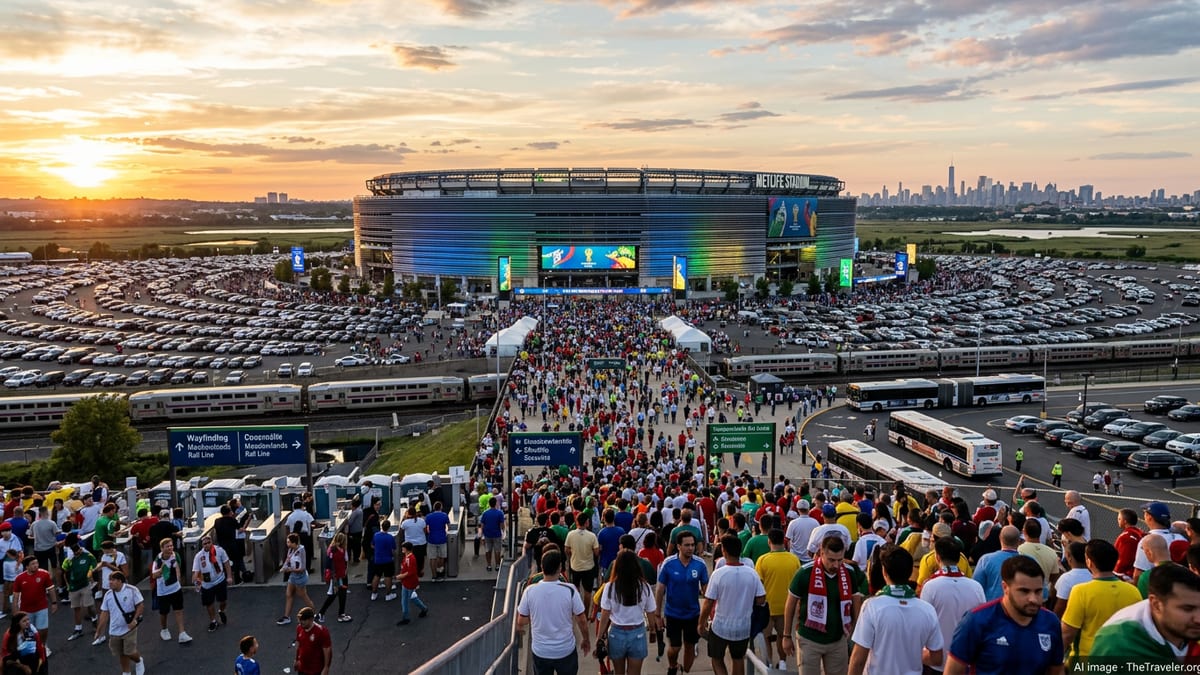
MetLife Stadium at the Center of a Global Spotlight
MetLife Stadium in East Rutherford has been designated as the venue for the 2026 FIFA World Cup final, scheduled for July 19, 2026, as well as seven other matches throughout the tournament. Publicly available tournament schedules show that the arena, temporarily branded as New York New Jersey Stadium for the event, will become one of the most heavily used venues in the expanded 48-team competition.
Recent coverage in global sports media notes that MetLife is the only stadium in the United States selected to host both the 2025 FIFA Club World Cup final and the 2026 World Cup final, turning northern New Jersey into a recurring test bed for tournament-scale logistics. The 2025 club tournament, which brought large crowds and weather-related delays, is being widely treated as a dress rehearsal for the even larger event to come in 2026.
Regional planning documents and tourism guides highlight that the World Cup matches will take place within the broader New York New Jersey host region, but with all local games staged on New Jersey soil. The arrangement gives the state an unusually prominent role in a tournament officially shared by the United States, Canada, and Mexico, and has prompted local leaders and businesses to frame the event as a generational opportunity for both visibility and visitor spending.
Economic projections cited in host committee materials and reported by local outlets suggest that more than a million international and domestic visitors could pass through the New York New Jersey area over the course of the tournament. Analysts expect a significant share of those visitors to lodge, dine, and spend in New Jersey’s hotels, restaurants, and entertainment districts due to proximity to the stadium and comparatively lower room rates than in neighboring Manhattan.
Transit Upgrades Target Crowd Surges and Fan Experience
Transportation planning has become one of the most visible pillars of New Jersey’s World Cup preparations. NJ Transit has spent the past several years using major events at MetLife Stadium to refine strategies for moving tens of thousands of passengers by rail and bus on match days. Agency reports on operations during the 2025 FIFA Club World Cup describe the event as a valuable real-world test, with more than 150,000 combined trips provided across nine matches and peak outbound flows of over 20,000 passengers per hour.
According to NJ Transit press materials and recent regional news coverage, planners are refining a system centered on the Meadowlands Rail Line connection via Secaucus Junction, supplemented by expanded event-day bus services. A dedicated “transitway” shuttle corridor between Secaucus and the Meadowlands Sports Complex has been advanced through contracts and design work, intended to create a high-capacity bus route that bypasses general traffic to reach the stadium more reliably.
Local reporting indicates that NJ Transit, the New Jersey Turnpike Authority, and the Port Authority of New York and New Jersey are coordinating on roadway improvements, station operations, and airport ground access. Technical papers shared with transportation organizations describe plans to repave key highway segments near the stadium, streamline traffic management around Route 3 and Route 120, and integrate real-time information systems to manage surges before and after matches.
Public workshops hosted with international transit experts over the past two years have focused on lessons from previous World Cups and Olympics, including crowd modeling, fare strategies, and communication with non-English-speaking visitors. Transportation advocates in New Jersey have continued to raise questions about funding and redundancy, while agency leaders point to recent large-event performance and tested contingency plans as signs the network can scale up for tournament demand.
Tourism, Hospitality and Local Business Gear Up
Tourism agencies and local destinations across New Jersey are positioning themselves to capture World Cup-driven demand that will stretch far beyond match days. Recent travel guides produced by county-level tourism boards emphasize that many of the state’s coastal resorts, historic downtowns, and suburban shopping districts are within a relatively short drive or train ride of MetLife Stadium and the region’s airports.
Hospitality industry coverage notes that hotel operators in northern New Jersey have already begun adjusting pricing strategies and block bookings to accommodate tour operators, corporate hospitality programs, and independent travelers. Analysts expect spillover into beach communities and smaller cities as fans look to combine match attendance with longer summer stays, especially during breaks between group and knockout rounds.
Local chambers of commerce are using publicly available tournament schedules to coordinate event calendars with match days, planning everything from viewing parties and cultural festivals to food and music events that connect participating nations with New Jersey’s own diverse communities. Restaurant groups in Hudson, Bergen, and Essex counties, which already serve large Brazilian, Portuguese, Mexican, and Caribbean communities, are anticipated to play a prominent role in attracting supporters before and after games.
State-level marketing materials point to easy access from Newark Liberty International Airport and regional rail hubs as a key selling point, highlighting that many visitors may find it more convenient to stay in New Jersey rather than commute from Manhattan. Tourism planners are packaging stadium access information with suggestions for day trips to the Jersey Shore, historic sites, and outdoor recreation areas to encourage visitors to extend their stays.
Security, Public Space and Event Footprint Evolve
Security planning for the World Cup has been folded into New Jersey’s broader public safety and emergency management framework. Budget documents and legislative hearing materials from early 2026 outline preparations involving multiple state divisions, including homeland security, traffic safety, and emergency preparedness, working in partnership with transportation authorities and neighboring jurisdictions.
These documents describe the World Cup as a “national special security event–scale” challenge, emphasizing coordinated planning for stadium perimeters, highway operations, and soft targets such as transit hubs and entertainment districts. Agencies are investing in upgraded traffic control systems, interoperable communications, and joint training exercises aimed at managing large crowds and potential disruptions across several counties.
The evolution of the tournament’s public footprint in New Jersey is also visible in changes to fan festival planning. In late winter 2026, widely covered announcements confirmed that the originally proposed official FIFA Fan Festival at Liberty State Park in Jersey City had been canceled after months of debate about environmental impacts, public access, and long-term park improvements. Reports indicate that state officials redirected funding toward a package of smaller, locally operated events and park investments, opening the door for cities such as Newark and Jersey City to stage their own game-day celebrations.
Community discussions documented in local media and public forums show a mix of enthusiasm and concern, with some residents welcoming investment and global attention, while others question potential congestion, costs, and disruptions to daily life. Municipal governments are now working to balance temporary World Cup programming with commitments to preserve neighborhood character and maintain access to popular waterfront and green spaces.
Balancing Mega-Event Scale with Long-Term Legacy
While the World Cup will last just over a month, many of New Jersey’s current projects are being framed as long-term infrastructure and economic investments. Transportation planning reports emphasize that improvements to the Meadowlands Rail Line, highway interchanges, and Secaucus-area bus facilities are intended to support everyday commuters and future major events at MetLife Stadium, including professional football games, concerts, and potential future tournaments.
Urban planners and academics quoted in regional coverage have pointed out that the state’s experience hosting the 2014 Super Bowl at MetLife and other large-scale events has already pushed agencies toward more integrated approaches to mobility and land use. The World Cup, they argue, is accelerating that trajectory by forcing decisions on capacity, resilience, and climate adaptation under a fixed global deadline.
Tourism strategists see a similar opportunity to reposition New Jersey in the international travel market. By promoting the state as both the home of the World Cup final and a convenient base for exploring the broader Northeast corridor, they aim to reach first-time visitors who might previously have viewed the area only through the lens of New York City. If those visitors are persuaded to return for beach vacations, city breaks, or business trips in the years after 2026, officials suggest the event’s economic impact could extend well beyond the immediate surge in spending.
As the countdown to kickoff continues, New Jersey’s preparations reveal both the complexity and promise of hosting the climax of the world’s most-watched sporting event. The next year will test whether ongoing investments in transit, public space, and visitor infrastructure can translate into a tournament experience that benefits local communities while meeting the intense expectations of global football fans.