

More news on this day
New Jersey is outpacing traditional tourism powerhouses in 2026, with record visitor arrivals, surging hotel revenues and a wave of new tech investment that is cementing the Garden State as the fastest-growing U.S. hotel market.
Record Tourism Highs Recast the Garden State
After several consecutive years of steady growth, New Jersey’s tourism industry has entered a new phase in 2025 and early 2026, with state data showing record-breaking visitor volume and spending. Tourism reports released over the past year highlighted that the state welcomed well over 120 million visitors in 2024, with total visitor spending climbing at a faster rate than the national average and outpacing pre-pandemic benchmarks. That momentum has carried into 2025 and is now shaping 2026 forecasts, positioning New Jersey ahead of legacy tourism giants such as California, Florida and Texas in hotel revenue growth.
Coastal counties remain the backbone of this surge. New research on the 2024 season showed New Jersey’s beaches delivering historic spending, with shore regions such as Cape May and Atlantic counties together accounting for close to one-third of the state’s tourism economy. Iconic seaside destinations including Cape May, the Wildwoods and Atlantic City reported new highs for direct tourism revenue in 2024 and strong forward bookings through 2025, creating a powerful base of demand that hotel operators are now leveraging statewide.
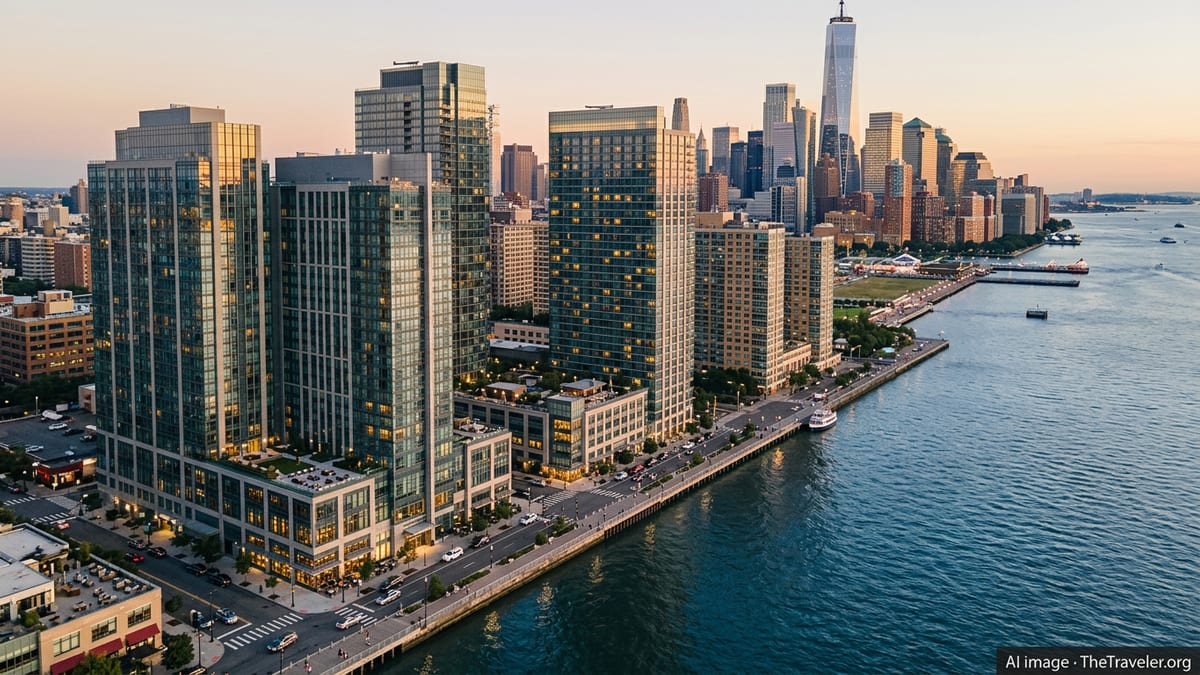
Urban centers have added an extra growth engine. Jersey City has emerged as one of the country’s priciest hotel markets, with average room rates in peak periods rivaling those in major gateway cities. Nearby Newark and the Hudson waterfront continue to attract both leisure and business visitors, boosted by access to New York City, expanded air connectivity at Newark Liberty International Airport and a growing roster of cultural and sporting events. Combined with the shore, these hubs are helping push New Jersey’s hotel metrics ahead of slower-growing markets in states such as Missouri and Pennsylvania.
Hotel Revenue Growth Outpaces National Trends
While the broader U.S. hotel sector confronts a cooler cycle characterized by flat occupancy and modest gains in revenue per available room in 2025 and 2026, New Jersey has emerged as a standout performer. Industry analysts say that the state’s blend of drive-to leisure demand, regional business travel and gaming-related stays has insulated it from some of the headwinds facing other regions. Early 2026 projections indicate that New Jersey’s hotel revenue growth is running ahead of the national average and above major competitors including Florida and Texas, where new supply and softening international arrivals have tempered performance.
Key indicators underscore the state’s momentum. Lodging was identified in recent state reports as one of the fastest-growing components of New Jersey’s tourism economy, with hotel spending rising by billions of dollars from 2023 to 2024 and double-digit gains in some coastal submarkets. In resort towns such as the Wildwoods, tourism officials reported new all-time revenue records in 2024, with visitor spending up several percentage points on what had already been a record year, setting the stage for price resilience and strong RevPAR growth entering 2026.
Comparison with other states further highlights New Jersey’s outperformance. While traditional leisure destinations in California and Florida are managing plateauing occupancy in several metropolitan areas, New Jersey’s combination of high-rate urban hotels and seasonally sold-out beach properties has produced one of the most robust RevPAR trajectories in the country. Industry observers note that even as national forecasts are revised downward for 2025, New Jersey’s pipeline of demand tied to regional leisure travel, coastal events and cross-river spillover from New York City remains unusually strong.
Tech Investment Transforms Hotel Operations
One of the less visible drivers of New Jersey’s ascent has been an aggressive push into travel and hospitality technology. State tourism officials have highlighted partnerships with digital marketing firms and data analytics providers that allow destinations to target high-value visitors and dynamically adjust campaigns across key feeder markets. At the property level, hotel groups along the shore and in northern New Jersey have been early adopters of revenue management platforms, contactless check-in, and AI-assisted forecasting tools that optimize staffing and pricing in real time.
These investments are particularly evident in Atlantic City, where large casino resorts have spent heavily on integrated tech stacks that connect gaming, lodging, dining and entertainment. By unifying guest data, operators are able to tailor offers, push midweek packages and lengthen stays, lifting hotel revenues even as the national gaming and lodging picture becomes more competitive. Similar strategies are appearing in Jersey City and Newark, where upscale and lifestyle hotels are leveraging mobile-first guest journeys and automated operations to boost margins.
The innovation is not limited to big brands. Smaller independent hotels and boutique properties in destinations like Cape May and Asbury Park are tapping cloud-based systems once reserved for major chains. By adopting dynamic pricing tools and centralized distribution platforms, these operators are capturing more direct bookings and reducing reliance on online travel agencies. Industry analysts say that this broad-based digital upgrade across the state’s hotel sector is a key reason New Jersey is outpacing markets in Pennsylvania and Missouri, where smaller operators have been slower to modernize.
Shore Destinations Lead, But Growth Spreads Statewide
New Jersey’s coast remains the emotional and economic heart of its tourism story, and the latest data reinforces that dominance. Cape May County recently reported more than 12 million visitors in a single year, with direct tourism spending surpassing eight billion dollars. The Wildwoods have logged consecutive record seasons, with revenue growth running ahead of inflation and a steadily lengthening shoulder season supported by festivals, sports tournaments and events that fill hotel rooms outside the traditional summer months.
Atlantic City continues to reinvent itself as more than a gaming hub. Major hotel-casino complexes have invested in entertainment venues, dining and wellness offerings designed to attract younger and more diverse visitors. As online gaming revenue has surged, operators have increasingly used digital platforms to funnel players into on-site hotel stays and live events, creating a new demand channel that national analysts say is unique among U.S. markets. This combination of beachfront appeal and integrated digital marketing has helped Atlantic City’s hotels maintain healthy occupancy and rate growth even as some competing resort markets level off.
Inland and northern destinations are riding the same wave. The expansion of film and television production in New Jersey, supported by state incentives, is bringing long-stay crews into hotels from Newark to the Jersey Shore, while major corporate relocations and logistics hubs along the New Jersey Turnpike corridor are underpinning weekday business travel. Together, these trends are ensuring that hospitality growth is not confined to any single region, but spread across a diverse statewide portfolio that ranges from Victorian inns to high-rise convention properties.
2026 Outlook: From Underdog to National Leader
Looking ahead through 2026, New Jersey appears poised to consolidate its position as the fastest-growing U.S. state for hotel tourism and revenue growth. Tourism economists working with the state have projected continued increases in visitor volume and spending through 2026, even as national forecasts for the U.S. lodging sector remain restrained. With shore destinations already operating near capacity in peak months, further gains are expected to come from higher average daily rates, expanded shoulder seasons and new product in urban markets.
Technological investment is set to deepen. Hotels are preparing for a future in which AI-driven travel planning and digital agents will play a larger role in how trips are researched and booked. New Jersey operators, already versed in dynamic distribution and data-led marketing, are seen as well positioned to capture demand surfaced by these tools. Industry watchers say that as these systems mature, states that invested early in connected, flexible hotel tech will command a disproportionate share of high-spend travelers.
For travelers, the shift means a more sophisticated, year-round New Jersey experience: upgraded beachfront hotels, revitalized boardwalks, high-design urban stays overlooking the Manhattan skyline and a growing calendar of cultural and sporting events across the state. For the industry, it signals that the Garden State has quietly moved from regional player to national leader, overtaking larger, more established tourism brands in the race for hotel growth in 2026.