

More news on this day
KwaZulu-Natal is preparing to launch a landmark art fair that observers say could reshape the province’s cultural landscape and give fresh momentum to its growing creative economy.
Get the latest news straight to your inbox!
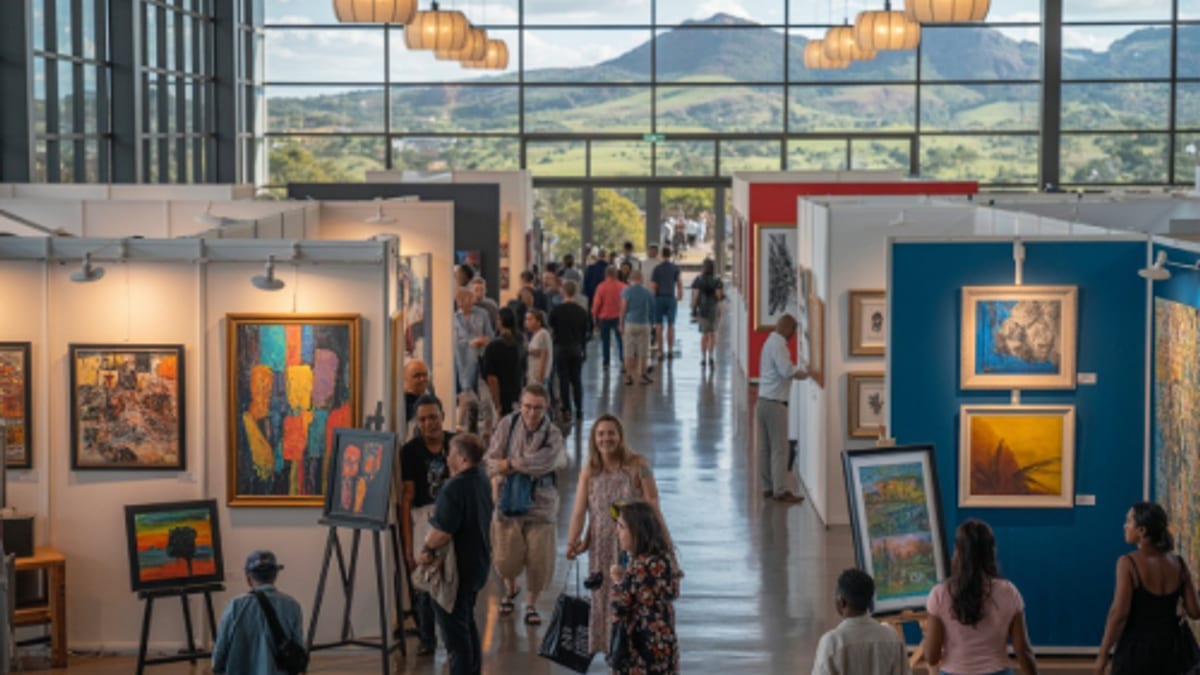
Image by Latest International / Global Travel News, Breaking World Travel News
Landmark Fair Anchors a New Moment for KZN Arts
According to recent regional coverage, KwaZulu-Natal will stage its first dedicated art fair as part of this year’s Hilton Arts Festival in the Midlands, a long-running hub for theatre, music and visual arts. The move places a commercial, market-facing platform at the heart of one of the province’s best-known cultural gatherings and is being framed as a turning point for visual artists who have historically struggled for structured access to buyers.
Reports indicate that the fair will convene galleries, independent artists, designers and craft producers under a single banner, with a particular emphasis on work produced in KwaZulu-Natal. By situating the initiative within an established festival environment, organisers aim to tap into existing audiences while signalling that visual art now sits alongside performance and literature as a core economic asset for the province.
Publicly available information suggests that the Hilton Art Fair will also function as a testing ground for new revenue models, including curated sales, commissions and partnerships with hospitality and tourism operators in the surrounding Midlands Meander. That region is already recognised as one of South Africa’s most mature creative corridors, home to attractions such as the Nelson Mandela Capture Site Museum and leading ceramics studios, and is viewed as fertile ground for embedding art-led experiences into visitor itineraries.
Industry commentators note that the timing aligns with a broader re-evaluation of how culture can underpin regional development. With traditional sectors under pressure, provincial agencies and private partners are placing new emphasis on creative industries both as an employer and as a magnet for higher-spend visitors seeking distinctive, locally rooted experiences.
Creative Economy Strategy Moves From Policy to Practice
The emerging art fair is unfolding against a backdrop of formal policy commitments to grow KwaZulu-Natal’s creative economy. Strategic planning documents from the provincial Department of Sport, Arts and Culture highlight cultural and creative industries as a significant contributor to South Africa’s wider creative output, with KwaZulu-Natal identified as one of the country’s key centres for cultural production.
These policy frameworks emphasise the dual objective of preserving heritage while expanding market opportunities in areas such as visual art, film, festivals and design. They call for targeted investment in galleries and art centres in Durban and Pietermaritzburg, capacity-building for practitioners, and stronger links between culture, tourism and small business development.
Economic development papers from the provincial trade and industry portfolio similarly reference the creative sector as part of an inclusive growth and job creation agenda. A specific initiative, branded as the KZN Creative Economy, Innovation and Business Week under the KWANDE FEST banner, focuses on showcasing creative products, building entrepreneurial skills and connecting innovators with markets.
Observers argue that the new art fair slots neatly into this policy environment by offering a visible, transaction-focused platform where artists can test demand, galleries can discover new talent and policymakers can measure impact in terms of sales, attendance and downstream tourism spend. The fair is being read as a practical expression of strategic ambitions that until recently were largely confined to planning documents.
Festivals, Corridors and the Tourism Link
KwaZulu-Natal has spent the past decade building a dense calendar of cultural events that extend far beyond the Midlands. Durban’s international film, dance, poetry and literature festivals, many of them convened through institutions such as the Centre for Creative Arts at the University of KwaZulu-Natal, already attract audiences from across South Africa and abroad and are recognised for their role in promoting social justice and human rights alongside artistic innovation.
At the same time, business and lifestyle corridors such as Durban’s Florida Road and the broader coastal strip have been promoted as mixed-use zones that blend dining, nightlife, design and creative services. Public information on city planning stresses the importance of cultural anchors including galleries and art centres in sustaining these precincts and differentiating Durban in a crowded tourism market.
Tourism and investment features on KwaZulu-Natal highlight how cultural programming now complements the province’s established strengths in beach, wildlife and conference tourism. Business tourism campaigns showcase integrated offerings where delegates attending trade or film markets can also access galleries, performances and heritage sites, turning short stays into longer, higher-value visits.
Analysts suggest the Hilton-based art fair will benefit from this existing infrastructure, especially given the Midlands Meander’s reputation for studio visits, craft outlets and farm-to-table hospitality. By offering a concentrated showcase of regional art within driving distance of Durban and Pietermaritzburg, the fair is positioned to encourage visitors to extend their journeys across multiple creative and leisure nodes.
New Platforms for Youth, Entrepreneurs and Rural Creatives
Advocates for the creative economy in KwaZulu-Natal often highlight the sector’s potential to generate livelihoods for young people and rural communities where formal employment opportunities are limited. Programmes linked to events such as KWANDE FEST explicitly foreground youth empowerment, small enterprise support and entrepreneurship as central pillars of their work.
Information on the festival’s concept notes shows that it is structured around themes including knowledge-sharing, advisory support, nurturing talent, development and entrepreneurship. These pillars are designed to help participants move beyond one-off performances or sales into sustainable business models, through training, mentorship and exposure to buyers and investors.
In this context, the new art fair is being interpreted as another rung on the ladder for emerging creatives. By providing a curated platform that sits between informal markets and international fairs, it can help artists build track records, refine pricing, and develop the professional networks needed to access larger stages in Johannesburg, Cape Town and abroad.
Observers also point out that the fair’s location in the Midlands widens participation beyond Durban’s urban core. Artisanal producers, crafters and community-based projects along the Meander and in surrounding rural districts gain a nearby venue where their work can be presented alongside established names, potentially reshaping perceptions of where significant cultural production in KwaZulu-Natal takes place.
Signals for Investors and the Wider African Art Market
The arrival of a dedicated art fair in KwaZulu-Natal is being watched within the broader African art ecosystem, where cities such as Lagos, Marrakech and Cape Town have used fairs to anchor global attention and investment. While the Midlands event is likely to be smaller in scale than established continental platforms, analysts say it sends a clear signal that the market for contemporary African art is diversifying both geographically and institutionally within South Africa.
Publicly available commentary on the sector suggests that collectors are increasingly looking beyond a handful of metropolitan centres in search of new voices and narratives. KwaZulu-Natal’s distinctive blend of Zulu heritage, anti-apartheid history, coastal urbanism and rural craft traditions provides a rich foundation for artists whose work speaks to local realities while addressing global themes.
Investment agencies in the province have already begun to frame culture and the creative industries as part of KwaZulu-Natal’s competitiveness story, alongside logistics, manufacturing and agriculture. The art fair offers a tangible focal point for that messaging, giving private investors, sponsors and international partners a specific moment in the calendar around which to build programming and partnerships.
As the province prepares for the fair’s debut, expectations are that its success will be measured not only in sales and visitor numbers but in how effectively it catalyses year-round activity across galleries, studios, educational programmes and tourism routes. For many in the sector, it represents a bold step toward a future in which art is recognised as central to KwaZulu-Natal’s identity and economic trajectory.