

More news on this day
A new luxury riverboat known as Marguerite is scheduled to enter service on Burgundy’s waterways in 2026, a development that industry watchers expect will strengthen the French region’s position as a high-end river tourism destination.
Get the latest news straight to your inbox!
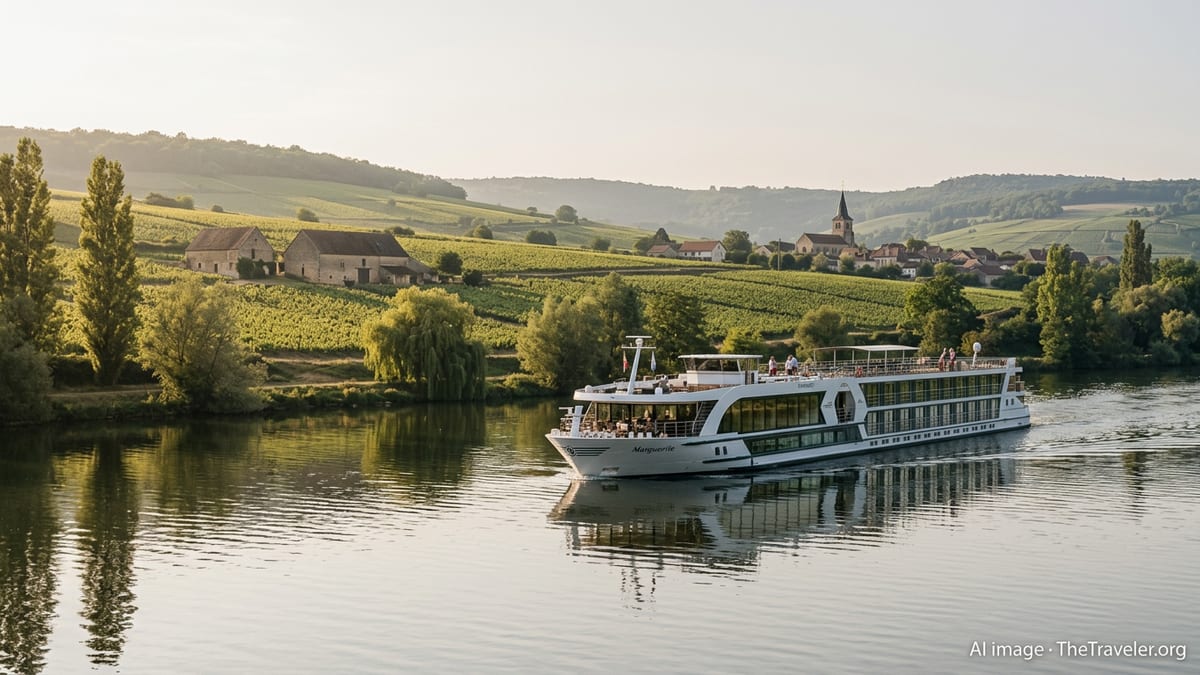
New Vessel Signals Confidence in Burgundy’s River Tourism
Publicly available information from regional tourism bodies and cruise planners indicates that Burgundy is preparing for an uptick in river-based travel in 2026, and the introduction of the luxury riverboat Marguerite aligns with this broader trend. While existing vessels already connect Burgundy with the Rhône and Saône river network, the new ship is being positioned as a more exclusive option aimed at international travelers seeking comfort, gastronomy and culture on slower, more immersive itineraries.
River cruising in and around Burgundy has expanded steadily in recent years, supported by a mix of hotel barges on canals and larger river ships on the Saône. Travel programs for 2026 already highlight themed journeys combining Burgundy with Provence and the Camargue, often focusing on vineyards, gastronomy and heritage towns along the Saône and Rhône corridors. The Marguerite is expected to complement this ecosystem by adding capacity at the luxury end of the market rather than competing with existing midrange products.
Although detailed technical specifications for the Marguerite have not yet been widely released, industry schedules and trade coverage suggest that the vessel will operate primarily between key Burgundy embarkation points on the Saône, linking them with established routes toward Lyon and southern France. This positioning places Burgundy at the heart of itineraries that can easily combine city breaks, food tourism and countryside cruising in a single trip.
Design Focused on Comfort, Cuisine and Scenic Cruising
Planning documents and sales materials circulated to travel advisors indicate that the Marguerite is being developed as a boutique-style riverboat with a relatively small number of spacious cabins compared with larger European river ships. The emphasis appears to be on generous public areas, extensive glazing for panoramic views and quiet, low-vibration navigation suited to Burgundy’s calmer canals and river stretches.
Early concept descriptions reference high-quality onboard dining built around regional produce, suggesting that Burgundy’s culinary reputation will be central to the guest experience. Wine-focused itineraries are already prominent on Saône and Rhône cruises, with existing operators offering tastings and vineyard visits; the Marguerite is expected to incorporate similar programming at a more personalized level, potentially with curated cellar selections and menus aligned to local appellations.
The vessel’s design is also understood to prioritize open-deck space, allowing passengers to take in Burgundy’s patchwork of vineyards, historic riverfront towns and canal-side villages. Observers note that this mirrors a wider movement in European river cruising toward ships that function as quiet viewing platforms, with subdued exterior styling and interiors that lean toward understated luxury rather than showy design.
Projected Economic Boost for Burgundy Communities
Tourism development studies for eastern France point to river cruising as a relatively low-impact way to distribute visitor spending beyond major cities. The arrival of the Marguerite in 2026 is expected to contribute to this pattern by bringing higher-spend guests directly to smaller Burgundy ports and canal stops that might otherwise see fewer international visitors.
Local businesses in wine villages and heritage towns along the Saône corridor typically benefit from shore excursions tied to river itineraries, including guided tastings, market visits, artisan workshops and historical tours. With a luxury positioning, Marguerite’s passengers are anticipated to favor small-group activities and premium experiences, which can translate into higher per-capita spending in independent wineries, specialty food shops and boutique accommodations used for pre and post-cruise stays.
Regional planners have also highlighted river tourism as a way to extend the travel season beyond the peak summer months. By marketing Burgundy’s autumn harvest period and spring shoulder seasons to cruise travelers, operators can smooth demand and support year-round employment in hospitality and guiding. If Marguerite adopts a season stretching from early spring into late autumn, it could help stabilize income for businesses along its route.
Aligning With Broader Luxury River Cruise Growth
Industry reports on European river cruising show a pipeline of new luxury and “super ship” launches planned through the mid 2020s, including vessels slated for Burgundy and Provence routes. The Marguerite fits within this wider expansion, in which operators compete less on scale and more on refinement, sustainability features and themed programming such as wine, art or gastronomy.
Trade coverage of upcoming 2026 itineraries notes that Burgundy consistently appears as a core region on higher-end river journeys, often marketed to repeat European travelers who are seeking deeper cultural and culinary exploration beyond first-time itineraries on the Rhine or Danube. Marguerite’s focus on Burgundy strengthens the region’s profile in this increasingly competitive segment and may draw attention from travelers who previously associated luxury river cruising in France primarily with the Rhône or Seine.
Operators are also responding to changing traveler expectations around flexibility and authenticity. Smaller luxury riverboats such as the Marguerite can more easily adjust schedules to incorporate local festivals, seasonal vineyard activities or less-visited moorings, offering itineraries that feel distinct from year to year. This adaptability is seen as an important advantage in attracting experienced travelers who value novelty as well as comfort.
Sustainability, Heritage and the Future of Slow Travel in Burgundy
As European destinations reassess tourism growth, river cruising is frequently presented as a relatively sustainable option when ships operate with modern engines, shore-power connectivity where available and careful management of port calls. Background information for the Marguerite indicates that environmental performance and efficient operations are likely to be part of the vessel’s positioning, in line with wider efforts on European waterways to reduce emissions and noise.
For Burgundy, where vineyards, historic abbeys and canal infrastructure are all sensitive to overuse, the controlled flow of visitors by river and canal is seen by many planners as preferable to heavier road traffic. Luxury ships with smaller passenger counts can concentrate on curated experiences that respect capacity limits at key sites, while still delivering meaningful economic benefits.
Analysts following the region suggest that the launch of Marguerite in 2026 will help reinforce Burgundy’s image as a flagship destination for slow travel in France. By combining comfortable onboard living with access to villages, markets and landscapes that remain largely untouched by mass tourism, the new riverboat is poised to become a high-profile symbol of how river cruising and regional heritage can evolve together.