

More news on this day
Sweden and Norway will deepen cross-border rail connectivity this summer when Swedish operator Snälltåget launches a new daily daytime service between Malmö and Oslo on 15 June 2026, offering a scenic west coast route with a full-service restaurant car and direct connections to continental Europe.
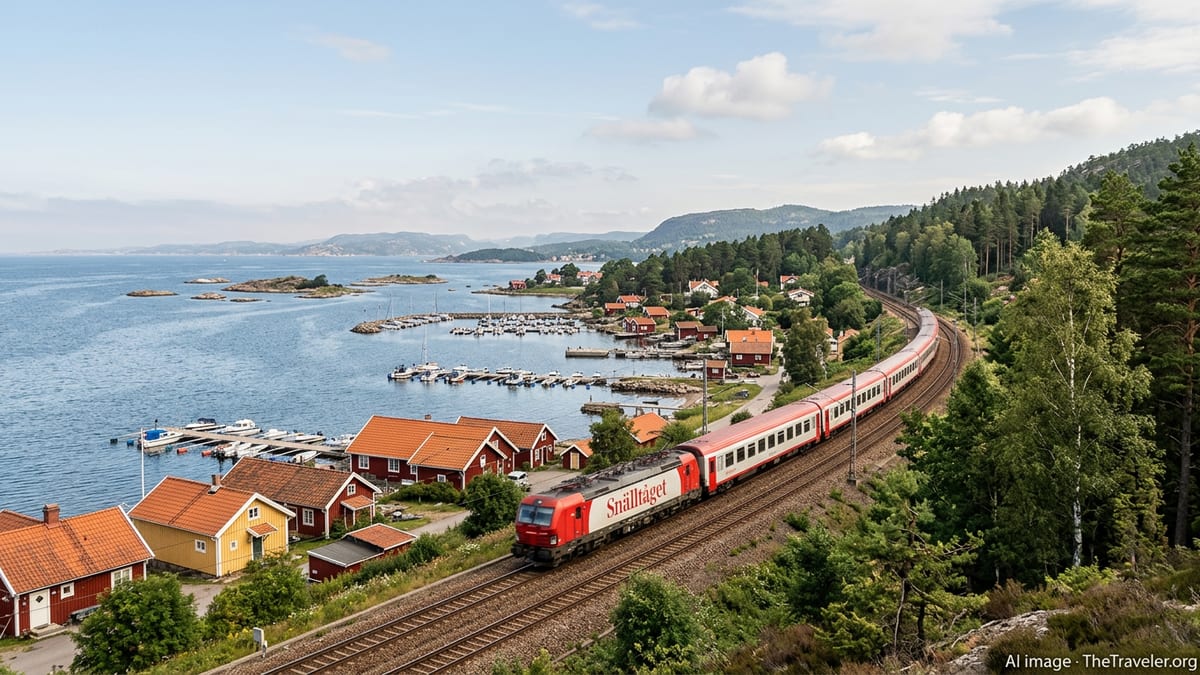
Daily Malmö–Oslo Daytime Service Set for June 2026 Launch
Snälltåget’s new Malmö–Oslo train will begin running on 15 June 2026, adding a fresh open-access option on one of Scandinavia’s busiest north–south corridors. The daytime service is scheduled to operate daily in both directions throughout the summer season, with plans to extend operations if demand remains strong.
The northbound train will depart Malmö Central early in the morning and arrive at Oslo Central just after midday, offering a journey of around six and a half hours. Southbound departures from Oslo are planned for the early afternoon, giving travellers the chance to enjoy the Scandinavian coastline in daylight for the entire ride.
Traffic planners say the new route has been timed to complement, rather than duplicate, existing Vy and SJ services that connect the two countries via Gothenburg and Halden. By adding extra daily capacity, the launch is expected to ease pressure on cross-border services that have seen steadily growing passenger numbers in recent years.
Snälltåget is positioning the new line as a flexible option for both leisure and business travellers, with a mix of advance-purchase fares and more flexible tickets. The operator has confirmed that seat reservations will be mandatory on the Malmö–Oslo train, in line with its other long-distance services.
Scenic West Coast Route Links Key Cities and Fjordland Gateways
The new service will follow Sweden’s western seaboard before crossing into Norway, serving a chain of coastal and regional hubs along the way. From Malmö, the train is expected to call at Lund, Helsingborg, Halmstad and Varberg before turning inland toward Gothenburg and continuing north to Trollhättan, Fredrikstad and Sarpsborg.
This routing offers passengers long stretches of sea views, farmland and forests, particularly between Helsingborg and Varberg and on the approaches to the Norwegian border. Rail enthusiasts point out that the line passes near popular seaside destinations on Sweden’s so-called “Gold Coast,” making it an attractive choice for domestic holidaymakers as well as international visitors.
North of Gothenburg, the tracks wind along rivers and through low hills as they approach Norway, before entering the Oslofjord region with its characteristic inlets, islands and harbours. The final run into Oslo Central gives travellers a close-up look at the Norwegian capital’s fast-changing waterfront skyline, including new residential districts and landmark cultural institutions.
Regional tourism boards are promoting the new train as a spine for multi-stop itineraries, encouraging visitors to hop on and off between Malmö and Oslo to explore smaller towns, beaches and outdoor areas that are often bypassed by air travellers. Industry observers expect the route to become a popular link for cyclists and hikers moving between trail networks in western Sweden and southeastern Norway.
Onboard Restaurant Car Brings Nordic Dining to the Rails
A key selling point of the Malmö–Oslo service is the inclusion of Snälltåget’s restaurant car, known as Krogen, for the full length of the journey. The operator plans to offer seated dining along with a more informal counter service, giving passengers a choice between a sit-down meal and lighter grab-and-go options.
The menu will feature seasonal Scandinavian dishes with a focus on regional ingredients, including fish from Nordic waters, locally sourced dairy products and baked goods from partner bakeries near the route. Vegetarian choices and family-friendly staples will also be available, reflecting the mix of passengers expected on board.
Unlike many short-haul European trains that rely largely on trolley service, Snälltåget’s concept aims to restore a more traditional restaurant-car experience, with proper table settings and the chance to linger over coffee while watching the coastline pass by. The bar area will serve beer and wine in line with Swedish and Norwegian regulations, alongside a wide selection of non-alcoholic drinks.
The company has indicated that the restaurant car will form part of its sustainability story, with efforts to minimize food waste, prioritize reusable service ware where possible and highlight producers committed to low-impact farming and fishing. For long-distance rail travellers increasingly seeking both comfort and lower-carbon choices, this combination of sit-down dining and scenic views is expected to be a major draw.
Stronger Links Between Norway and Continental Europe
Beyond regional tourism, the Malmö–Oslo service carries wider strategic importance for Nordic rail connectivity. Malmö is already a key hub for night trains from Germany and central Europe, and the new daytime link to Oslo will allow passengers from cities such as Hamburg and Berlin to reach the Norwegian capital with a single daytime connection.
The timetable has been designed to line up with Snälltåget’s existing overnight services to and from continental Europe, reducing layover times and simplifying ticketing for through journeys. Travellers will be able to step off a night train in Malmö in the morning and continue north on the same ticket, completing a cross-border trip to Oslo in daylight.
Officials and rail advocates see this as an important step toward building a coherent, climate-focused transport network that offers a practical alternative to short-haul flights between Norway and the rest of Europe. By expanding open-access services on key corridors, operators like Snälltåget are testing new models for cross-border rail that could later be replicated elsewhere in the region.
Swedish and Norwegian planners are also watching closely to see how the new route interacts with ongoing infrastructure improvements, including capacity upgrades near Gothenburg and around Oslo. Over time, these projects are expected to smooth bottlenecks, helping long-distance passenger services run more punctually and paving the way for additional direct connections.
Environmental Shift and Growing Demand for Rail in the Nordics
The Malmö–Oslo launch comes amid a broader surge of interest in rail travel across northern Europe, driven by concerns over aviation emissions and renewed investment in cross-border services. Surveys in both Sweden and Norway have indicated that more residents are willing to switch from planes to trains on medium-distance routes, provided that services are frequent, reliable and comfortable.
By offering daylight departures, reserved seating and a full dining car, Snälltåget is attempting to make rail a compelling choice for travellers who might otherwise have flown or driven. The scenic nature of the route is an additional incentive, positioning the journey itself as part of the holiday rather than simply a transfer between cities.
Analysts note that the new service will also complement seasonal and trial operations by other operators linking Oslo, Gothenburg and Malmö, gradually building a denser cross-border timetable. If passenger numbers meet expectations, the Malmö–Oslo train could strengthen the case for further investments in electrification, signalling and station upgrades along this vital corridor.
For now, the June 2026 debut marks a tangible milestone in the effort to reconnect Norway to the wider European rail network. As tickets go on sale and summer approaches, rail operators, tourism partners and climate campaigners alike will be watching closely to see how quickly travellers embrace this new, scenic path between Malmö and Oslo.