

More news on this day
With spring break just weeks away, a burst of new and resumed airline routes between Florida and the Midwest is reshaping the U.S. leisure map, as carriers move quickly to link Miami with Chicago and Orlando with Pensacola in a high-stakes contest for price-sensitive travelers.
Strategic Florida Push Arrives Just Before Peak Travel
The timing of the latest route announcements is no accident. Airlines are loading fresh capacity into Florida markets in February and March 2026, just as families, college students and snowbirds finalize plans for spring break trips. The additions include new nonstops between Miami and Chicago and a cluster of low cost links tying Orlando to Pensacola in Florida’s Panhandle, all aimed at capturing a spike in seasonal demand while competitors are still reworking schedules.
For carriers betting on Florida, the upside is clear. The state continues to post robust tourism numbers and strong in‑migration, while theme parks, beaches and cruise ports support year-round travel. By tightening the web of routes within Florida and adding more direct links to major hubs like Chicago, airlines are banking on filling planes with both vacationers and travelers making onward connections.
For passengers, the result is more choice at a moment when fares on many domestic routes have crept higher. The added competition on Miami–Chicago and Orlando–Pensacola is already prompting aggressive introductory pricing and targeted flash sales, undercutting legacy carriers that long dominated key corridors into and out of the Sunshine State.
Miami–Chicago: A Crowded Corridor Gets Even Busier
The Miami to Chicago corridor has long been one of the most hotly contested domestic routes, with major network airlines using Chicago O’Hare and Miami International as critical hubs for connections across the United States and to Latin America and Europe. The latest expansion injects still more capacity into this already busy market, as a low fare carrier moves to add new Miami–Chicago service in time for the 2026 spring break peak.
Industry filings show that the new Miami–Chicago flights are being layered onto a schedule in which a large legacy airline is already planning more than 500 daily departures from Chicago O’Hare next summer, underscoring how important the airport remains as a connecting gateway. The newcomer’s presence on the route shifts the balance, offering additional nonstop options likely operated by single aisle jets configured to maximize seat count and keep unit costs low.
That extra capacity is expected to exert downward pressure on fares, particularly during off‑peak days and shoulder periods around spring break. Travel advisers report that advance purchase round trips in March are already pricing lower than in prior years once ultra low cost carriers are factored in, with basic economy style tickets frequently undercutting the mainline competition by a significant margin.
Business and leisure travelers stand to benefit in different ways. While corporate contracts still steer a significant share of premium demand to the largest incumbents, many price sensitive travelers departing Chicago and South Florida now have more flexibility to mix and match carriers, with options that trade some frills for lower base fares and additional departure times.
Orlando–Pensacola Becomes Florida’s New Low Fare Battleground
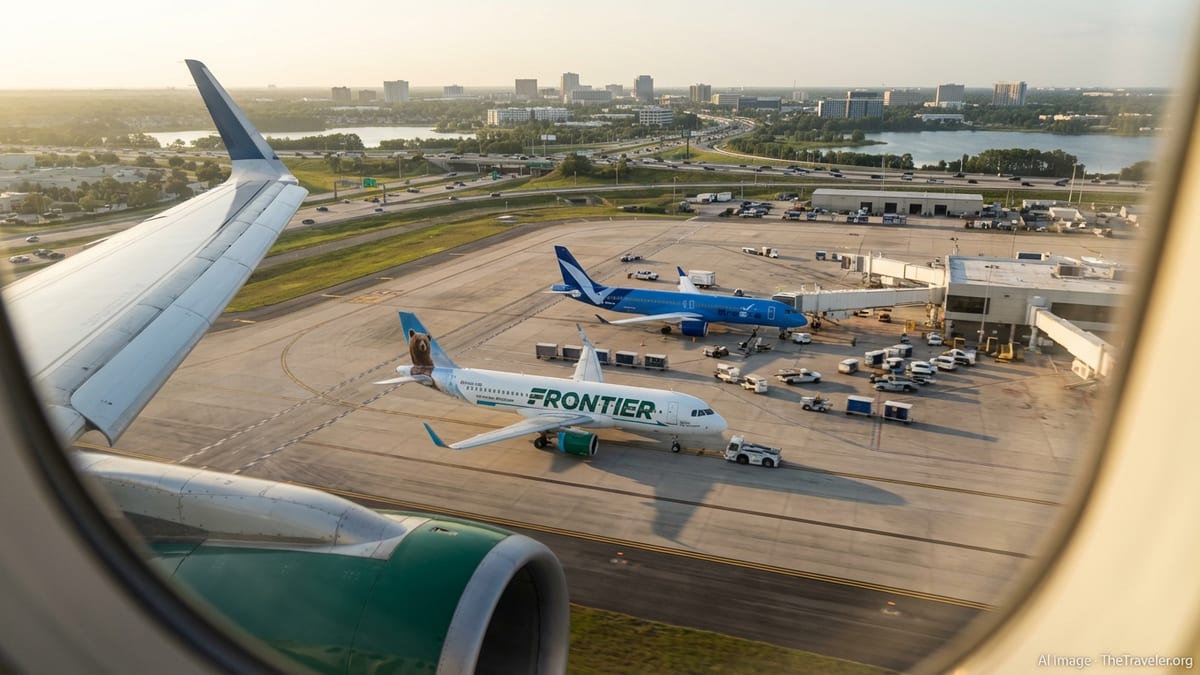
The in‑state route between Orlando and Pensacola, once a niche market with limited nonstop service, is rapidly turning into a showcase for intense low cost competition. Frontier Airlines is scheduled to resume nonstop Orlando–Pensacola flights on February 13, 2026, using Airbus A320neo aircraft and operating multiple weekly round trips. The move restores a link that Frontier last flew in 2022 and signals the carrier’s renewed interest in connecting Central Florida with the Panhandle.
Frontier will not have the market to itself for long. Breeze Airways has announced its own nonstop service between Orlando and Pensacola, with flights set to begin in March 2026 and initial schedules built around twice weekly departures. Local officials in both Orlando and Pensacola have highlighted the new Breeze route as part of a broader effort to expand point‑to‑point options within Florida for families, students and military communities.
Additional capacity comes on top of returning service from other low fare competitors, which are rebuilding Florida networks after earlier pandemic era cuts. Together, these moves mean that by early spring multiple ultra low cost carriers will be vying for the same pool of leisure passengers on a relatively short hop across the state, turning Orlando–Pensacola into one of Florida’s most hotly contested short haul routes.
For travelers, that rivalry translates into a markedly different experience from just a few years ago, when driving between Central Florida and the Panhandle or connecting through a hub were often the only realistic options. With a cluster of nonstop flights scheduled each week, travelers can increasingly treat Orlando–Pensacola as a quick shuttle instead of an all day trek.
Promotional Fares Signal a Bid for Market Share
The opening salvo in any new route battle is almost always price, and Florida’s latest additions are no exception. On Orlando–Pensacola, carriers have rolled out headline grabbing introductory fares as low as the upper 50 dollar range one way for select dates, with some flash offers undercutting that level on limited inventory. Those prices are typically tied to stripped back fare products that exclude extras such as advanced seat assignments, checked bags or even full sized carry‑ons.
Analysts say such promotions are designed less to be sustainable over the long term and more to quickly stimulate awareness and capture share from early adopters. Launch fares encourage travelers to lock in plans for spring break, book weekend getaways or sample a new airline, even when the carrier is operating just a few flights per week. Once the booking curve is established and revenue management teams can better gauge demand, fares often drift upward, especially around school holidays and major events.
On the crowded Miami–Chicago corridor, low introductory fares may be harder to spot at first glance given the number of airlines already in the market. However, the addition of another competitor increases pressure on incumbents to match or at least respond to sale activity, particularly on off‑peak travel days such as Tuesdays and Wednesdays. Travel search data in recent weeks shows greater volatility in Miami–Chicago pricing, with sudden drops around promotional windows followed by rapid rebounds as low fare buckets sell out.
Travelers willing to be flexible with dates and times, or to accept a bare bones onboard product, are the clear winners. Consumer advocates caution, however, that headline prices do not always reflect the total cost of travel once mandatory add‑ons such as seat selection for families and fees for standard carry‑on bags are taken into account.
Millions of Travelers Gain New One Stop and Nonstop Options
While the most visible changes are the nonstop routes themselves, the wider impact is felt through the new connecting possibilities they create. Linking Miami more tightly with Chicago opens up additional one stop itineraries for passengers heading from the Midwest to the Caribbean and Latin America, and for Florida based travelers heading to smaller Midwestern cities beyond Chicago. Even a modest increase in daily frequency can translate into more convenient bank connections and shorter total trip times.
The Orlando–Pensacola build‑up, meanwhile, creates new opportunities for travelers across Florida. Visitors flying into Orlando for theme parks can now more easily tack on a long weekend on the Gulf Coast without committing to a lengthy drive. Residents of Northwest Florida gain easier access not just to Orlando’s attractions, but also to its growing roster of domestic and international flights, including links to major Northeastern and Midwestern markets.
Local tourism organizations in the Panhandle are already promoting the new Orlando services as a way to capture additional visitor segments, from families looking for quiet beaches after a high energy theme park stay to sports fans traveling for tournaments and spring training. In reverse, Orlando tourism officials see the routes as a way to attract more short break visitors from Pensacola’s catchment area, particularly during shoulder seasons when resort occupancy may soften.
For many travelers these incremental improvements matter as much as the headline grabbing new routes. Shorter travel times, better timed connections and more choices across different budget levels broaden the range of trips that feel practical, especially for families juggling school schedules and limited vacation days.
Airlines Bet on Florida’s Resilience Despite Industry Headwinds
The latest round of Florida focused route additions comes against a backdrop of continued volatility for the airline industry. Carriers are grappling with higher labor costs, fluctuating fuel prices and operational challenges tied to aircraft delivery delays and maintenance constraints. Yet even with those headwinds, Florida remains one of the few domestic markets where airlines are still willing to add capacity aggressively.
Executives point to several factors underpinning that confidence. Population growth in Florida’s major metros and smaller coastal communities is outpacing many other parts of the country, providing a solid base of visiting friends and relatives traffic. At the same time, pent up demand for leisure travel remains strong as consumers continue to prioritize experiences and trips, even while trimming some discretionary spending elsewhere.
Airlines also see opportunities created by shifting competitive dynamics. As some carriers scale back in certain Florida airports or restructure networks following financial setbacks, rivals have moved quickly to occupy the space. The build‑up of Orlando–Pensacola service and the push on Miami–Chicago are part of a broader pattern in which low cost and ultra low cost airlines target gaps left by legacy competitors, often with leaner operations and lower average fares.
Still, the strategy is not without risk. If broader economic conditions deteriorate or if demand softens outside peak periods, airlines may be forced to trim frequencies or adjust schedules. Industry observers note that new and resumed routes will be tested in real time across the 2026 spring and summer seasons, with underperforming flights vulnerable to schedule changes in subsequent timetables.
What Travelers Should Watch as Spring Break Nears
For travelers planning trips in March and early April 2026, the scramble by airlines to expand service between Miami, Chicago and key Florida cities presents both opportunities and new complexities. The most immediate opportunity lies in monitoring fares closely over the coming weeks, as airlines fine tune pricing and adjust capacity in response to early booking trends.
On Orlando–Pensacola, shoppers should expect to see a patchwork of very low promotional fares on specific days alongside higher prices on peak travel dates. Given the relatively low frequency of some new services, it will be important to look not just at price but also at schedule reliability, minimum connection times and airport amenities, particularly for families traveling with children.
On Miami–Chicago, travelers may find that the best values come from mixing carriers, such as flying one airline outbound and another on the return leg, or pairing a legacy airline in one direction with a low fare operator in the other. Travel experts suggest that passengers pay close attention to change and cancellation policies, as even small schedule adjustments can have outsized effects when connecting to cruises, international flights or time sensitive events.
With more airlines crowding into already busy terminals in Miami, Orlando and Chicago, passengers should also allow extra time at the airport, especially during peak departure waves. Despite those challenges, the overarching takeaway for millions of potential passengers is positive: more planes, more routes and more competition are tilting the balance slightly back toward the consumer as spring break 2026 approaches.