

More news on this day
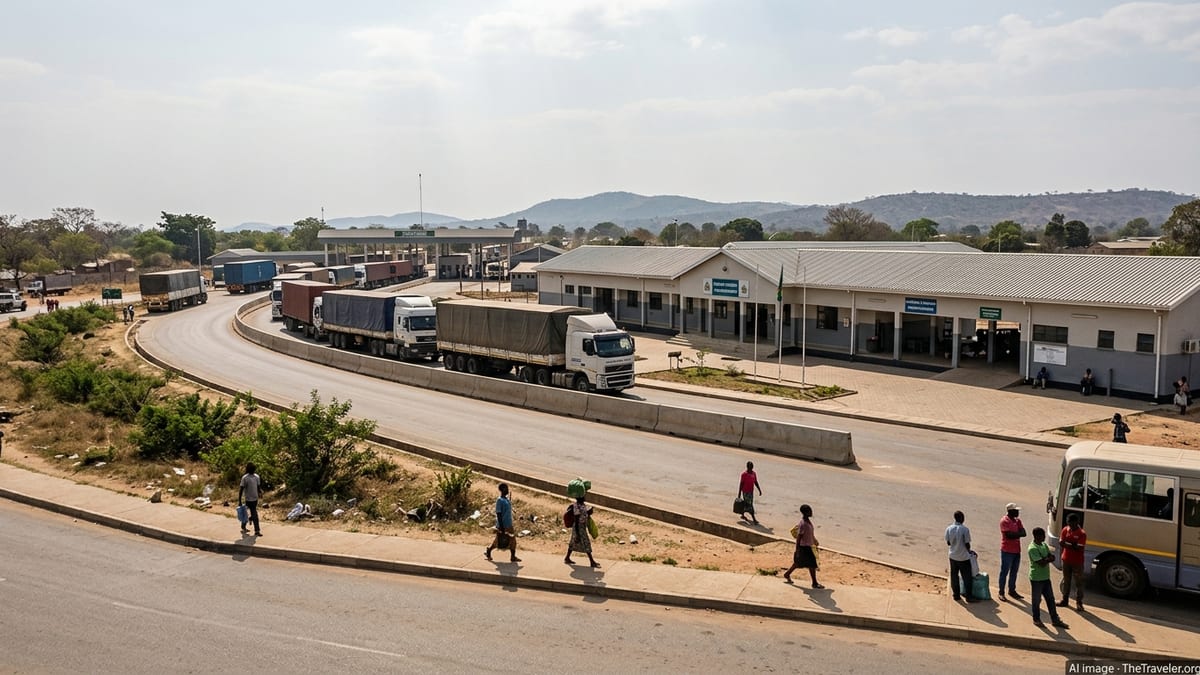
New and upgraded facilities at the Nakonde–Tunduma border between Zambia and Tanzania are beginning to ease long-standing congestion, promising faster travel times for passengers and freight along one of Southern Africa’s busiest road and rail corridors.
Get the latest news straight to your inbox!
Strategic Gateway on the North–South Corridor
The Nakonde–Tunduma crossing is a critical gateway linking Zambia to the port of Dar es Salaam and to wider markets in East and Southern Africa. Located on the North–South Corridor, it carries a significant share of regional traffic, from fuel and agricultural inputs to manufactured goods and household supplies.
Publicly available information describes Nakonde as one of Zambia’s highest-volume road border posts, handling thousands of trucks each month alongside growing numbers of cross-border passengers. For years, the combination of rising trade volumes, limited parking, and fragmented checks on both sides of the frontier contributed to queues stretching for kilometres.
The development of a full one stop border post model at Nakonde–Tunduma, in which agencies from both countries coordinate controls in a shared zone, is intended to address those bottlenecks. Officials in both Lusaka and Dodoma have publicly framed the site as central to regional integration initiatives under Southern African Development Community and the African Continental Free Trade Area.
Recent planning documents from Zambia’s transport and trade authorities emphasise that smoother flows at Nakonde are not only a logistics issue but also a competitiveness concern, influencing transport costs for exporters in sectors such as mining, agriculture, and manufacturing.
New Facilities Aimed at Faster Clearance
According to published coverage and institutional reports, the latest phase of works at Nakonde focuses on modernising physical infrastructure and streamlining procedures. Investment packages negotiated with development partners have supported new inspection bays, dedicated cargo and passenger lanes, improved parking areas, and upgraded office space for border agencies.
Trade facilitation programmes funded through organisations such as TradeMark Africa and the World Bank have backed the supply of information and communications technology equipment, training for staff, and the integration of risk-based inspection systems. These measures are designed to reduce the number of physical checks while improving compliance, cutting clearance times for compliant traders.
Regional newsletters describing technical missions to the border in 2024 highlight additional improvements such as expanded scanner capacity, more orderly truck marshalling, and clearer signage for buses and light vehicles. Combined with reconfigured traffic flows inside the border compound, the new layouts aim to minimise conflicts between heavy trucks, private cars, and pedestrians.
Local planning documents from Nakonde District further indicate that authorities are working toward a modernised one stop border post by the middle of the decade, aligning on-site construction with wider road upgrades on the Chinsali–Nakonde section of the corridor to ensure that improved facilities are matched by better access routes.
Digital Systems and Coordinated Border Management
Beyond bricks and mortar, a major focus of the new Nakonde facilities is the digitisation of border processes. Trade facilitation briefs from regional programmes describe the deployment of electronic customs platforms, single window concepts for trade documentation, and cross-border data exchange between Zambia and Tanzania.
System upgrades carried out in coordination with the Tanzania Revenue Authority and the Zambia Revenue Authority have included planned downtimes to install new software and interfaces. Public notices about these works emphasise that the objective is to streamline procedures, support pre-arrival processing, and reduce manual paperwork at the counter.
Other measures highlighted in recent assessments include smart gates, electronic truck tracking, and improved sanitary and phytosanitary certification facilities. Since early 2025, some of these tools have been used to accelerate the clearance of sensitive goods such as food products, with reports indicating shorter turnarounds for compliant consignments.
Stakeholder-focused initiatives at the border, including capacity-building for cross-border trader associations, aim to ensure that small-scale and informal traders can also benefit from new systems. Training on documentation, classification, and regulatory requirements is being promoted as a way to reduce disputes and delays for low-value consignments that are vital to local livelihoods.
Impacts on Travel Experience for Passengers
The improvements at Nakonde are beginning to influence the travel experience for passengers moving between Zambia and Tanzania by road and rail. The border town is a key node for long-distance buses linking Lusaka, Mbeya, and Dar es Salaam, as well as for services associated with the Tanzania–Zambia Railway Authority.
Publicly available travel accounts from recent years have pointed to long waiting times, limited amenities, and confusion over procedures as common pain points for passengers. With the roll-out of more clearly separated passenger processing areas, enhanced lighting, improved public information, and better coordination between agencies, reports now suggest gradual progress in reducing queues and overnight waits.
Planned investments in related infrastructure, including a new airport project near Nakonde and ongoing rehabilitation of the Chinsali–Nakonde road, are expected to complement the border works. For travellers, this could translate into more reliable journey times, smoother multimodal connections, and greater choice of services as operators respond to a more predictable operating environment.
Tourism stakeholders monitoring developments in the border region note that simpler and faster crossings are likely to support itineraries that combine destinations in northern Zambia with attractions in southern Tanzania. This is particularly relevant for self-drive visitors and overland tour operators who rely on efficient land borders to keep to tight schedules.
Regional Trade and Integration Outlook
The upgraded Nakonde facilities are part of a broader push across the region to modernise border posts and link them with high-priority transport corridors. Policy documents from regional economic communities frequently cite one stop border posts as a cornerstone of efforts to reduce the time and cost of moving goods across multiple frontiers.
For Zambia and Tanzania, a more efficient Nakonde–Tunduma crossing strengthens the connection between inland production centres and the Indian Ocean, enhancing resilience by diversifying access routes alongside other corridors. Analysts of regional trade expect that reduced clearance times, once fully realised, should improve the competitiveness of exporters and encourage greater use of formal trade channels.
Development finance institutions involved in upgrading roads leading to Nakonde highlight anticipated benefits such as lower vehicle operating costs, fewer accidents, and more predictable transit schedules. These gains are expected to accumulate over time as complementary reforms in customs, transport regulation, and logistics services take hold.
While reports acknowledge that some bottlenecks persist, particularly during peak harvest seasons and periods of system changeover, the direction of travel at Nakonde points toward a more streamlined, traveller-friendly border. As construction phases are completed and digital platforms stabilise, the crossing is positioned to become a flagship example of how coordinated infrastructure and policy reforms can reshape mobility between neighbouring countries.