

More news on this day
Louis Armstrong New Orleans International Airport is moving ahead with an ambitious expansion that lays the groundwork for a second terminal, additional gates and new ground access projects by early next decade, positioning New Orleans for a fresh wave of tourism growth and regional connectivity in the 2030s.
Get the latest news straight to your inbox!
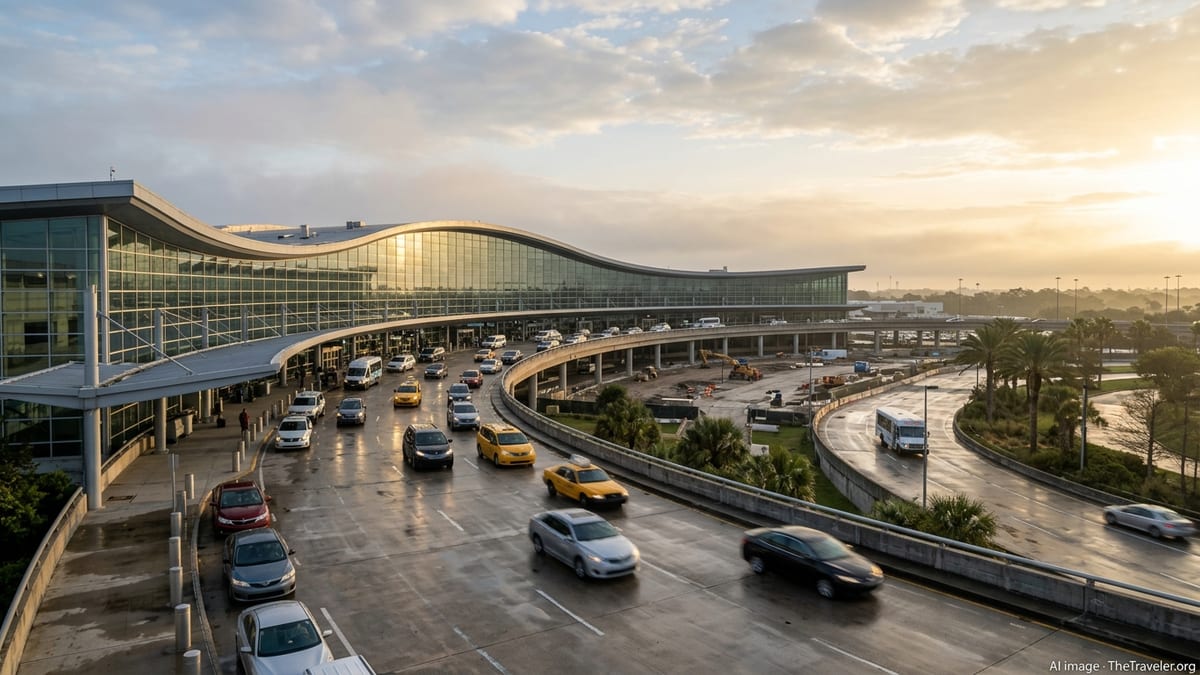
Second Terminal Concept Anchors MSY’s 2030s Growth Strategy
Recent planning documents and regional coverage indicate that Louis Armstrong New Orleans International Airport is advancing a long-range expansion framework that calls for a second terminal by around 2031. The plan builds on the $1.3 billion North Terminal that opened in 2019 and reflects faster than expected passenger growth in the years since.
Reports from mid 2025 describe a conceptual program that would add at least 15 new gates, significantly expand ticketing and security areas, and increase baggage claim capacity to handle projected passenger volumes. The second terminal is being considered as a complementary facility rather than a replacement, effectively turning MSY into a two-terminal airport for the first time in its modern history.
Airport planning information suggests that the new terminal would be developed in phases, with early work focused on enabling projects such as additional parking, roadway reconfiguration and utility upgrades. The aim is to keep core operations in the existing terminal running smoothly while capacity is built up in step with demand.
Although detailed architectural renderings and final timelines have not yet been publicly released, the broad contours of the plan signal a shift from incremental tweaks to a comprehensive second-terminal strategy that would reshape how travelers move through MSY over the next 15 to 20 years.
More Gates, Bigger Checkpoints and a Travel Experience Makeover
Planning summaries indicate that the proposed expansion is driven primarily by gate and processing capacity. If current trends continue, MSY is projected to need roughly 15 additional gates by 2031, on top of the 35 now in service at the North Terminal. That expansion footprint is expected to be paired with tens of thousands of square feet of new ticket lobby, security checkpoint and baggage claim space.
The intent is to relieve crowding pinch points that have emerged as airlines have rebuilt schedules and new routes have been added since the pandemic downturn. Larger security areas and expanded check-in zones are expected to reduce peak-period congestion, while reconfigured baggage halls would aim to speed luggage delivery and create more room for oversized and international baggage processing.
The second terminal plan is also being framed as a travel-experience refresh. Publicly available descriptions reference opportunities for more food and beverage outlets, additional local retail brands and upgraded seating and waiting areas that showcase New Orleans culture. As the new build comes into focus, design teams are expected to draw on lessons learned from the 2019 terminal, including demand for more power outlets, flexible seating zones and quieter workspaces.
In the near term, separate capital projects already underway, such as a multimillion-dollar runway rehabilitation and ongoing technology upgrades, are intended to keep the airfield reliable and efficient while terminal concepts advance through environmental review and design.
Connector Road and Future Rail Link Aim to Transform Ground Access
Alongside the terminal concept, MSY is pushing forward with an $84 million express connector road that is set to redefine how travelers and employees move between the airport’s north and south campuses. Groundbreaking coverage in late 2025 and early 2026 describes a dedicated shuttle corridor that will link the economy garage, employee garage and rental car center directly to the main terminal without using local streets.
The new roadway is designed to shave minutes off shuttle trips and reduce traffic on surrounding roads in Kenner, a key quality-of-journey improvement for visitors arriving at peak times or during major events. By separating shuttle buses from general traffic, the project is also expected to improve reliability for early morning departures and late-night arrivals.
Crucially, planning materials note that the connector is being built as a foundation for an eventual intermodal hub, with provisions for a future Baton Rouge to New Orleans passenger rail stop near the airport’s south campus. Early state-level rail planning envisions trains serving the airport area as an intermediate stop, creating a direct, car-free link between MSY, downtown New Orleans and Baton Rouge.
Looking further ahead, the airport has indicated that the same corridor could support additional transit modes, such as dedicated bus rapid transit, potential light rail or even autonomous shuttle systems connecting the second terminal precinct with parking and regional rail. That multimodal vision is being presented as a key part of the airport’s long-range connectivity strategy.
Tourism, Air Service and Economic Impact Across Southeast Louisiana
The expansion blueprint arrives as New Orleans tourism continues to rebound and diversify, with growing interest from leisure, cruise, festival and conference travelers. Visitor data compiled by regional tourism organizations point to steadily rising hotel demand and new events on the calendar through the late 2020s, trends that typically translate into higher air service requirements.
By planning a second terminal and additional gates, MSY is positioning itself to accommodate more nonstop routes, larger aircraft and expanded frequencies, especially on high-demand leisure and visiting-friends-and-relatives markets. Industry observers note that the added capacity could make it easier for airlines to test new domestic and near-international links, broadening the region’s reach.
The construction phase itself is expected to generate significant economic activity, from design and engineering contracts to construction trades and airport support services. Past terminal builds at MSY have been credited in public reports with creating thousands of jobs and catalyzing hotel, restaurant and logistics investment in nearby areas.
Longer term, local business groups and economic development agencies often highlight airport capacity as a deciding factor for corporate relocations, film and entertainment projects, and major conventions. A modernized, higher-capacity MSY is widely viewed as a prerequisite for Southeast Louisiana to compete with larger Gulf and Sun Belt markets for visitors and investment.
Phased Timeline and What Travelers Can Expect Next
According to published coverage and planning summaries, the MSY team is still in the early stages of formalizing its 20-year master plan, with the second terminal targeted around 2031 as a key milestone. In the interim, travelers are more likely to notice smaller but tangible changes as enabling projects move forward.
Runway rehabilitation work, new roadway construction and potential east concourse enhancements identified in local capital budget documents are expected to roll out over the next several years. These efforts may bring periodic detours, adjusted shuttle operations or construction zones, but they are also intended to support smoother operations during peak travel seasons.
For passengers, the most visible short-term improvements will likely involve clearer wayfinding, consolidated shuttle routes along the new connector road once it opens, and incremental additions to dining and retail choices as concessions contracts evolve. As design decisions firm up, airport stakeholders are anticipated to share more detailed visuals and construction timelines to help travelers and nearby communities prepare.
By the time the second terminal concept matures into active construction, MSY is expected to be handling substantially more passengers than today, with new routes and airline partners in place. The current planning wave suggests that New Orleans is intent on ensuring its main gateway keeps pace with that growth, turning the airport itself into a more efficient and welcoming starting point for experiencing the city.