

More news on this day
Passengers traveling through Louis Armstrong New Orleans International Airport on March 15 are confronting significant disruption, with publicly available data showing dozens of flight cancellations and widespread delays affecting major domestic routes operated by Southwest, Spirit, Delta Air Lines and other carriers.
Get the latest news straight to your inbox!
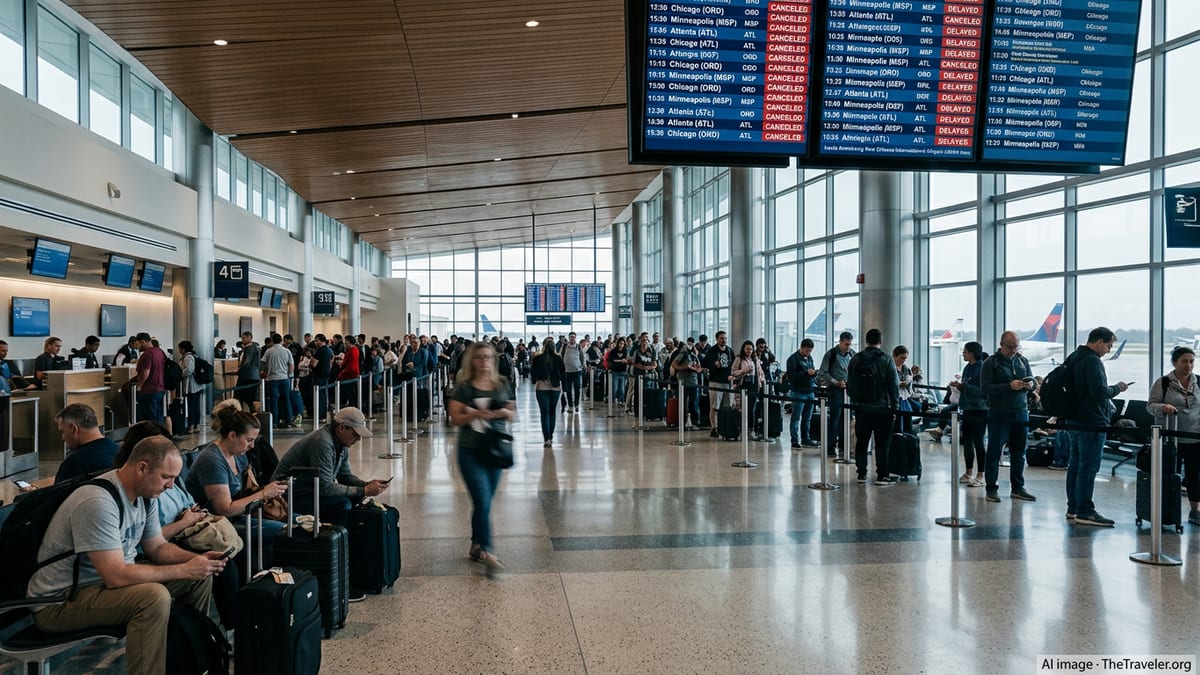
Widespread Disruption Hits Key Domestic Hubs
Flight-tracking dashboards for Sunday, March 15 indicate that New Orleans has emerged as one of several U.S. airports wrestling with an unusually high number of schedule changes, particularly on routes linking the Gulf Coast city with Chicago, Minneapolis and Atlanta. The disruption spans early-morning departures through late afternoon, complicating plans for both leisure and business travelers at the start of the busy spring break period.
Southwest, Spirit and Delta Air Lines feature prominently among the affected operators, reflecting their role in connecting New Orleans with major Midwest and Southeast hubs. Nonstop services between New Orleans and Chicago, including flights to Midway and O’Hare, show multiple cancellations and rolling delays, while itineraries to Minneapolis and Atlanta are also experiencing extended holds, gate changes and revised departure times.
Operational data suggests that the issues are not confined to a single airline or aircraft type, pointing instead to a mix of factors from tight crew and aircraft rotations to ongoing staffing challenges at airports and in air traffic control. For travelers attempting to make onward connections through larger hubs, even relatively short delays in New Orleans are resulting in missed links and forced rebooking later in the day.
The timing of the disruption is particularly challenging because many itineraries were planned months in advance around school holidays and major events. With load factors already high, same-day alternatives on popular routes are limited, leaving some travelers facing overnight stays or substantial rerouting through secondary hubs.
Recent Strains at New Orleans Airport Set the Stage
The latest wave of cancellations and delays comes on the heels of a difficult stretch at Louis Armstrong New Orleans International Airport, where travelers have recently reported unusually long security lines and operational strain. In early March, publicly available accounts highlighted wait times stretching well beyond typical levels as passenger volumes ramped up for spring travel.
Those earlier bottlenecks were linked in part to a broader national context of staffing constraints and shifting demand patterns across U.S. airports. Industry analyses in recent months have pointed to persistent challenges balancing available personnel with high travel demand, especially at peak morning and evening banks when many New Orleans departures to major hubs are scheduled.
That backdrop has increased the vulnerability of New Orleans to knock-on effects when weather, crew availability or upstream delays ripple through airline networks. When an inbound aircraft or crew arrives late from another city, the impact at a spoke airport such as New Orleans can quickly cascade into cancellations on subsequent legs, including those to Chicago, Minneapolis and Atlanta.
Travel observers note that New Orleans has also seen evolving route maps from low-cost and legacy carriers over the past two years, as airlines adjusted schedules to chase demand and manage costs. This has at times concentrated more passengers onto fewer daily departures on key city pairs, leaving less slack in the system when irregular operations occur.
Airlines Confront Network Ripple Effects
For carriers such as Southwest, Spirit and Delta, the current disruption underscores how tightly integrated their networks have become. According to published airline and airport information, New Orleans feeds traffic into several major hubs that themselves are coping with busy schedules and intermittent operational challenges.
Chicago and Minneapolis, both important connecting points for Upper Midwest and transcontinental itineraries, have been managing their own waves of delays this season, particularly during bouts of winter weather further north. When aircraft or crews are held up at those hubs, downstream flights to and from New Orleans can be canceled or rescheduled at short notice, affecting passengers in both directions.
Atlanta, one of the world’s largest hub airports, remains a critical node for Delta and several partner airlines. Any congestion there can quickly limit options for rebooking New Orleans passengers whose original flights are canceled. With many weekend services running close to full, airlines have less ability to absorb displaced travelers without resorting to significant time shifts or multi-stop routings.
Industry-focused commentary has additionally highlighted the pressures on ultra-low-cost carriers, which tend to operate tighter aircraft utilization and thinner schedules. When a Spirit or similar carrier cancels a flight between New Orleans and a major hub, there may be no later same-day departure on the same route, forcing travelers onto other airlines or into overnight delays.
Travelers Navigate Long Lines, Rebookings and Uncertainty
For passengers on the ground in New Orleans, the disruption has translated into a familiar mix of long check-in lines, crowded departure halls and tense waits for updates on status boards. Social-media posts and traveler forums on Sunday describe queues forming well before dawn at airline counters as customers sought to switch to alternate flights or secure hotel and meal support where eligible.
Reports from within the terminal indicate that some travelers arriving closer to departure time have found their flights already canceled or significantly delayed, prompting a scramble to connect with airline customer-service desks or mobile apps. In several cases, rebooked itineraries have routed passengers through entirely different hubs than originally planned, adding hours to total travel time.
Families heading to or from New Orleans for spring break trips appear to be among those hardest hit, with multi-ticket groups more difficult to accommodate on the few remaining open seats. Travelers connecting to international flights through Chicago, Minneapolis or Atlanta also face a heightened risk of missed long-haul departures, additional change fees where applicable, and complications with onward hotel and tour reservations.
Publicly available guidance from travel experts continues to emphasize proactive steps such as enrolling in airline text alerts, downloading carrier apps and monitoring flight-status pages frequently on the day of travel. With conditions changing rapidly, passengers at New Orleans are being urged to arrive early, verify their flight number and routing, and prepare for the possibility of extended stays at the airport.
What Disruption Means for Upcoming Spring Travel
The current bout of cancellations and delays at New Orleans is likely to resonate beyond this single weekend, serving as a cautionary example for travelers planning trips through March and April. Industry data for recent years shows that spring has increasingly become one of the busiest and most disruption-prone periods in U.S. aviation, as high demand interacts with storms, staffing limits and tight aircraft schedules.
Observers note that as more airlines rebuild and expand their networks from Gulf Coast cities, operational resilience will remain a key concern. For routes such as New Orleans to Chicago, Minneapolis and Atlanta, the balance between offering attractive fares and maintaining enough schedule flexibility to handle irregular operations will continue to shape the passenger experience.
For travelers, the events of March 15 reinforce the value of contingency planning. Flexible tickets, travel insurance that explicitly covers delays and cancellations, and itineraries with generous connection times can reduce exposure when a single canceled New Orleans departure disrupts an entire day’s journey. Some passengers are also turning to early-morning or midweek flights, which historically have faced fewer cascading delays than peak weekend departures.
As airlines and airports assess the latest disruption, New Orleans remains a vital gateway to the Gulf Coast and a barometer of how well U.S. carriers can manage complex, interconnected networks during periods of high demand. Passengers moving through the city in the coming weeks will be watching closely for signs that systems are stabilizing and that the turbulence experienced this weekend will not become a recurring feature of their spring travel plans.