

More news on this day
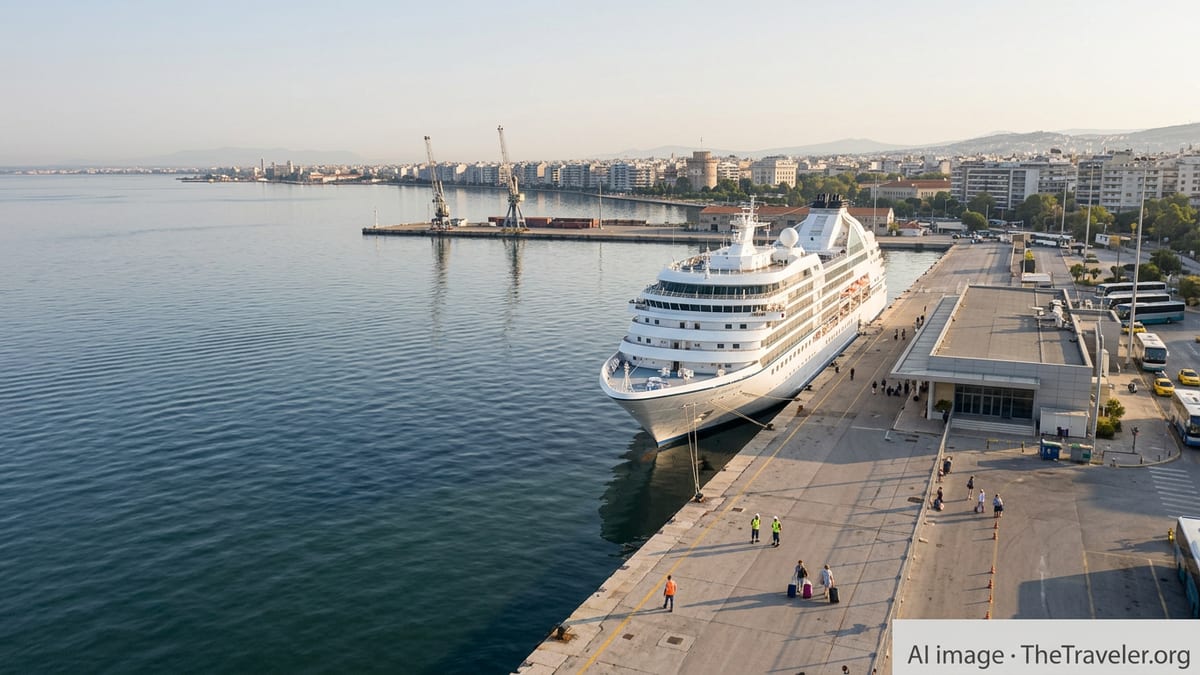
Thessaloniki is moving to reposition itself as a leading cruise gateway for northern Greece, with a new wave of strategic partnerships and coordinated promotion aimed at revitalizing the city’s cruise tourism industry and elevating its role on the global cruise map.
Get the latest news straight to your inbox!
Coordinated Strategy to Lift Thessaloniki’s Cruise Profile
Recent initiatives bring together the Thessaloniki Port Authority, the Region of Central Macedonia and national tourism bodies in a more unified push to attract cruise lines and passengers. Publicly available information shows that this coordinated effort focuses on marketing Thessaloniki as both a port of call and a viable homeport for Eastern Mediterranean itineraries, building on its role as Greece’s second city and a key transport hub.
Reports indicate that this strategy is rooted in data showing strong year-on-year growth in Greek cruise tourism overall, with Greece emerging as one of Europe’s most dynamic cruise markets. Thessaloniki’s leadership aims to capture a larger share of this traffic by emphasizing the port’s modern infrastructure, proximity to Balkan source markets and easy access to UNESCO-listed sites across Central Macedonia.
Regional promotion campaigns launched in recent seasons have begun to reposition Thessaloniki and surrounding destinations, such as Halkidiki and Pieria, as year-round tourism areas attractive to cruise planners. According to published coverage, these campaigns are being reinforced by new partnerships with international travel and cruise platforms designed to raise the city’s visibility with both industry decision-makers and consumers.
This emerging framework represents a shift from ad hoc marketing toward a longer-term cruise development plan, in which port upgrades, destination branding and stakeholder training are treated as interconnected pillars rather than isolated projects.
New Cruise Line Partnerships and Future Homeport Potential
One of the clearest signs of Thessaloniki’s evolving cruise role is the growing interest from major international cruise brands. Recent coverage from Greek and regional media highlights fresh partnerships and exploratory agreements aimed at adding Thessaloniki to itineraries or expanding existing calls in the coming seasons.
Reports describe ongoing collaboration with the cruise division of MSC Group, including its luxury brand Explora Journeys, to develop Greek cruise routes that feature northern gateways alongside established ports. Thessaloniki is presented within this context as a port with strong homeporting potential, particularly for itineraries serving passengers from the wider Balkans and Central Europe.
Additional momentum appears to be coming from German tourism giant TUI, which has signaled plans to include Thessaloniki in its cruise programs from 2026. Publicly available information suggests that evaluation visits focused on the city’s accommodation stock, cultural assets and overall readiness to host larger numbers of cruise guests. This interest is viewed locally as an endorsement of the city’s long-term cruise ambitions.
At the same time, the port continues to welcome smaller luxury and boutique operators that see value in Thessaloniki’s urban atmosphere and access to inland excursions. The combination of established names considering deployment and niche lines already calling at the port underpins expectations that passenger volumes can grow significantly in the medium term if the new partnership strategy is sustained.
Infrastructure Investments and Operational Readiness
Thessaloniki’s push to enhance its cruise profile is closely linked to broader investment in port infrastructure and city transport. The approved Master Plan for the port, highlighted in specialized maritime media, foresees upgrades that include improved berthing capacity, enhanced passenger reception facilities and better integration with logistics and rail networks that connect Thessaloniki to Southeast and Central Europe.
Port documents and corporate material describe a long-term business strategy that positions Thessaloniki as a regional logistics and transport hub, with cruise and ferry operations forming part of a diversified portfolio. This approach aims to leverage shared infrastructure and intermodal connections, making it easier for cruise passengers to combine sea travel with rail or road journeys into neighboring countries.
Operational readiness is also being addressed through targeted training and knowledge-sharing. A specialized cruise development seminar hosted in Thessaloniki for Greek ports and destinations in early 2026 is designed to equip local stakeholders with practical tools on itinerary planning, port presentations, excursion design and regulatory changes such as new Schengen entry systems. The event underscores recognition that soft skills and coordinated service delivery are as important as physical infrastructure in winning and retaining cruise business.
City improvements, including expanding public transport and revitalizing waterfront areas, are expected to further enhance the passenger experience. These changes support the narrative that Thessaloniki is not only a convenient embarkation point but also an attractive city-break destination in its own right, encouraging pre- and post-cruise stays that increase local economic impact.
Regional Partnerships to Strengthen Destination Appeal
Beyond the port perimeter, Thessaloniki’s cruise strategy increasingly relies on partnerships across the Region of Central Macedonia. Regional authorities have launched campaigns to promote a cluster of destinations surrounding the city, presenting cruise planners with a broader palette of shore excursion options that range from coastal resorts to inland cultural and gastronomic routes.
According to tourism sector reports, this regional framing is designed to counter perceptions of Thessaloniki solely as an urban call and instead position it as a gateway to a varied hinterland. Excursions to archaeological sites, wine regions and seaside areas are being packaged and promoted in collaboration with local municipalities and tourism enterprises, with the aim of lengthening passenger stays and spreading spending more evenly.
The strategy also taps into growing demand for authentic, less crowded alternatives to Greece’s most saturated island destinations. By highlighting Central Macedonia’s landscapes, cuisine and cultural festivals, officials and tourism bodies hope to appeal to cruise lines that are diversifying itineraries in search of new experiences to market to repeat Mediterranean travelers.
Collaboration with international media and cruise-focused platforms plays a role in this effort, providing exposure for Thessaloniki and nearby regions in key source markets such as Germany, France and the United Kingdom. This approach aligns with the broader Greek objective of dispersing tourism flows more evenly across the country and across seasons.
Positioning Thessaloniki in a Changing Cruise Landscape
The timing of Thessaloniki’s strategic partnerships coincides with wider shifts in the global cruise industry. Demand for Eastern Mediterranean routes has recovered strongly, yet operators face mounting pressure to balance growth with environmental considerations and local community concerns. Thessaloniki’s leadership is attempting to position the port as a responsible, manageable-scale alternative to congested hubs that struggle with overtourism.
As part of this repositioning, the port’s environmental credentials, including recognition as a leading Greek port for sustainability initiatives, are being promoted to cruise lines that increasingly factor environmental performance into deployment decisions. Public statements from port management stress commitments to green operations and stakeholder engagement, themes that resonate with industry efforts to demonstrate more sustainable practices.
Analysts note that Thessaloniki’s relatively modest cruise volumes, compared with the country’s largest ports, may be an advantage in this context. The city can grow from a lower base while applying lessons learned from more saturated destinations, managing passenger flows, integrating cruise arrivals with local life and maximizing benefits for businesses beyond the immediate port zone.
The evolving partnership framework, centered on collaboration between the port authority, regional tourism bodies and major cruise brands, suggests that Thessaloniki is serious about securing a lasting place on the Mediterranean cruise map. If upcoming seasons confirm anticipated increases in ship calls and homeport operations, the city could emerge as one of Greece’s most significant cruise success stories in the second half of the decade.