

More news on this day
For tens of thousands of New Jersey rail commuters, the long-promised Portal North Bridge is finally coming into use, but the price of progress is a bruising month of service cuts, longer trips and scrambled routines along the Northeast Corridor.
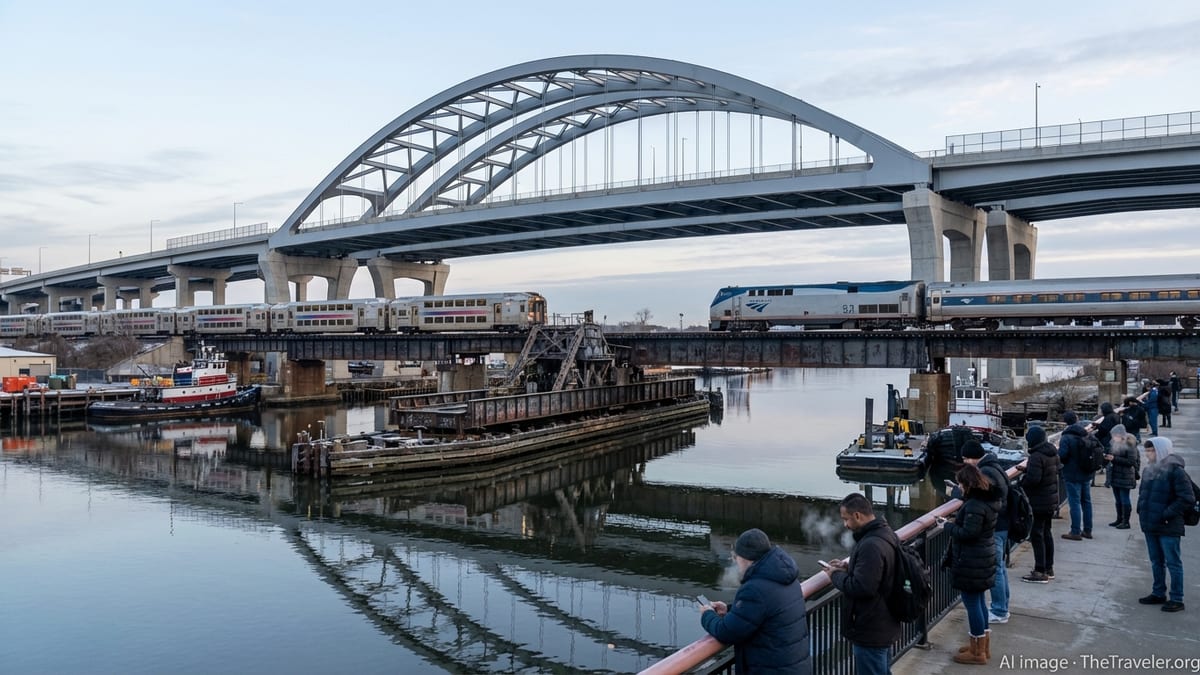
A Century-Old Bottleneck Gives Way to a New Era
The Portal North Bridge is replacing a 115-year-old swing bridge over the Hackensack River that has long been one of the most notorious choke points on the Northeast Corridor between Newark and New York Penn Station. Before the pandemic, the existing Portal Bridge carried more than 450 Amtrak and NJ Transit trains and roughly 200,000 passengers each weekday, yet it still had to pivot open for marine traffic, frequently getting stuck and triggering ripple-effect delays up and down the coast.
The new structure, a higher fixed-span bridge that rises more than 50 feet over the river, is designed to remove that vulnerability entirely. Because it no longer needs to open for ships, the Portal North Bridge eliminates many of the moving parts that routinely failed, leaving workers to bang frozen components back into place with sledgehammers while trains stacked up on both sides.
Rail officials describe the project, part of the larger Gateway Program, as a once-in-a-century upgrade that will ultimately double capacity between Newark and New York. The new bridge stretches nearly two and a half miles including its approaches, with two modern tracks, new interlockings and upgraded power and signal systems intended to support faster, more reliable operations for decades to come.
That long-term promise, however, depends on surviving a short but intense period of disruption as trains are shifted off the old bridge and onto the new one.
The Cutover: Four Weeks of Rail Surgery in Live Traffic
Beginning February 15 and running through roughly March 15, Amtrak engineers are carrying out what they call a cutover, transferring one of the two main tracks, along with its overhead wires and signal equipment, from the aging Portal Bridge to the new Portal North span. The work is akin to open-heart surgery on one of the busiest rail arteries in North America, performed while trains continue to move.
To make that possible, all traffic between Newark and Secaucus is being squeezed onto a single track for about four weeks. That constraint forces a dramatic reduction in the number of trains that can safely operate into New York Penn Station each hour, with priority given to the most heavily used Northeast Corridor and North Jersey Coast Line services.
Rail planners say the cutover involves about 40,000 labor hours and daily crews of 70 to 90 workers. On the ground, they are cutting and shifting rails, tying in 2.5 miles of new right-of-way, energizing new catenary power lines and testing complex new interlockings that will eventually allow trains to move more fluidly through the area.
Officials from Amtrak and NJ Transit argue that compressing the job into a single four-week window is the least bad option. Spreading the work over many nights and weekends, they say, would have dragged disruptions out for months and increased the risk that the first track on the new bridge would miss its planned 2026 in-service date.
Service Cuts Hit Midtown Direct Riders Hardest
The most visible impact of the cutover is on NJ Transit’s weekday schedule, which has been trimmed by roughly half across the lines that rely on the Portal crossing. Agency planning documents and rider alerts show that overall rail service into New York is being reduced from a peak of about 48 trains per hour to as few as 18 during the busiest parts of the day.
That squeeze is especially painful for Midtown Direct customers. All weekday Midtown Direct trains on the Morristown Line, Gladstone Branch and Montclair-Boonton Line that normally run straight into Penn Station are being diverted to Hoboken Terminal for the duration of the work. Riders who are used to stepping off their train beneath Midtown Manhattan now face an extra transfer to PATH, a ferry or a bus to reach the same destination.
The Northeast Corridor and North Jersey Coast Line retain some direct trains to New York, but on a reduced schedule with longer gaps and more crowding. Raritan Valley Line passengers, who already deal with limited one-seat rides under normal conditions, are also seeing reduced and reshuffled service during the cutover window.
Amtrak is trimming its own operations as well, canceling or consolidating dozens of Acela, Northeast Regional and Keystone trains each day. While some long-distance services are preserved, riders are being told to expect altered departure times, combined trains and tighter connections at New York and Philadelphia hubs.
Commutes Rerouted Through Hoboken, PATH and the Ferries
To keep the system functioning with fewer trains into Manhattan, NJ Transit and Amtrak are leaning heavily on the region’s other transit links. Hoboken Terminal, typically a busy but balanced hub, has suddenly become a primary gateway for rail riders who would usually stream directly into Penn Station.
From Hoboken, diverted passengers are being funneled onto PATH trains toward 33rd Street and the World Trade Center, as well as onto NY Waterway ferries bound for Midtown and Lower Manhattan. NJ Transit buses, including popular routes like the 126 to the Lincoln Tunnel area, are also absorbing spillover demand from rail riders seeking alternatives.
To soften the blow, transit officials have introduced cross-honoring policies that allow affected rail passengers to use their tickets on PATH, select buses and some ferries at no extra charge. The agencies are also urging employers to allow remote work or flexible hours so that riders can avoid the most congested peak periods on the reduced schedules.
Despite those measures, platforms at Hoboken and on PATH lines were expected to be noticeably more crowded once the new timetables took effect. Transit agencies have warned of longer wait times, packed trains and the possibility of temporary gate closures when platforms reach capacity, particularly during the weekday morning rush.
Rider Frustration Grows Amid Longer Trips and Uncertain Timing
For many commuters, the cutover is more than a minor inconvenience. Riders face longer door-to-door trips, more connections and new pinch points on systems that are themselves operating near capacity. A commute that once took 45 minutes on a single train can easily stretch past an hour with transfers and additional walking time.
Some passengers have taken to social media and local radio call-in shows to vent their frustration, questioning why a four-week disruption is necessary and whether enough has been done to coordinate between rail, bus, PATH and ferry operators. Others say they fear another round of similar upheaval when the second track is eventually shifted to the new bridge in a later construction phase expected in the fall.
There is also lingering skepticism among longtime riders shaped by years in which the old Portal Bridge was synonymous with unpredictable delays. Even as they welcome the idea of a more reliable span, some commuters say they will believe in smoother travel only after they experience it consistently during bad weather, high winds and heavy traffic on the rest of the corridor.
Transit advocates, while generally supportive of the project, are pressing agencies to provide clearer, real-time information on delays, platform changes and crowding. They argue that transparent communication and frequent updates can help riders adapt their routines and reduce the sense of chaos during such a disruptive transition.
Inside the Engineering Challenge of Switching to a New Bridge
Behind the scenes, the cutover is a complex choreography of civil, electrical and signal engineering. Moving active rail traffic from one bridge to another is not as simple as connecting a new segment of track. Crews must carefully integrate new rails, concrete ties, overhead catenary, signal cabins and interlockings into a live railroad that cannot simply shut down for weeks at a time.
At the heart of the work are two new interlockings on either side of the Hackensack River that allow trains to cross from one track to the other and route around potential blockages. During the cutover, technicians are testing and verifying every switch, signal aspect and safety logic sequence before each piece of the new infrastructure is placed into revenue service.
Railroaders compare the process to rewiring a building without turning off the power. Temporary speed restrictions and single tracking are used to create safe work windows, but dispatchers still have to move hundreds of trains per day through the reduced-capacity zone. Any mistake or unforeseen equipment failure could ripple through the tightly packed schedules along the entire Northeast Corridor.
Once testing and safety certification are complete, the first track over the Portal North Bridge is expected to carry regular revenue trains, marking the first time passengers cross the Hackensack River on the new span. The second track will follow in a later phase, after which the old Portal Bridge can finally be retired from service.
How the New Bridge Could Transform Future Travel
While this month’s disruptions dominate riders’ attention, transportation planners say the long-term benefits of the Portal North Bridge will be felt far beyond New Jersey. By eliminating the need to open for river traffic and reducing the risk of mechanical malfunctions, the new structure is expected to significantly cut the number of delay minutes attributed to the Hackensack River crossing.
In practical terms, that means more predictable travel times for both regional commuters and long-distance travelers on Amtrak’s Boston-to-Washington corridor. Trains that no longer creep across a temperamental swing bridge can maintain higher speeds and tighter headways, freeing valuable capacity in and out of New York Penn Station.
The bridge is also designed with the future Gateway Program tunnels in mind. As those new Hudson River tubes are completed in the coming years, the combination of modern bridge and expanded tunnel capacity is projected to roughly double the number of trains that can enter Manhattan at peak hours, unlocking more frequent service and new one-seat rides for communities across New Jersey.
Economic development advocates argue that a more reliable corridor will bolster the region’s competitiveness, making it easier for businesses to recruit workers who depend on transit and for visitors to travel between major East Coast cities without relying on increasingly congested highways or short-haul flights.
Balancing Short-Term Pain With Long-Term Payoff
For now, though, the question that matters most to riders is whether the agencies can keep the four-week disruption contained and restore normal schedules by mid-March as promised. Officials say they have built some contingency time into the work plan, but acknowledge that severe weather or unexpected equipment problems could still complicate the timeline.
To increase the odds of success, crews are working extended shifts and agencies are monitoring ridership patterns daily, tweaking crowd management and communications as they learn how passengers respond to the new reality. Riders have been urged to sign up for electronic alerts, check schedules before leaving home and consider travel before 7 a.m. or after 9 a.m. to avoid the heaviest rush-hour loads.
Looking ahead, a second round of similar disruptions is anticipated later this year, when the remaining track is shifted to the new bridge and the old span is fully taken out of service. Agencies say they will use lessons from this month’s cutover to refine service plans and outreach strategies for that next phase.
As the first trains begin to roll across the Portal North Bridge, the tension between immediate hardship and long-term gain is on full display. For commuters enduring crowded platforms and unfamiliar transfers, the promise of a faster, more reliable trip may feel distant. But if the new bridge performs as advertised, the frustrations of this winter could be remembered as the final, painful chapter in the saga of one of the Northeast Corridor’s most infamous bottlenecks.