

More news on this day
A low-key announcement out of Alaska is sending ripples through the cruise trade, as Princess Cruises and The Travel Institute unveil a new year-long education and perks alliance that industry insiders say could quietly reset how cruise lines compete for the loyalty of frontline travel advisors worldwide.
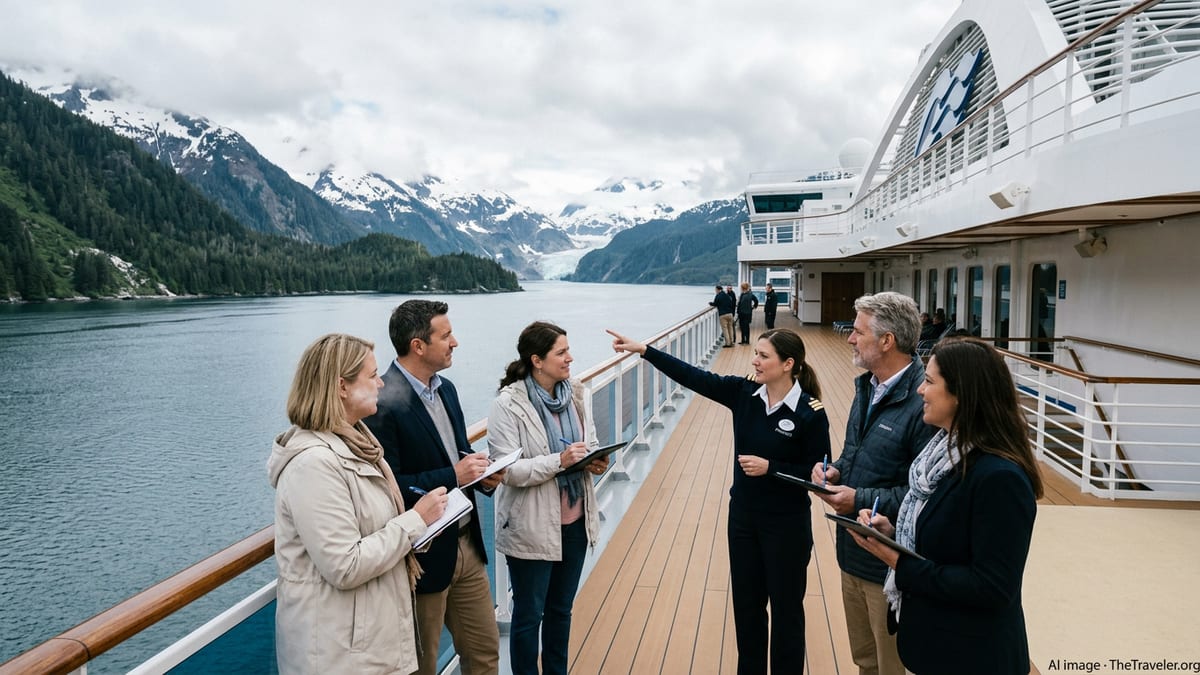
A Strategic Alliance Born in Alaska
Princess Cruises and The Travel Institute have confirmed a new, year-long strategic partnership centered on advisor education, timed to coincide with the cruise line’s expanding Alaska program and the upcoming debut of Star Princess in the region. While the agreement was rolled out without fanfare to consumers, it is being closely watched inside the trade as a potential model for how cruise lines structure future sales relationships.
The alliance focuses on three pillars for travel advisors: formal education, deeper engagement with the brand and new recognition and reward mechanisms tied to professional credentials. Executives from both organizations framed the deal as an investment in the long-term health of the advisor channel rather than a short-term promotion.
The Travel Institute, a long-standing nonprofit educator for travel professionals, will work directly with Princess to ensure course content reflects the realities of selling modern cruise product, particularly in Alaska. For Princess, the move provides a pipeline of better-trained advisors who are more likely to steer clients toward itineraries and experiences that fit their needs, improving satisfaction and repeat business.
Industry observers note that such tightly aligned, curriculum-based partnerships between a major global cruise brand and an independent education body have been rare. By starting in a single marquee destination and tying the initiative to a new ship, Princess is effectively using its Alaska portfolio as a laboratory for a new approach to trade sales.
Advisor Perks Tied Directly to Professional Education
At the core of the agreement is a suite of tangible perks designed specifically for advisors who commit to structured learning. Princess will collaborate on The Travel Institute’s new Alaska Destination Specialist Course, set to launch in the second quarter of 2026, with content that reflects the cruise line’s extensive deployment in the region and its onboard destination programming.
Crucially, Princess is backing the educational push with money. The company will fund scholarships for TRIPKIT, The Travel Institute’s entry-level training for new-to-industry advisors, as well as its advanced certification ladder, including the Certified Travel Associate, Certified Travel Counselor and Certified Travel Industry Executive designations. That financial support lowers the barrier for both newcomers and experienced sellers to invest in deeper cruise expertise.
The alliance also integrates existing Princess training into the wider certification ecosystem. Advisors who complete the Princess Commodore Program, the top tier within the line’s proprietary academy, will now earn continuing education units that can be applied toward maintaining Travel Institute certifications. That linkage effectively turns brand training, which many advisors already complete for product knowledge and sales incentives, into recognized professional development currency.
In addition, Princess is introducing an opt-in booking incentive exclusively for graduates who hold Travel Institute certifications. While specific terms were not disclosed, the program is expected to layer extra earning potential or rewards on top of standard commission, giving certified advisors a direct financial reason to prioritize Princess when matching clients to cruises.
Why Alaska Is the Testbed for a Global Shift
The decision to anchor the alliance in Alaska is no accident. The destination remains one of the most hotly contested arenas in cruising, with multiple brands adding capacity and new hardware to capture first-time cruisers and repeat guests alike. Star Princess, scheduled to enter service with Alaska sailings, provides a fresh marketing hook for both advisors and consumers.
For travel advisors, Alaska also demands more specialized knowledge than many warm-weather itineraries. Clients often need guidance on shoulder-season conditions, wildlife viewing windows, one-way versus roundtrip sailings and the logistics of combining cruise and land tours. By contributing to an independent Alaska specialist course, Princess is betting that better-trained advisors will not only sell more confidently but will also steer clients toward itineraries where the line’s product strengths are most evident.
If the concept proves successful in Alaska, executives and analysts expect similar frameworks could roll out for other key cruise regions. Caribbean, Europe and world-cruise segments all rely heavily on advisor recommendations, and a standardized way to translate line-specific training into broadly recognized professional credit could become a new industry norm.
Other cruise brands have invested in in-house academies and destination programs, but few have gone as far as formally tying those efforts to an external credentialing body. That is why competitors are likely to watch closely how much incremental Princess business flows from advisors who move through the new Alaska course and associated incentives.
Rewriting the Playbook for Cruise Sales Worldwide
The Princess and Travel Institute partnership lands at a moment when the role of the travel advisor is once again in flux. Advisors emerged from the pandemic as critical interpreters of complex health regulations, air disruptions and changing supplier policies. At the same time, direct online sales and large membership retailers have continued to chip away at traditional commissionable bookings.
By directly underwriting advisor education and awarding perks based on certifications, Princess is effectively signaling that professionalized, relationship-driven advisors are central to its long-term sales strategy. That stance contrasts with models that focus primarily on price-driven distribution or opaque loyalty offers aimed at end consumers.
If the Alaska initiative delivers measurable gains, pressure may build on other cruise lines to match or exceed the depth of their trade education partnerships. Travel agency leaders say that could trigger a new phase of competition, not just on onboard product and pricing, but on how generously suppliers invest in the skills and earning potential of the advisors who sell their cabins.
For The Travel Institute, the alliance adds fresh relevance to its certification tracks in a crowded marketplace of supplier-run e-learning platforms. For Princess, it creates a differentiated story to tell high-performing agencies and networks: that the line is willing to put dollars and booking advantages behind advisors who treat cruising as a serious, education-backed specialty.
Implications for Frontline Advisors and Their Clients
For working travel advisors, the new alliance translates into a mix of carrots and expectations. Those who already embrace formal training will find that time spent inside the Princess academy now carries added weight in maintaining credentials and qualifying for exclusive incentives. New entrants, meanwhile, may find that scholarships and sponsored webinars lower the cost of getting up to speed on cruise product, especially in Alaska.
The partnership also underscores a broader trend in the trade: suppliers rewarding specific behaviors rather than raw sales volume alone. Completing courses, attending webinars and holding recognized certifications are increasingly tied to better commission tiers, marketing support and access to limited-availability events. Princess’s decision to attach a booking incentive specifically to certified Travel Institute alumni reinforces that shift.
For travelers, the impact is likely to be felt indirectly. Clients who work with advisors engaged in the new education programs should encounter more detailed destination guidance and more transparent explanations of cabin categories, onboard inclusions and itinerary trade-offs. In theory, that could reduce post-cruise dissatisfaction and elevate the perceived value of a Princess Alaska sailing versus a competing product.
While the announcement itself may have been quiet, its implications are expansive. By entwining destination expertise, third-party certification and exclusive financial perks, Princess Cruises and The Travel Institute are testing a new template for how cruise sales are cultivated. If it takes hold, the deal that started in Alaska could influence how travel advisors worldwide are trained, rewarded and ultimately how millions of future cruise vacations get sold.