

More news on this day
Bleary-eyed travelers facing overnight delays and long layovers at Miami International Airport now have a radically more comfortable option: a brand-new sleep center of private rooms designed to replace hard benches and noisy gate areas with real beds, hot showers and quiet, personal space.
Get the latest news straight to your inbox!
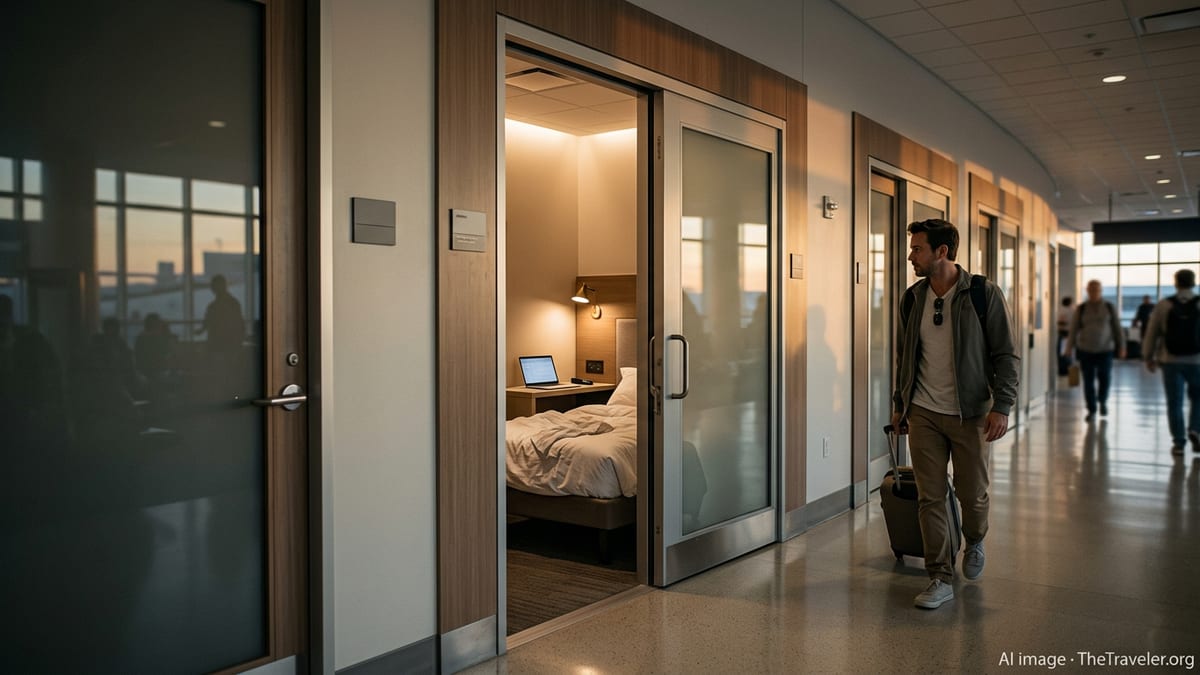
Miami’s First-Ever In-Terminal Sleep Center Opens
Miami International Airport has officially joined a growing global trend by unveiling its first dedicated sleep center, offering private rooms by the hour to passengers who want to rest between flights. Airport officials cut the ribbon this week on the new facility inside the terminal complex, describing it as a direct response to years of complaints about crowded gates and scarce quiet spaces for stranded travelers.
The opening follows a multi-year process by Miami-Dade County to bring short-stay sleep infrastructure into the airport, after commissioners approved a sleep-center concession expected to generate new nonairline revenue for MIA. The concept was pitched as a step beyond basic sleeping pods, replacing the cramped capsule model with compact rooms that feel closer to a small hotel space than a futuristic coffin.
Located in the airport’s busy North Terminal, the first sleep center is positioned near American Airlines’ main hub operations, where delays and missed connections regularly leave passengers on the concourse overnight. Officials say the goal is to provide a safe, quiet and climate-controlled alternative to sleeping on the floor or staying awake all night in crowded waiting areas.
The launch places Miami alongside major U.S. hubs that already offer similar pay-per-use sleep facilities, and it arrives as the airport undergoes a sweeping, multibillion-dollar modernization aimed at improving comfort and capacity through the 2030s.
What the Private Rooms Actually Look and Feel Like
Unlike traditional airport lounges, the new facility is built around fully enclosed private rooms with a door, walls and space to move around. Each room is compact but functional, with a proper bed or convertible sofa-bed, a workstation with desk and chair, power outlets within easy reach and adjustable lighting to allow for everything from sleep to laptop work.
Several rooms are configured with access to private showers, with fresh towels and basic toiletries available for purchase. Travelers can step off a long-haul flight, take a hot shower, change clothes and rest in a dark, quiet room before reentering the terminal. For long-haul passengers arriving from overnight flights to connect elsewhere in the United States or Latin America, that combination of sleep and a shower is expected to be one of the most in-demand features.
The environment is intentionally minimalist: neutral colors, sound-dampening materials and no sweeping runway views to tempt onlookers to linger. Instead, the focus is on privacy and recovery, with in-room entertainment provided via flat-screen TV and reliable high-speed Wi-Fi for those who need to work or stream content.
Access is controlled by reservations and timed entry, minimizing foot traffic and noise in the corridor. Check-in is designed to be largely self-service, allowing travelers to scan a code, enter, and close the door behind them within minutes of arriving at the center.
Pricing, Booking and How Long You Can Stay
The new sleep rooms operate on an hourly pricing model, broadly in line with similar concepts at other large U.S. hubs. Airport documents and concession agreements indicate that the business case assumes rates around the cost of a midrange hotel stay when calculated on a per-night basis, but with the flexibility to book as little as one hour at a time.
Travelers can typically reserve a room in advance through the operator’s website or app, or walk up and check availability on the spot during a layover. Dynamic pricing may apply during peak travel periods and overnight hours, when demand for quiet space tends to spike. Airport officials have framed the service as an optional premium amenity, not a budget alternative to sleeping in the terminal, with the emphasis on comfort, safety and convenience.
Stays are generally capped at about eight hours, making the rooms ideal for long layovers, red-eye recovery or extended delays rather than multiday stays. Some rooms are expected to be marketed toward business travelers needing a secure place to take calls, attend virtual meetings or work privately between flights.
For passengers weighing their options, the sleep center sits in a niche between a traditional day room at an airport hotel and a crowded airline lounge. It costs more than a coffee and a seat at the gate, but less time and hassle than leaving the terminal for a hotel, especially for travelers without U.S. entry clearance or tight connections.
Why Miami Is Betting on Sleep Rooms Now
Miami International Airport has long been one of the world’s busiest gateways for flights between North America, Latin America and the Caribbean, with a particularly heavy schedule of overnight and early-morning services. That traffic pattern has produced a steady flow of passengers forced into extended layovers, misaligned connections and irregular operations when storms or air-traffic disruptions hit South Florida.
Until now, those travelers had few in-terminal options beyond the airport’s hotel, which does not typically sell rooms by the hour, or a patchwork of airline lounges with strict access rules and limited capacity. Sleep-focused infrastructure was a glaring gap compared with competitors in New York, Atlanta, Dallas and international hubs that have embraced short-stay cabins and suites.
County officials have framed the new sleep center as part of a broader strategy to upgrade hospitality and amenities while capturing more revenue from nonaviation services. The sleep rooms are expected to generate significant concession income over the life of the contract, while enhancing MIA’s reputation among high-value passengers such as business travelers and premium leisure customers.
For airlines, the facility offers a new tool for handling distressed passengers during mass delays or cancellations. Instead of distributing blankets and directing people to public seating, carriers may be able to steer some customers toward subsidized access to private rooms, reducing congestion at gates and easing pressure on customer-service desks.
How to Find the Sleep Center and Who It’s Best For
The first sleep center at Miami International is located in the North Terminal, in the vicinity of Concourse D, home to the airport’s largest concentration of domestic and international flights. Signage within the terminal directs passengers toward the facility, and it also appears in airport maps and mobile-app listings under services such as “sleep,” “rest” or “private rooms.”
Because security rules in the United States do not allow non-ticketed visitors beyond checkpoints, the rooms are reserved for ticketed passengers and airline crew members who are already inside the terminal. That makes the center particularly valuable for travelers on tight layovers who cannot afford to exit the airport and re-clear security to reach an off-site hotel.
The service is aimed squarely at long-haul and overnight travelers, but airport officials expect a broad mix of users: business passengers seeking a quiet office with a door, parents traveling with young children who need a dark room for a nap, and airline crews between duty periods. Even regional and domestic travelers facing long delays during summer storms or winter disruptions could find the rooms a worthwhile upgrade.
With the first sleep center now open and a second planned for the South Terminal in the coming phases of the project, Miami is signaling that the age of improvising sleep on terminal floors may finally be coming to an end. For many exhausted flyers, a private bed, a hot shower and a closed door inside the airport itself could turn “layover hell” into something much closer to a controlled, if still unexpected, pause in the journey.