

More news on this day
A planned river cruise hub at the Port of Walla Walla is emerging as one of the Pacific Northwest’s most closely watched tourism projects, promising to connect Columbia and Snake River itineraries more directly with southeastern Washington’s wine country and small-town destinations from 2027 onward.
Get the latest news straight to your inbox!
A Strategic Shift on the Columbia and Snake Rivers
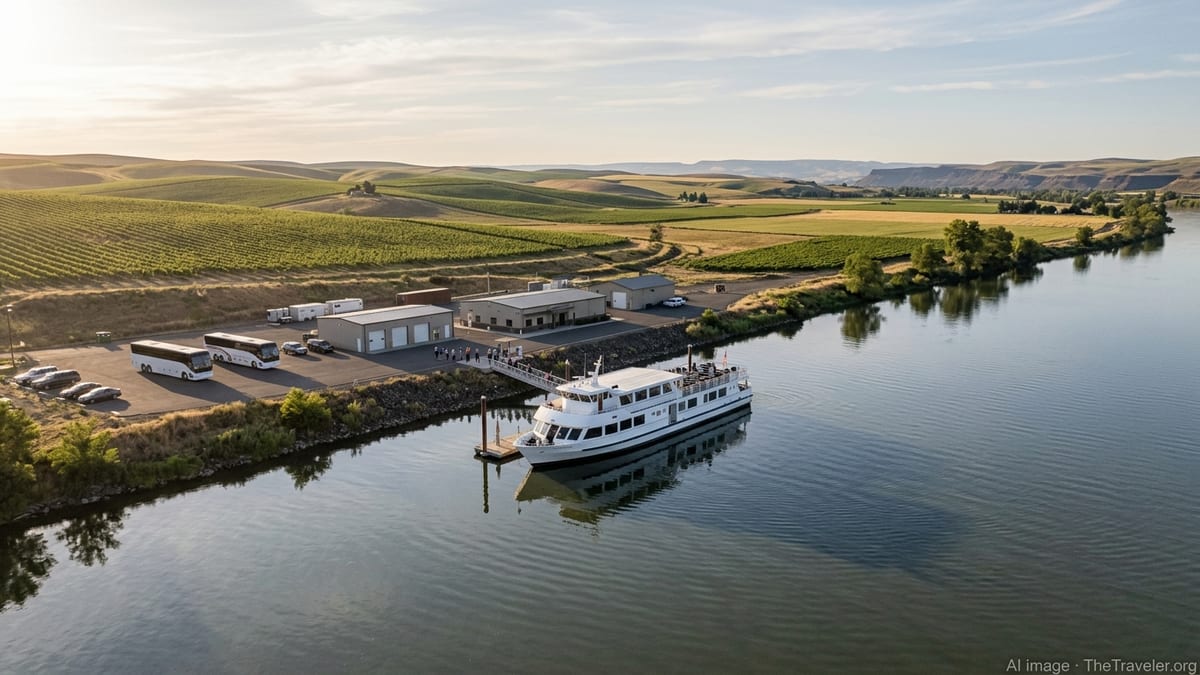
Publicly available port planning documents indicate that the Port of Walla Walla has been advancing marine infrastructure at its Burbank properties along the Snake River, including projects described as high dock and barge facilities. While historically focused on bulk cargo, the location sits at a key junction where Columbia and Snake River cruise itineraries already bring visitors within day-trip range of Walla Walla’s wineries and historic downtown. The emerging concept of a more formalized river cruise hub builds on that geography, aiming to turn what has often been a side excursion into a primary gateway.
At the same time, national small-ship cruise operators continue to expand their Columbia and Snake River offerings. American Cruise Lines, for example, has promoted longer Grand Columbia and Snake River itineraries for 2027 that spotlight Walla Walla Valley vineyards and cultural attractions as marquee experiences along the route. Industry materials emphasize the appeal of docking within reach of Washington’s wine country and using smaller vessels to access less congested ports than major coastal terminals.
If the Port of Walla Walla evolves current marine upgrades into a dedicated river cruise hub, it would position the region alongside other Pacific Northwest gateways such as Clarkston and Washougal, which already host regular calls by river cruise vessels. In practice, that could mean more ships regularly turning, provisioning, and embarking passengers in the Walla Walla area instead of relying solely on downriver ports or distant airports.
For regional planners, the timing aligns with broader forecasts that river cruising in North America will grow through the second half of the decade, supported by aging demographics, demand for slow travel, and interest in wine-focused itineraries. Industry observers note that an additional embarkation or turnaround port on the inland rivers could help spread traffic and offer new packaging options for tour operators.
Tourism Impacts in 2027 and the Years That Follow
By 2027, a functioning cruise-oriented river terminal at the Port of Walla Walla would likely begin to shift how visitors move through southeastern Washington. Instead of arriving predominantly by car or via connecting flights from Seattle to Walla Walla’s regional airport, a larger share of leisure travelers could step ashore directly from river vessels, often for multi-night pre- or post-cruise stays. Travel industry experience from other small ports suggests that this pattern can drive demand for boutique hotels, tasting rooms, and guided experiences that cluster near historic centers.
Walla Walla’s existing reputation as a wine and food destination, with more than one hundred wineries across the valley, gives it a head start in capturing cruise-related spending. Tour programs already marketed on Columbia and Snake River itineraries highlight vineyard visits, downtown tasting walks, and cultural institutions connected to tribal and pioneer history. A formal hub would make these excursions more logistically straightforward and could encourage cruise lines to extend time in port, including overnights that send guests into local restaurants for dinner rather than keeping them aboard.
Over the longer term, local businesses may see changes in seasonality as well as volume. River cruise schedules tend to follow shoulder and peak travel periods from spring through fall, which could reinforce existing high seasons in the valley but also fill gaps in early spring and late autumn when traditional drive-market traffic is thinner. Lodging operators and activity providers could adapt by aligning staffing and event calendars more closely with cruise call patterns published months in advance.
There may also be indirect benefits for nearby communities in the Tri-Cities and along the lower Snake River, where shore excursions to regional parks, waterfalls, and agricultural attractions are already part of the river cruise mix. A Walla Walla-based hub could make it easier to bundle these locations into pre- and post-cruise touring circuits, drawing visitors deeper into rural parts of southeastern Washington.
Connectivity, Infrastructure, and Environmental Considerations
For the Port of Walla Walla, transforming a working riverfront into a true cruise hub will hinge on transportation links and passenger handling facilities as much as on docks and moorage. Planning materials from recent years outline broader infrastructure ambitions in the Burbank area, including road and rail improvements. To support regular cruise turnarounds, the port and its partners would need to coordinate motorcoach staging, luggage handling, parking, and wayfinding that can move several hundred passengers at a time between ships, hotels, and regional airports.
Air connectivity remains a key factor. Walla Walla already benefits from its role in statewide tourism marketing, which has promoted air links via Seattle-Tacoma International Airport to the local regional airport. As cruise lines promote itineraries that feature Walla Walla wine country more prominently from 2027 onward, tour operators are likely to package fly-cruise combinations that use both the river hub and these air connections, giving travelers more options for short, high-value stays.
Environmental and community impacts are also likely to draw increasing attention. The Columbia and Snake River system supports critical fish runs, irrigation, and hydropower, and any intensification of tourism activity must align with evolving conservation goals and navigation management. Industry trends point toward smaller, more efficient river vessels and tighter regulations on emissions and waste handling, which may become prerequisites for long-term berthing agreements at sensitive inland ports like Walla Walla’s.
Local residents may weigh the benefits of visitor spending against concerns about congestion, waterfront access, and housing pressure, debates that have surfaced in other Pacific Northwest destinations as tourism has grown. Early engagement through public planning processes, along with clear information on projected ship calls and passenger volumes, will likely shape how the hub is perceived and how its footprint is managed once operations scale up.
Positioning Walla Walla in the Pacific Northwest Tourism Network
In the broader Pacific Northwest tourism landscape, a river cruise hub at the Port of Walla Walla would fill a geographic gap between coastal ports such as Seattle and Vancouver, inland gateways like Spokane, and existing river terminals at Clarkston and along the Columbia Gorge. It would give tour designers another anchor point around which to build themed itineraries that combine wine, outdoor recreation, and cultural history across Washington and Oregon.
Tourism boards already promote Walla Walla as part of statewide road-trip and wine-trail campaigns. Integrating cruise arrivals would extend that strategy onto the waterways, where passengers might experience the region first from the deck of a ship, then from the sidewalks of downtown or the rows of a vineyard. For many, this multimodal experience aligns with current preferences for slower, more immersive travel rather than quick, single-stop visits.
Looking beyond 2027, the success of a Walla Walla cruise hub could influence investment decisions elsewhere on the inland river system. Other small ports may assess whether to court similar traffic, upgrade docks, or position themselves as specialty stops focused on nature, heritage, or specific agricultural products. In that sense, Walla Walla’s evolution from cargo-focused riverfront to mixed-use tourism gateway could become a model for how interior communities adapt to changing patterns in North American cruise travel.
For now, the combination of port-side infrastructure planning, expanding river cruise itineraries, and a well-established wine and culture brand suggests that Walla Walla is poised to play a larger role in Pacific Northwest tourism. As 2027 approaches, travelers watching the region’s rivers may find that a once quiet stretch of the Snake has become a new doorway into Washington’s interior.