

More news on this day
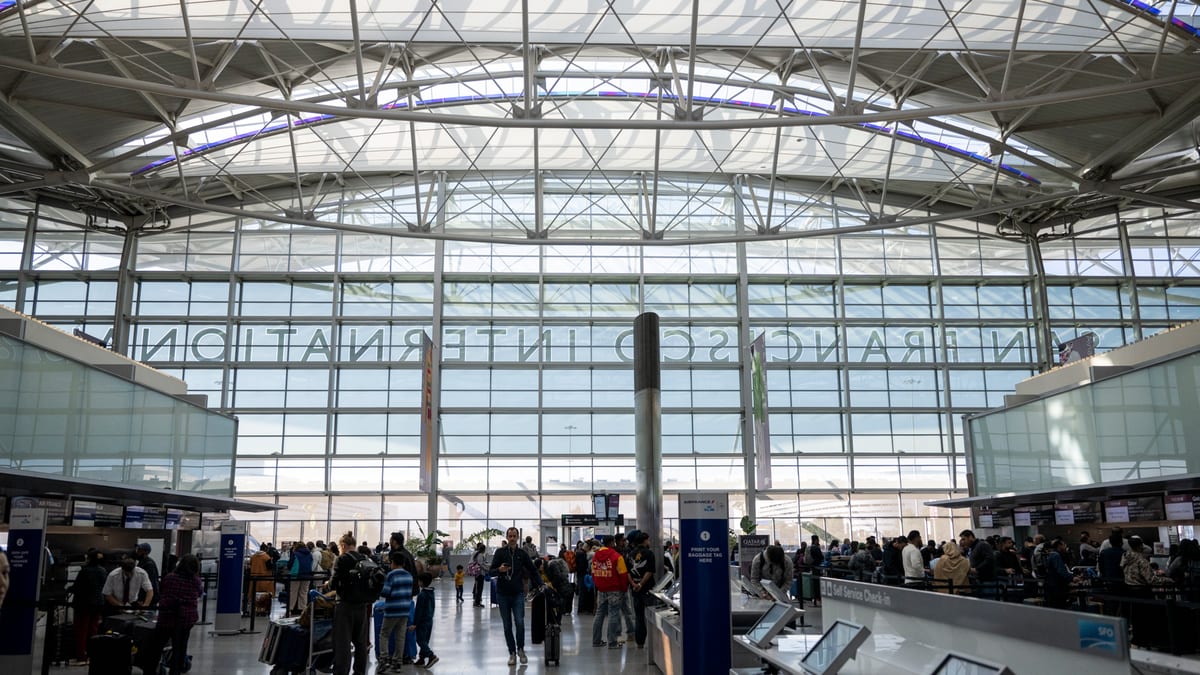
San Francisco International Airport is entering one of its most disruption-prone periods in years, as a six-month runway closure, tighter federal safety rules on landings and rail construction near the airport combine to increase the chances of delays for Bay Area travelers through early October 2026.
Get the latest news straight to your inbox!
Runway 1R Closure Will Shrink Capacity Through October
Publicly available airport notices show that San Francisco International plans to close Runway 1 Right from March 30, 2026, through October 2, 2026, to repave the surface and upgrade adjacent taxiways and lighting. The work is part of a broader airfield rehabilitation program aimed at keeping one of the nation’s busiest hubs in compliance with federal safety and pavement standards.
During the closure, arrivals and departures that would normally use Runway 1R are expected to shift primarily to the main 28L and 28R runways, which already handle most of SFO’s traffic. Airport planning materials and local news coverage indicate that Runway 1 Left, which parallels the construction zone, will be converted into an additional taxiway to help manage congestion on the ground instead of carrying regular takeoffs and landings.
Airport projections cited in recent coverage suggest that, based on construction alone, roughly 10 percent of flights could see delays of up to 30 minutes, particularly during peak periods around midmorning and in the late evening departure banks. The impact will not be evenly distributed: flights scheduled at off-peak hours may see relatively minor effects, while tightly timed connections during the busiest banks could be more vulnerable to knock-on delays.
Federal aviation construction outlook documents list the project as bringing “reduced capacity and greater delay impact,” a reminder that repaving critical infrastructure at a high-volume hub almost inevitably leads to slower throughput. Travelers who routinely see SFO recover from bad weather or routine congestion may notice that the airfield has less flexibility this year when one more runway is off the table.
New FAA Safety Rules Cut Arrivals per Hour
Compounding the construction-related squeeze, a new Federal Aviation Administration rule is now reducing the number of planes allowed to land at SFO each hour. National and Bay Area outlets report that the FAA has decided to limit arrivals to 36 per hour, down from the previous cap of 54, after reassessing the risks of closely spaced parallel landings at the airport’s north-south runways.
Historically, SFO has depended on the ability to conduct simultaneous approaches on runways that sit only about 750 feet apart, a configuration that helps squeeze more arrivals into short periods but leaves little margin for error in the region’s crowded airspace. Under the new rules, that long-standing practice is being curtailed, at least during the period when one of the north-south runways is closed for work.
Coverage of the change indicates that the FAA’s decision is tied both to the construction at SFO and to an agency-wide focus on runway safety after a series of high-profile incidents nationwide. While the rule is formally framed as a permanent adjustment to procedures at San Francisco, the most acute impact is expected while Runway 1R is unavailable and traffic is funneled onto fewer operational surfaces.
Airport forecasts cited in recent reporting suggest that the combined effect of construction and the new arrival cap could push delay rates among arriving flights to around 25 percent, with many of those delays running 30 minutes or longer. With United Airlines and Alaska Airlines operating large banks of flights at SFO, schedule ripple effects could spread across their networks if bottlenecks persist during busy hours.
Terminal and AirTrain Work Are Changing Passenger Flows
The runways are not the only part of SFO in flux. Terminal changes and people-mover work are also subtly reshaping how long it takes passengers to reach their gates. Harvey Milk Terminal 1, a multi-year, multibillion-dollar redevelopment effort, is now substantially complete, offering a modernized check-in hall, consolidated security, new concessions and closer integration with the AirTrain automated people mover.
At the same time, the AirTrain itself is undergoing changes that can affect walking times and transfer patterns. The Terminal 3 AirTrain station closed in late 2025 as part of a renovation of the Terminal 3 West complex and is not expected to reopen until 2027, according to project summaries. That closure means some travelers headed for certain United gates must use other AirTrain stops and walk farther through construction-affected concourses.
Separate from terminal expansions, the airport has moved ahead with new identity-verification technology at security. Biometric e-gates that verify passenger IDs are now in use at Harvey Milk Terminal 1 for travelers enrolled in certain fast-lane programs, according to technology and travel industry coverage. Early reports suggest that, while the system is intended to streamline checkpoint flows, unfamiliarity with the new process can slow some travelers during busy periods as they navigate the updated equipment.
For passengers, the practical takeaway is that extra time is wise not only because of possible airside delays, but also due to evolving landside layouts. Closed people-mover stations, relocated security checkpoints and new technology can add unanticipated minutes between curb and gate, especially for those connecting between terminals.
Ground Access: BART Construction and Service Variability
Reaching SFO may also take longer for travelers who rely on regional rail. Bay Area Rapid Transit has been rolling out a long-term project to install a modern communications-based train control system, which requires significant nighttime and weekend work on the tracks near Millbrae and the airport. A BART service notice issued ahead of a 2025 schedule change described a late-evening shuttle between SFO and Millbrae to accommodate construction, and more recent regional news coverage indicates that riders between Millbrae, San Bruno and SFO should expect slower evening trips through 2026.
Past reporting shows that technical problems have already led to full suspensions of service in the corridor on occasion, with riders pushed to local bus routes during unplanned outages. While those incidents are not part of the planned construction schedule, they highlight how fragile the link can be when infrastructure is under heavy maintenance pressure, leaving little redundancy for airport-bound passengers.
BART’s broader effort to rework its timetable around post-pandemic travel patterns has generally increased access to SFO during daytime hours, but the overlay of train control construction means that late-night and weekend riders may face longer headways and more transfers. Public documents and news coverage emphasize that these changes are expected to last at least through the current construction phase, and riders are being encouraged to check schedules close to departure.
For flyers, the risk is less about missing a single specific train and more about the loss of slack in the journey. When trains come less frequently, disruptions on the rail side can compound the airport’s own delay environment, especially for travelers attempting to catch early morning or late evening departures during SFO’s busiest construction windows.
What Travelers Can Do To Reduce Disruption Risk
Given the combination of runway work, federal safety limits and rail construction, aviation analysts and local coverage suggest that travelers treat SFO as an airport with reduced resilience through at least early October 2026. Booking patterns, connection times and even the choice of ground transport can influence how exposed an itinerary is to the new constraints.
Morning and late-evening departure banks are expected to face the most strain, particularly on days when fog or strong winds already constrain operations. Opting for midday flights when possible, building in longer connection windows and avoiding last flights of the day on key routes may help reduce the risk of missed connections or overnight disruptions. Passengers connecting through SFO from shorter regional hops could also consider whether a slightly earlier inbound flight provides a buffer against cascading delays.
On the ground, publicly available information from transit agencies underscores the value of real-time checks on BART status and alternative options such as airport shuttles, app-based ride services or the emerging autonomous taxi programs that are being gradually introduced at SFO under city and airport permits. While those alternatives can be more expensive than rail, they may offer greater predictability at times when track work or unplanned outages affect the airport branch.
Ultimately, the changes at SFO reflect an airport and a region investing heavily in long-term improvements while managing near-term pain. For travelers passing through in 2026, the key to avoiding the worst of that pain will be extra time, flexible planning and close attention to both flight and transit updates in the days leading up to departure.