

More news on this day
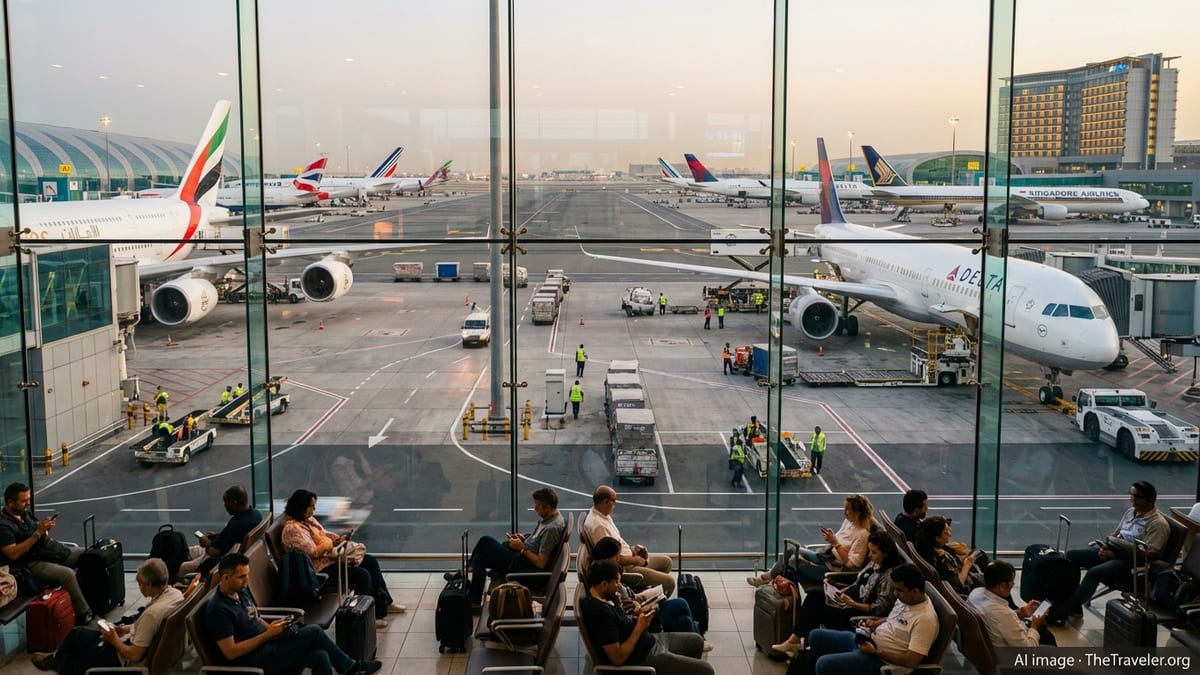
Emirates is joining British Airways, Air France, Qatar Airways, Delta, Lufthansa, Singapore Airlines, and United Airlines in embracing a new generation of aviation safety regulations that is quietly reshaping the way the world flies and travels, transforming everything from cockpit technology and crew training to airport hotels and onboard service.
A Global Safety Framework Tightens Around the Skies
The latest cycle of safety reforms is being driven by the International Civil Aviation Organization’s new Global Aviation Safety Plan for 2026–2028, paired with fresh security and air navigation strategies that aim to push the industry toward a long-term ambition of zero fatalities. National regulators are translating those plans into binding rules on everything from data-driven risk management to incident reporting, compelling leading carriers to invest heavily in new systems and procedures.
For major network airlines such as Emirates, British Airways, Air France, Qatar Airways, Delta, Lufthansa, Singapore Airlines, and United Airlines, compliance now goes far beyond periodic audits. Safety management systems, once treated as technical back-office functions, are being embedded into route planning, fleet renewal, and daily operating decisions, with boards and investors paying close attention to safety metrics as leading performance indicators.
Industry bodies are reinforcing that shift. The International Air Transport Association’s most recent safety data show that while flying remains exceptionally safe, the complexity of global operations and rising geopolitical risks demand more predictive, data-rich oversight. Airlines on enhanced safety audit registries continue to post significantly better accident rates than non-participating carriers, encouraging more governments to tie operating approvals to proven adherence to global standards.
The result is a rapidly tightening safety ecosystem in which global carriers must not only meet their own national rules but also align with a lattice of international standards, audit protocols, and shared databases designed to surface weak signals before they become incidents.
Conflict Zones, Rerouted Flights, and New Risk Calculus
Nowhere is the impact of modern safety regulation more visible than in the way airlines are navigating conflict zones and contested airspace. Recent escalations in the Middle East and ongoing restrictions over Ukraine and parts of Russia have forced carriers such as Emirates, Qatar Airways, British Airways, Singapore Airlines, and United Airlines to reroute or temporarily suspend services, often at short notice.
Under stricter risk-assessment rules, large airlines are required to continuously monitor government advisories, satellite data, and military activity, feeding that information into safety management systems that can trigger immediate flight plan changes. Even when airspace technically remains open, carriers are increasingly choosing longer, more fuel-intensive routings to maintain separation from potential threats such as missiles, drones, or navigation signal interference.
Those decisions are backed by fresh guidance from international regulators, which have ordered new work on conflict-zone risk manuals, targeting threats like Global Navigation Satellite System jamming. Airlines are expected to train pilots and dispatchers on complex contingency procedures, simulate degraded navigation scenarios, and invest in more resilient avionics to keep aircraft safely clear of danger.
The cost of that caution is substantial: longer flight times, higher fuel burn, tighter crew duty windows, and increased pressure on maintenance and scheduling. Yet for carriers positioning themselves as premium, safety-first brands, visibly conservative routing policies are becoming a competitive differentiator, reassuring passengers that risk is being managed well beyond the minimum legal threshold.
Inside the Aircraft: Batteries, Cabins, and Data-Driven Safety
While conflict zones capture headlines, some of the most consequential regulatory changes are unfolding inside aircraft cabins and cargo holds. Updated global manuals for dangerous goods and battery shipping, effective for the 2026 season, include stricter charge limits for lithium-ion batteries, new shipping classifications for hybrid vehicles, and detailed guidance on passenger use of power banks and spare batteries on board.
Airlines including Emirates, Delta, Lufthansa, and Singapore Airlines are rolling out revised cabin crew briefings, more prominent gate and in-flight announcements about portable electronics, and enhanced screening of carry-on and checked baggage to catch undeclared batteries. Ground staff are being retrained on updated checklists, while cargo teams adopt new digital tools to classify and track battery shipments in real time.
At the same time, safety regulators are pressing carriers to take fuller advantage of data flowing from modern aircraft and operations. Large airlines are expanding flight data monitoring programs, correlating hard landings, tail strikes, turbulence encounters, and runway excursions across fleets and regions. Advanced analytics and, increasingly, artificial intelligence are being used to identify patterns that might signal training gaps, airport infrastructure issues, or procedural drift long before an incident occurs.
This deeper integration of technical regulation and operational data is changing cockpit and cabin culture. Line pilots and flight attendants at airlines such as British Airways, Qatar Airways, and United Airlines are encouraged to submit de-identified safety reports through user-friendly apps, with management promising non-punitive responses. The regulatory push is clear: a strong reporting culture is now as essential as new hardware or software in keeping passengers safe.
From Runway to Reception Desk: Hospitality Feels the Impact
The ripple effects of tougher aviation rules are increasingly felt on the ground, especially across the hospitality sector that depends on seamless global connectivity. As airlines reprofile networks to sidestep risky airspace and comply with new safety-driven slot and staffing constraints, flight timings into major hubs from Dubai and Doha to London, Paris, Frankfurt, Singapore, Atlanta, and Chicago are shifting.
Airport hotels and city properties that serve long-haul transfer passengers are adapting quickly. With airlines building more buffer time into schedules to manage potential delays from airspace congestion or heightened security checks, late-night arrivals and daytime layovers are becoming more common. Hoteliers are responding with more flexible check-in and check-out policies, short-stay room packages, and enhanced quiet zones to accommodate exhausted travelers between flights.
Travel demand remains robust, but guests are more aware of safety as part of the overall journey. Hospitality brands are coordinating more closely with airline partners and ground handlers on real-time disruption alerts, allowing front-desk teams to anticipate surges of rerouted or delayed passengers. In some markets, upscale hotels are marketing proximity to safer, better-equipped airports as a selling point for corporate and high-end leisure clients.
For destinations that rely heavily on long-haul connectivity, such as major European capitals and Gulf hubs served by Emirates, Qatar Airways, and their rivals, the interplay between safety-driven schedules and local tourism strategies is becoming a central planning issue. Tourism boards are working alongside airports and airlines to ensure that heightened safety measures do not translate into a fragmented visitor experience upon arrival.
Safer Journeys and a New Definition of Premium Travel
As safety regulations evolve, the definition of premium air travel is changing. Beyond lie-flat seats and signature menus, travelers now expect transparent communication about safety decisions, from why their flight is taking a longer route to how lithium batteries are managed onboard. Leading carriers are incorporating safety messaging into customer apps, pre-trip emails, and in-flight announcements, framing regulatory compliance as part of a broader commitment to passenger well-being.
Frequent flyers are responding by scrutinizing safety records, audit participation, and incident histories when choosing airlines, especially on routes that cross sensitive regions. This shift aligns commercial incentives with regulatory goals: carriers that invest most aggressively in safety culture and technology can justify higher fares and foster loyalty among risk-conscious travelers.
For Emirates and peers such as British Airways, Air France, Qatar Airways, Delta, Lufthansa, Singapore Airlines, and United Airlines, the strategic bet is that elevated safety standards will ultimately support rather than suppress growth. Regulators are signaling that future approvals for new routes, aircraft types, and innovative services will hinge on demonstrable, data-backed safety performance.
In that sense, the current wave of aviation law and safety reform is less a constraint than a new operating baseline. Airlines that embrace it are not only protecting passengers and crews but also helping to sustain the confidence that underpins the global travel and hospitality economy.