

More news on this day
A fresh wave of connectivity between Singapore and Hangzhou is emerging as airlines restore and expand non-stop services, raising expectations that the new capacity will fuel tourism to the Chinese “lake city” and strengthen links between Southeast Asia and China’s booming Yangtze River Delta.
Get the latest news straight to your inbox!
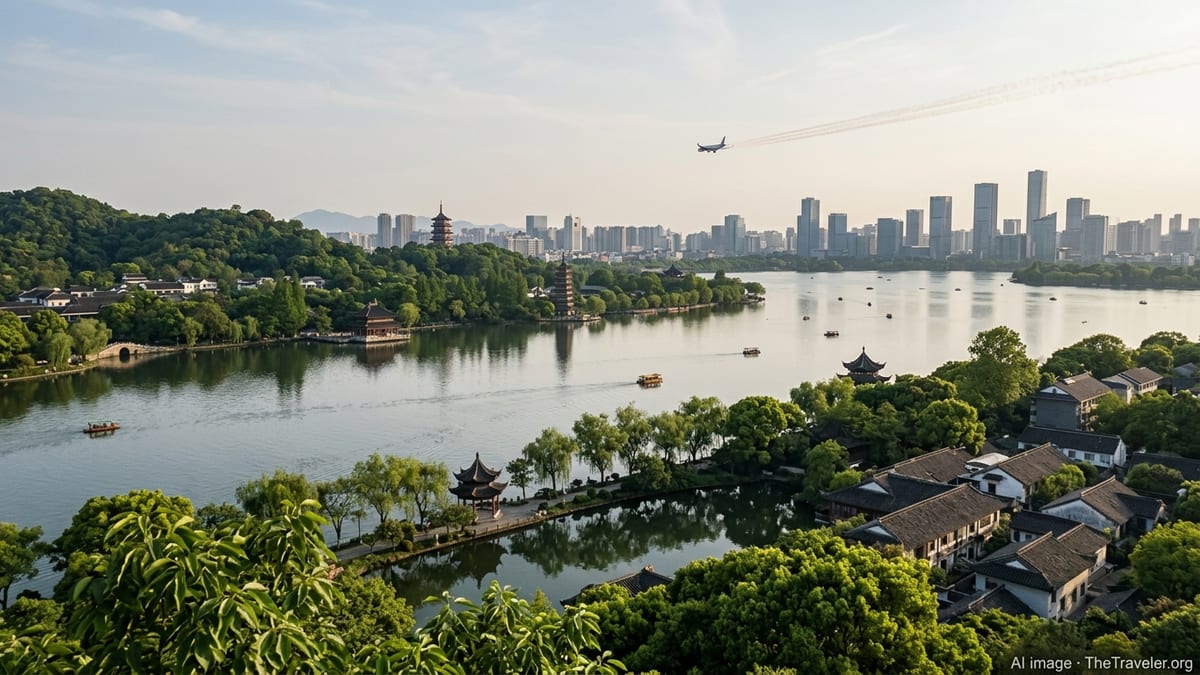
Non-Stop Links Return Between Singapore and Hangzhou
Recent schedule updates show airlines reactivating and reshaping non-stop flights between Singapore Changi Airport and Hangzhou Xiaoshan International Airport, turning a once-fragmented connection into a more straightforward city pair once again. Industry data indicates that carriers have shifted some one-stop, tag-on services to dedicated non-stop operations, signalling renewed confidence in point-to-point demand between the two hubs.
Chinese carrier Loong Air has been among the operators adjusting its network. According to specialist aviation schedule trackers, the airline is transitioning its Hangzhou–Zhangjiajie–Singapore routing into a direct Hangzhou–Singapore service during the first months of 2026, using single-aisle aircraft on multiple weekly frequencies. Similar adjustments by other airlines suggest that non-stop capacity on the route is set to climb from early 2026 as networks are fine-tuned for post-pandemic travel patterns.
Singapore-based low-cost operator Scoot has also been steadily rebuilding its presence in eastern China after earlier increases in services to cities such as Hangzhou in 2023. Publicly available timetables and airport information indicate that Scoot’s flights, together with services by full-service partner Singapore Airlines and Chinese counterparts, will provide travellers with a mix of budget and premium options across the roughly five-hour sector.
Flight information platforms tracking the Singapore–Hangzhou route list multiple non-stop services in each direction, typically covering the journey in just over five hours. These schedules replace a period when some connections required detours or transit stops, shortening total travel time and making weekend and short-stay trips far more accessible for both leisure and business passengers.
Tourism Windfall for Hangzhou’s West Lake and Beyond
The renewed focus on direct Singapore–Hangzhou connectivity comes as Hangzhou positions itself more prominently on the international tourism map. Known for the UNESCO-listed West Lake, classical gardens and tea plantations in nearby Longjing, the city has long been promoted domestically as one of China’s most scenic destinations. Easier access from Southeast Asia is expected to draw more first-time international visitors who may previously have opted for better-connected Chinese gateways such as Shanghai or Guangzhou.
Hangzhou’s airport authorities have highlighted an expansion of international and regional links in recent seasonal schedule announcements, pointing to rising frequencies on routes to key visa-free or short-visa destinations. Within that broader growth, the Singapore corridor stands out as a high-value market, connecting affluent travellers, sizeable overseas Chinese communities and a strong meetings and incentives segment.
Travel agencies in both markets are already packaging Hangzhou into multi-city itineraries, pairing the city with Shanghai, Suzhou or nearby ancient water towns in Zhejiang province. The combination of lakefront scenery, tech-driven urban experiences and high-speed rail access across the region positions Hangzhou as a convenient base for wider exploration of eastern China, particularly for visitors arriving from Singapore who are accustomed to efficient transit and integrated transport systems.
Hotel operators in Hangzhou, particularly international brands clustered around the city’s central business districts and the West Lake waterfront, are expected to benefit from a more predictable stream of arrivals. With direct flights trimming connection times and cutting uncertainty around domestic transfers, analysts note that Southeast Asian visitors are more likely to consider short breaks or shoulder-season visits rather than limiting trips to peak holiday periods.
Changi and Xiaoshan Strengthen Their Regional Gateway Roles
The tightening air bridge between Singapore and Hangzhou is also a story of two ambitious airports reinforcing their status as regional gateways. Changi Airport has been adding Chinese secondary and tertiary cities back into its network as travel demand recovers, while positioning itself as a key hub for traffic between Southeast Asia, Australasia and China. New and restored routes to cities such as Ningbo and Dali show how Chinese carriers and Singapore-based airlines are jointly rebuilding connectivity across the region.
On the Chinese side, Hangzhou Xiaoshan International Airport has rolled out new domestic and international routes and invested in improved transfer facilities, including an international transit hall designed to support smoother connections. Local government updates on seasonal schedules point to additional domestic links to smaller Chinese cities, which in turn make it easier for international passengers to use Hangzhou as a springboard to inland destinations via rapid domestic hops.
For Singapore travellers, this network effect opens up more one-stop options deeper into China via Hangzhou, especially for those who prefer a smaller, more manageable gateway compared with the mega-hubs of Shanghai and Beijing. For Chinese passengers, the upgraded Singapore connection extends their reach to Southeast Asia, Australia and Europe through Changi’s extensive onward network, often on single-ticket itineraries that simplify baggage and immigration procedures.
Both airports are also promoting more seamless ground access, with Hangzhou integrating high-speed and intercity rail links into its wider urban transport plan, and Singapore continuing to expand public transport connections to Changi. These developments are expected to support longer-term growth beyond the immediate boost provided by new or restored flights.
Policy Tailwinds and Shifting Travel Flows
Policy changes have created an additional tailwind for traffic between Singapore and Chinese cities such as Hangzhou. Since early 2024, Singapore has offered 30-day visa-free entry to Chinese passport holders, reducing friction for outbound leisure and family travel from China. In parallel, China has expanded its own list of countries eligible for short-term visa-free access, encouraging more spontaneous regional trips.
Travel and tourism analysts note that these reciprocal relaxations, combined with a strengthening Singapore dollar and the rising spending power of Chinese travellers in first and second-tier cities, are reshaping travel flows across the region. Itineraries that pair shopping and dining in Singapore with nature and heritage experiences in locations like Hangzhou are becoming more popular in online travel agency listings and social media recommendations.
Airlines operating on the Singapore–China corridor are calibrating capacity accordingly, allocating widebody aircraft during peak seasons and retaining flexible scheduling tools to respond to surges in demand around major holidays in both countries. The addition of new non-stop Singapore–Hangzhou services is widely viewed as part of this broader recalibration, aimed at capturing travellers who value time savings and direct connectivity over the lower fares sometimes available on indirect routes.
At the same time, tourism boards are intensifying their marketing efforts in each other’s markets, using co-branded campaigns that highlight city-pair experiences. Hangzhou’s iconic lakeside vistas, tea culture and digital-savvy retail scene are being positioned as a natural complement to Singapore’s urban attractions, with the new flights giving these campaigns a practical backbone.
Opportunities and Challenges for Carriers on the Lake City Route
While the new and restored Singapore–Hangzhou flights promise growth, the route is also expected to be competitive. Multiple carriers with different business models are vying for passengers, from full-service airlines that emphasise premium cabins and seamless connections, to low-cost operators targeting budget-conscious leisure travellers and visiting-friends-and-relatives traffic.
Observers note that yield management on the route may prove challenging, as airlines balance attractive introductory fares to stimulate demand with the need to maintain profitability amid fluctuating fuel costs and currency movements. Ancillary revenue streams such as seat selection, baggage, onboard meals and holiday packages tied to Hangzhou hotels and attractions are likely to play an increasing role in route economics.
Operational resilience is another focus, particularly during China’s busy travel peaks and Southeast Asia’s monsoon seasons. Airport congestion, weather-related disruptions and air traffic control constraints can quickly ripple along a relatively tight schedule, affecting on-time performance. Industry reports suggest that carriers are building additional buffers into turnaround times and exploring schedule tweaks to protect punctuality on strategic routes such as Singapore–Hangzhou.
Even with these challenges, the consensus across publicly available aviation and tourism data is that the Singapore–Hangzhou corridor is entering a new phase of maturity. As more travellers discover the convenience of non-stop flights and the appeal of combining Singapore with Hangzhou’s storied lakeside landscapes, the route is poised to become one of the key channels linking Southeast Asia with China’s dynamic eastern seaboard.