

More news on this day
A new air link between London Stansted and Paris Charles de Gaulle launching in March 2026 is set to reshape short‑haul travel between the UK and France, adding fresh capacity, sharper competition and new opportunities for leisure and business passengers planning European trips next year.
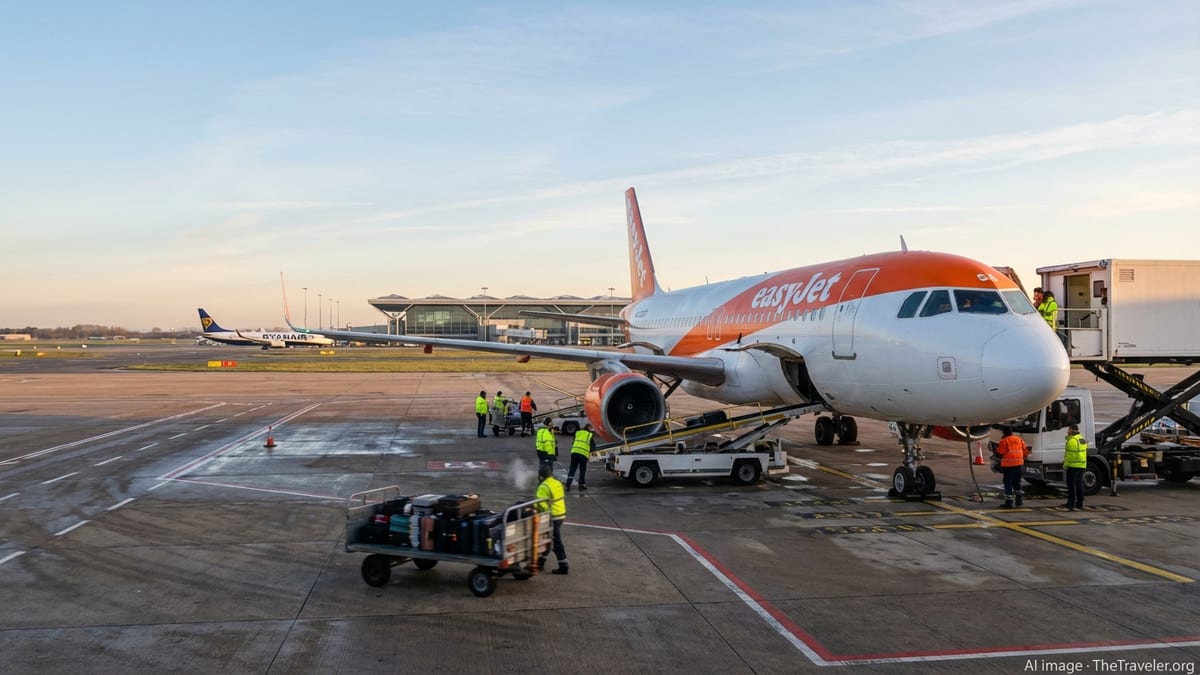
EasyJet Restores a Stansted–Paris Connection for Spring 2026
Low cost carrier easyJet will resume direct flights between London Stansted and Paris Charles de Gaulle from 5 March 2026, re‑establishing a link that has been absent from the airport’s schedule in recent years. The route joins the airline’s existing London services to the French capital from Gatwick, Luton and Southend, but is the first to specifically target the large catchment area in northeast London, Essex and the wider East of England.
The Stansted–Paris service is planned as a seasonal link for the spring and summer schedule, running through to October. Initial filings and airport announcements describe a twice weekly operation, concentrated on long weekend demand and city breaks. Flights are expected to operate mainly on Mondays and Fridays from April onwards, giving passengers the option of three or four night stays in the French capital or convenient timing for short business trips.
Fares on the new service are being marketed in typical low‑cost fashion, with lead‑in one‑way prices advertised from around the mid‑£30 range, depending on travel date and booking horizon. Travel publications monitoring early sales have reported sample one‑way fares between roughly 40 and 100 euros equivalent on popular spring and early summer dates, with some lower prices available during promotional periods.
Airport and airline executives have framed the launch as both a symbolic and a practical expansion. With Stansted steadily growing its portfolio of full‑service and low‑cost carriers, the addition of a direct link to Europe’s most visited city is being portrayed as a key missing piece for the airport’s European city break map ahead of the busy 2026 travel season.
London–Paris by Air: Intensifying Competition With Rail
The new Stansted–Paris flights are arriving in a year when the broader London–Paris travel corridor is becoming one of the most fiercely contested short‑haul markets in Europe. By spring 2026, aviation analysts expect more than 50 flights every day between the UK and French capitals, spread across five London airports and two major Paris hubs. That is in addition to frequent Eurostar high speed rail services linking central London and central Paris.
EasyJet’s decision to reinstate Stansted–Paris comes alongside Air France’s move to open a Gatwick–Paris Charles de Gaulle service from 29 March 2026. Together with existing routes from Heathrow, Gatwick, Luton, Southend and London City, the network of London–Paris flights is set to offer an array of timings, price points and airport combinations, increasing choice but also intensifying competition for passengers.
Industry observers note that airlines sense an opportunity to tempt some travellers away from rail, particularly those frustrated by high last‑minute Eurostar fares, limited availability on peak dates, or those who live closer to outlying airports than to central London rail terminals. Air services offer greater geographic reach across southeast England, even if total door‑to‑door journey times can be longer once airport transfers and security are factored in.
At the same time, Eurostar is expected to retain the majority share of point‑to‑point traffic between London and Paris, thanks to its city centre terminals and straightforward boarding process. The growth in air services is therefore widely seen as an expansion of overall travel capacity between the two countries rather than a simple zero‑sum contest with rail, particularly as tourism flows rebound and diversify heading into 2026.
Daily and Near‑Daily Options for 2026 Travellers
Though the Stansted–Paris route itself will not operate every day of the week, its integration into a dense mesh of London–Paris flights effectively gives passengers daily and near‑continuous options across the London system. Travellers who prefer Stansted for its location, parking options or existing low‑cost connections will now be able to start or end a multi‑stop European itinerary via Paris using the new easyJet link, while still having the option to combine with other London airports on separate tickets.
Schedule filings suggest that from April 2026, Fridays will be the single busiest day for London–Paris air travel, with close to 30 flights each way across all airports. Even on quieter midweek days, a traveller seeking to depart the UK capital for Paris will have a choice of early morning, daytime and evening departures, making same‑day out‑and‑back business trips or flexible leisure plans more feasible than in previous years.
For the Stansted catchment specifically, the twice weekly operation fits into a broader pattern of growing weekend‑focused connectivity. Airlines at the airport have been turning increasingly to city break oriented scheduling, clustering departures to popular European capitals on days that align with school holidays, long weekends and major events. The Paris service will sit alongside new 2026 routes to Istanbul, Scandinavian cities and Mediterranean resorts, all of which lean heavily on peak leisure demand.
While airlines have not yet indicated that Stansted–Paris will become a year‑round or daily service, aviation consultants say that strong load factors in the first operating season could persuade easyJet to extend either the season length, the weekly frequency or both in subsequent years. For now, the emphasis remains on carefully targeted capacity to test demand and manage operational risk in a market that is already heavily served from other London airports.
Boost for Tourism, Business Travel and Events in 2026
The timing of the Stansted–Paris launch is no accident. France is preparing for another significant tourism year in 2026, building on the global exposure generated by major events earlier in the decade and anticipating new visitor draws, including large‑scale theme park expansions in the Paris region. For UK travellers, the route offers a relatively low‑cost, short‑flight gateway to a destination that consistently ranks among their top choices for city breaks, romantic getaways and family holidays.
Travel trade publications note that packages built around the Stansted–Paris flights are already being promoted, with city centre hotel stays, museum passes and rail add‑ons to other French regions bundled with flights. The route is also expected to prove attractive to businesses based in the Stansted corridor, including technology firms, logistics operators and service companies that maintain close ties with partners or subsidiaries in and around the French capital.
On the French side, tourism bodies see an opportunity to tap deeper into the UK’s East of England market, an area whose residents have traditionally routed through central London or alternative airports when travelling to Paris. Direct access from Stansted shortens the overall trip for many of these passengers and may encourage more frequent short stays rather than a single longer holiday each year.
Conference organisers and events planners are likewise watching the route closely. With Paris continuing to host major international exhibitions, trade fairs and cultural festivals, having additional air links that tie directly into the wider London region could simplify group travel logistics and strengthen the French capital’s pitch for future events targeting UK participants.
Stansted’s 2026 Route Map Expands Across Europe
The new Paris link forms part of a much broader expansion of London Stansted’s route network heading into 2026. Recent announcements outline significant growth from a range of carriers, including a new high‑frequency Istanbul service from Turkish Airlines, added Scandinavian routes from Ryanair and fresh Mediterranean destinations from leisure specialists Jet2.com and TUI. Collectively, these launches are positioning Stansted as a more rounded European gateway rather than simply a base for a single dominant low‑cost airline.
Airport executives have stressed the importance of diversity in both airlines and destinations. The arrival of Turkish Airlines, for example, will connect Stansted passengers to an extensive onward network across Asia, Africa and the Middle East via Istanbul. At the same time, incremental additions like the Paris route increase the depth of choice within Europe itself, particularly for short‑haul travel where convenience and frequency are at a premium.
Analysts suggest that the strengthening of Stansted’s European city portfolio may also help rebalance traffic flows across the London airport system. As Heathrow grapples with capacity constraints and Gatwick pursues its own expansion strategies, Stansted’s ability to absorb growth in point‑to‑point leisure traffic could ease pressure on more slot‑constrained hubs while still giving airlines access to the lucrative London market.
For travellers in northern and eastern parts of Greater London, as well as counties such as Hertfordshire, Cambridgeshire and Suffolk, this shift means an increasingly compelling case to treat Stansted as their default airport. The Paris service is a high‑profile example of how the airport’s network is moving beyond a narrow selection of routes to encompass major European capitals and beyond.
Paris Charles de Gaulle’s Growing UK Footprint
On the French side of the new air link, Paris Charles de Gaulle continues to consolidate its role as a central hub in European and global aviation. The addition of Stansted to its UK portfolio deepens a network that already includes connections to Heathrow, Gatwick, Luton, Southend and London City operated by a mix of full‑service and low‑cost carriers. For Charles de Gaulle, these routes are vital feeders, funnelling UK passengers into its extensive long haul network.
Air France and its partners are in the midst of a broader strengthening of their Paris schedules, particularly on high yielding transatlantic corridors. For UK travellers connecting onward from Stansted via Paris to destinations in North America, Africa or Asia, the new route could offer an additional choice of itineraries, especially when combined with self‑connecting options and interline agreements marketed through travel agents and online platforms.
Beyond long haul connectivity, Paris’s dual airport system, with Charles de Gaulle and Orly serving different segments of the market, gives travellers options in terms of proximity to specific districts and onward transport. The Stansted link into Charles de Gaulle aligns with easyJet’s broader strategy of focusing on major metropolitan airports rather than smaller regional fields, giving passengers access to a wide range of ground transport, including high speed rail to other French cities and neighbouring countries.
French tourism officials have argued that strengthening air access from multiple UK regions is essential to sustaining visitor numbers in the face of changing travel patterns and competition from other European capitals. The Stansted connection is one element in a wider push that also includes new links from regional UK airports to French regional cities and coastal destinations.
What the New Link Means for 2026 Trip Planning
For travellers mapping out their 2026 holidays or business itineraries, the Stansted–Paris air link effectively adds another variable to consider when choosing routes, dates and budgets. Those living closer to Stansted may find that the combination of low lead‑in fares and reduced surface travel time more than offsets the limited weekly frequency, particularly for planned weekend trips booked well in advance.
Families looking at school holiday travel could see the route as an attractive option for combining the cultural draw of Paris with other regional attractions reachable by rail or car. The scheduling around long weekends is likely to prove popular for quick breaks tied to special events, anniversaries or sporting fixtures, while business travellers may focus on specific dates that match key meetings or trade shows.
Travel agents and online booking platforms are expected to respond by building Stansted–Paris combinations into suggested itineraries, highlighting the link alongside more established routes from Gatwick and Heathrow. Price‑sensitive customers may increasingly look across all London airports when searching for fares, opting for Stansted when the cost gap is significant or when the timing better suits their plans.
Ultimately, the new Stansted–Paris air link underlines how rapidly the London–Paris travel market is evolving as carriers jockey for position ahead of the 2026 peak season. For passengers, the headline takeaway is straightforward: more routes, more seats and more choice, with the Stansted catchment finally gaining a direct, low‑cost gateway to the French capital just as demand for flexible, short‑haul European travel returns to full strength.