

More news on this day
South Korea and Taiwan are preparing for a major lift in two-way tourism in 2026 as new and expanded direct flights from Taichung and Taipei to Busan promise faster journeys, stronger regional economies and closer cultural ties across the Korea Strait.
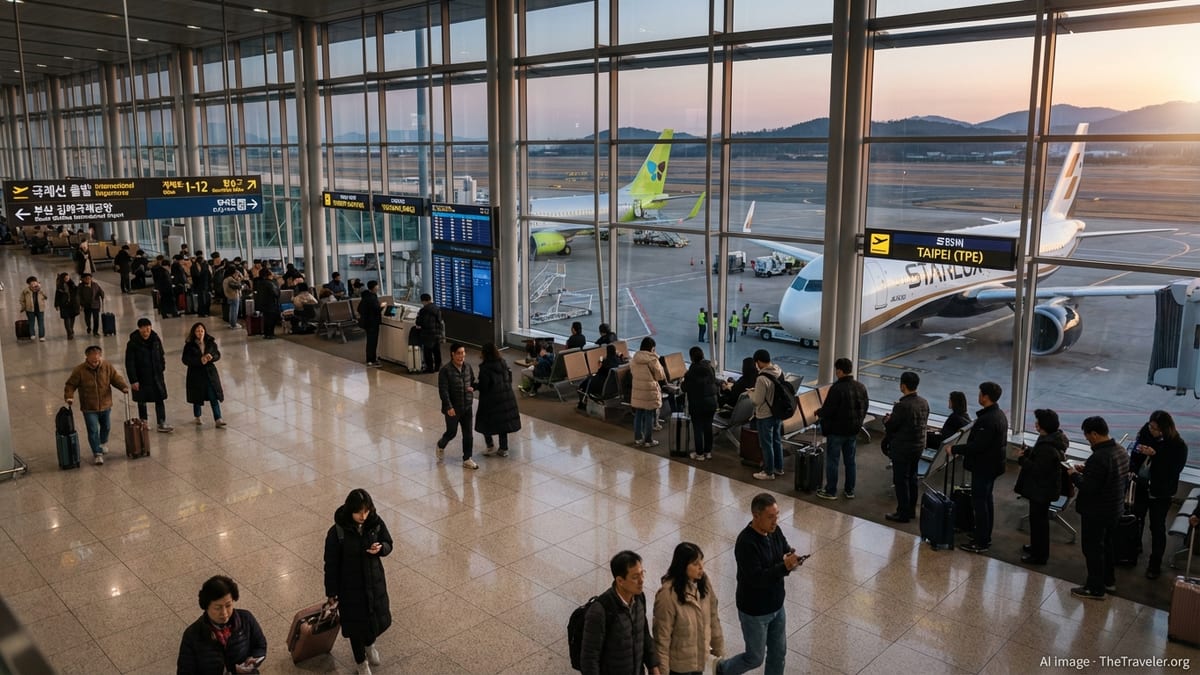
New Routes Put Busan at the Heart of Korea–Taiwan Travel
Busan is emerging as a pivotal gateway between South Korea and Taiwan as carriers outline a wave of new and expanded services for 2026. The southern port city, long popular with Taiwanese leisure travelers, is set to gain fresh links with both Taipei and Taichung, dramatically simplifying itineraries that once required transfers in Seoul or other regional hubs.
In February 2026, Taiwan-based Starlux Airlines confirmed plans to launch direct flights from both Taipei Taoyuan and Taichung to Busan beginning in early June, using single-aisle Airbus A321neo aircraft. The dual-origin strategy is designed to capture demand from northern and central Taiwan, cutting travel times and eliminating domestic connections for many passengers.
The move comes as Busan’s existing Taipei route marks 15 years as one of Gimhae International Airport’s flagship international services, already served by a dense mix of Korean and Taiwanese airlines. With Starlux and other carriers adding seats, Busan is poised to consolidate its role as South Korea’s second gateway for Taiwan traffic after Seoul.
For Taiwanese and Korean tourism officials, the new schedules are more than incremental capacity. They are being framed as a foundation for a new phase of regional cooperation built on easier short-haul travel, diversified city-pair options and a more balanced distribution of visitors beyond capital city corridors.
Taichung Gains First Nonstop Link to Busan
Among the most significant developments is the emergence of Taichung as a direct player in Korea-bound travel. Historically, travelers from central Taiwan have faced the choice of routing via Taipei or flying through secondary hubs to reach South Korea, often adding time and complexity to short leisure trips.
That dynamic will begin to change in late March 2026, when Korean low-cost carrier Jin Air inaugurates a Busan–Taichung route with five weekly flights using Boeing 737-800 aircraft. The service is scheduled to operate in the core daytime leisure window, allowing same-day hotel check-ins on arrival and convenient returns for weekend travelers.
Starlux’s planned Taichung–Busan flights in June add a Taiwan-based operator to the same corridor, creating a rare two-way competitive market at Taichung Airport for South Korea services. Aviation analysts say the combined effect could be faster fare adjustments, more promotional campaigns and increased package-tour variety for residents in central Taiwan.
For Taichung’s local government, which has spent recent years courting Korean carriers and promoting the city as a jumping-off point to Sun Moon Lake, Guguan hot springs and central Taiwan’s mountain landscapes, the new Busan link represents a visible payoff. Officials are openly targeting a new record in international passenger traffic in 2026, with Korea routes expected to anchor that growth.
Taipei–Busan Frequencies Rise to Meet Surging Demand
While Taichung makes its debut on the Busan map, Taipei is seeing its own surge in capacity as airlines readjust to robust post-pandemic demand. Taiwan’s Tourism Administration reported strong outbound figures in 2025, with South Korea ranking among the top destinations for Taiwanese travelers and short-haul regional routes leading the recovery.
Against that backdrop, network carriers and low-cost airlines alike have been adding seats on Taipei–Busan. Flag carrier China Airlines moved to extend an expanded schedule on the route through late 2025, deploying fuel-efficient Airbus A321neo jets and operating up to 18 weekly flights at peak periods to keep pace with demand.
Korean and Taiwanese budget airlines, including Air Busan, Jeju Air and others, already operate multiple daily frequencies, with new entrants such as Starlux poised to intensify competition in 2026. Travel agents in both markets say the thickening schedule is reshaping consumer behavior, making long weekend trips to Busan’s beaches, cafes and festivals as straightforward as domestic travel for many Taiwanese.
The increased choice of departure times out of Taipei, combined with connecting options via Busan to other Japanese and Southeast Asian cities, is also expected to support growing business travel and multi-country itineraries. For airlines, the Taipei–Busan corridor is evolving from a niche leisure route into a strategically important short-haul trunk line.
Tourism Boards Seize the Moment for Joint Promotion
Tourism authorities in both South Korea and Taiwan are moving quickly to leverage the new connectivity. Busan city officials and regional tourism bodies are coordinating with carriers on joint campaigns that highlight seaside attractions such as Haeundae Beach, cultural districts like Gamcheon, and Busan’s expanding calendar of film, food and music festivals.
On the Taiwan side, national and municipal tourism offices are packaging Busan with lesser-known Taiwanese destinations accessible from Taichung, encouraging Korean visitors to explore beyond Taipei. Sample itineraries under discussion pair Busan’s coastal landscapes and seafood markets with Taichung’s art museums, night markets and highland tea regions.
Industry insiders expect coordinated marketing to intensify around mid-2026, once new flights have bedded in and load factors stabilize. Travel trade fairs, familiarization trips for Korean and Taiwanese agents, and cross-border city branding initiatives are all being positioned as tools to turn additional seat capacity into lasting tourism flows.
Crucially, officials see these efforts as complementary rather than competitive with Seoul and Taipei. By adding Busan and Taichung to the mix, they argue, the bilateral tourism portfolio becomes richer, spreading visitor spending more evenly and relieving pressure on major gateways that have struggled with congestion during peak periods.
Economic and Cultural Ripple Effects Across the Korea Strait
Beyond visitor numbers, policymakers view the 2026 flight expansions as a catalyst for wider economic and cultural exchange. Busan’s role as a logistics and maritime hub makes it a natural partner for Taiwanese businesses in manufacturing and technology, and better air links are expected to dovetail with port and freight partnerships.
Regional chambers of commerce in Busan, Taichung and Taipei are planning to align business forums with the launch of new services, hoping to attract trade delegations and small and medium-sized enterprises to explore opportunities in sectors such as tourism infrastructure, creative industries and green technology.
Culturally, easier travel is likely to deepen trends already visible in both societies. Korean dramas and pop music have long drawn Taiwanese fans to South Korea, while Taiwanese cuisine, tea culture and night-market aesthetics are gaining ground in Korean cities. Educators and youth organizations are eyeing the new flight schedules as a chance to revive exchange programs, short-term language courses and university partnerships interrupted in recent years.
As 2026 approaches, airlines, tourism boards and city governments on both sides of the Korea Strait are betting that more direct paths between Taichung, Taipei and Busan will bring their communities closer together. If current plans stay on course, the routes could become emblematic of a broader shift in Northeast Asian travel, where regional connectivity and shared prosperity go hand in hand.