

More news on this day
UK travellers heading to Croatia in 2026 will encounter a tougher rulebook, with new EU-wide border technology, paid pre-travel authorisations and stricter local penalties for bad behaviour reshaping trips to Adriatic favourites such as Split, Hvar and Dubrovnik.
Get the latest news straight to your inbox!
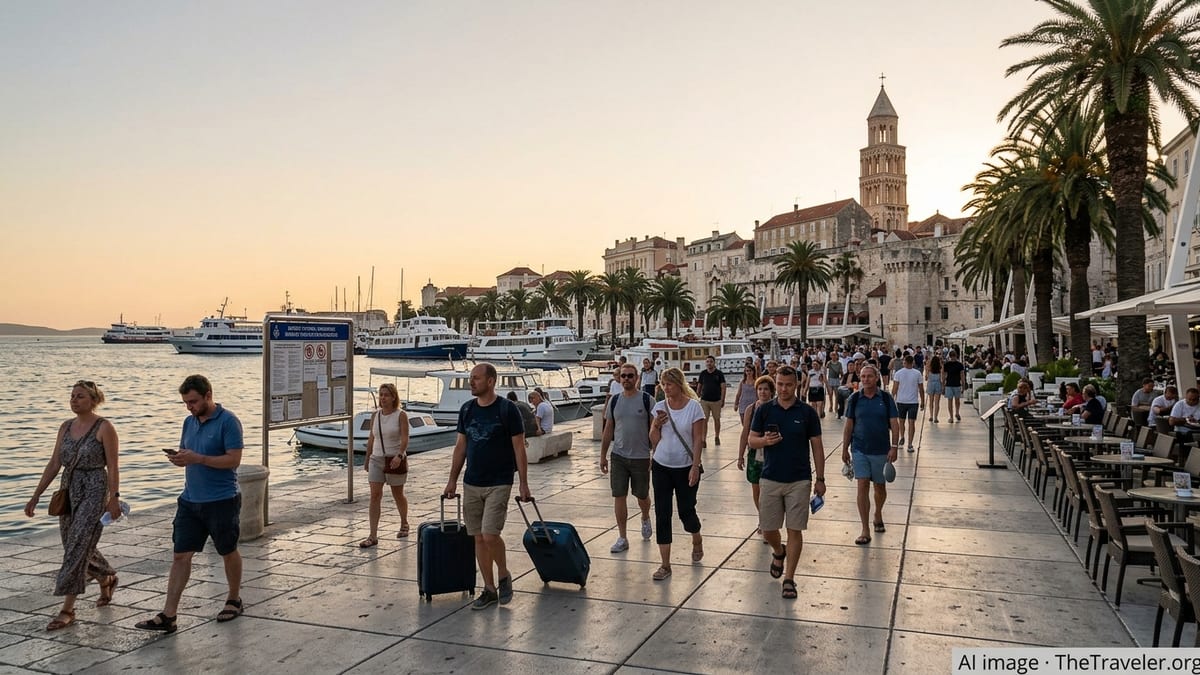
Schengen Entry Rules and Biometric Checks at Croatian Borders
As a member of the Schengen Area, Croatia now applies the bloc’s common short-stay rules to UK nationals. British visitors can typically spend up to 90 days in any rolling 180 day period across the Schengen Zone, with time in Croatia counted together with stays in other participating countries. Publicly available UK government travel advice highlights that these limits will continue to apply in 2026, meaning frequent travellers must track previous trips carefully to avoid being treated as overstayers.
Border procedures are also changing. The European Union’s Entry/Exit System is being phased in at external Schengen borders, including Croatian airports, seaports and land crossings. The technology records arrivals and departures of non EU visitors, capturing fingerprints and a facial image on first use and storing passport details electronically instead of stamping documents. According to recent government guidance and European media reports, the system is due to be fully operational by 10 April 2026, so UK holidaymakers visiting from spring onwards should expect biometric checks as standard.
Travel industry coverage notes that these extra steps are designed to take only a few minutes but may lengthen queues during busy summer peaks while procedures bed in. First time users can expect a slightly longer process as their data are registered; subsequent trips should be faster because details are already stored in the system. Car travellers entering via neighbouring non Schengen states such as Bosnia and Herzegovina or Montenegro may notice the biggest difference, as land borders adjust to new gate hardware and staffing patterns.
The 90 day limit will be enforced automatically through this database. Press analysis of the new rules explains that travellers found to have overstayed risk on the spot penalties that can range from several hundred to several thousand euros across the Schengen Area, alongside potential entry bans. While specific fine levels are set nationally, the message for UK visitors to Croatia in 2026 is that casual miscalculations on length of stay are far more likely to be picked up than in the era of paper stamps.
ETIAS: Paid Pre Travel Authorisation Arriving Late 2026
Alongside biometric border checks, UK visitors will soon face a new layer of bureaucracy before they even board a flight or ferry. The European Travel Information and Authorisation System, known as ETIAS, is an online pre screening mechanism for visa exempt travellers heading to the Schengen Area. The European Commission and subsequent explanatory material indicate that, after several delays, ETIAS is now scheduled to start in the final quarter of 2026, around a year after the Entry/Exit System becomes fully operational.
Specialist travel and visa services reporting on the latest timetable note that once ETIAS is active, British passport holders will need to complete an application before short stays in Croatia or any other Schengen country. Applicants will provide passport details, answer basic security and health questions and pay a fee. Recent coverage from Croatian and European outlets highlights that policymakers have agreed a standard charge of around 20 euros per application when the system launches, higher than the originally discussed figure.
For most travellers the process is expected to be quick, with automated checks returning a decision within minutes in the majority of cases. Approved authorisations will typically be valid for several years and multiple trips, up to the passport’s expiry, so frequent visitors should not need to reapply before every holiday. However, carriers will be required to verify ETIAS status before boarding, meaning that arriving at the airport without valid clearance could result in denied travel even if a passport is otherwise in order.
Because ETIAS is not expected to be live until late 2026, the main impact for British holidaymakers next year will be awareness and preparation. Tour operators and airlines are already beginning to brief customers that, once the start date is confirmed, travellers planning autumn or winter 2026 breaks in Croatia will need to build an extra online step into their pre departure checklist alongside insurance and accommodation details.
Behaviour Rules Tighten in Croatia’s Coastal Hotspots
Beyond border controls, Croatia has been sharpening its response to overtourism and antisocial behaviour in heavily visited cities. Over recent seasons, local authorities in Split, Hvar and Dubrovnik have introduced stricter communal order regulations and higher fines for disruptive conduct, with measures increasingly aimed at party focused visitors. Travel news reports from 2025 describe campaigns urging respect for historic centres and island communities, backed by penalties for public drinking, loud late night noise and inappropriate dress.
In Split, new rules linked to the historic core prohibit walking around parts of the old town in swimwear or bare chested, drinking alcohol on streets and steps, and climbing on monuments or fortifications for photos. Coverage of the updated ordinances indicates that fines commonly start in the low hundreds of euros, with higher penalties for repeat or serious violations. Enforcement has been stepped up during peak summer evenings, when inspectors and police issue on the spot tickets rather than relying on warnings.
The island of Hvar has gone further in tackling late night disturbance. Reports in regional and international travel media highlight local decisions to enforce strict quiet hours and cap amplified music volumes in bars and on waterfront terraces. Publicly available summaries of the rules cite headline fines of around 600 euros for drinking in public after set evening cut off times and additional penalties when noise thresholds are exceeded. These measures, introduced ahead of the 2025 season, are expected to remain in force for 2026 as authorities seek to balance nightlife with residents’ quality of life.
Dubrovnik, which has long run its well known “Respect the City” programme, continues to focus on managing cruise crowds and behaviour in its walled old town. While detailed fine levels vary, visitors can expect enforcement of bans on climbing fortification walls outside designated areas, swimming under historic bridges, or blocking narrow lanes for extended photo shoots. For UK travellers planning 2026 itineraries, the overall picture is of a destination still keen to welcome tourism income but increasingly ready to penalise behaviour that disrupts daily life or damages heritage sites.
On the Spot Penalties and Overstay Risks for UK Travellers
Croatia’s legal framework allows for on the spot fines in many cases where foreign visitors break local regulations. An English version of the country’s misdemeanour law sets out how financial penalties can be collected immediately when the offender is not resident in Croatia, a category that typically includes most holidaymakers. In practice, this means that a British visitor caught drinking in a prohibited public area, disturbing the peace or ignoring dress codes can be required to pay before leaving the scene, with refusal potentially escalating the situation or affecting the ability to exit the country smoothly.
Recent Croatian business and legal press has also drawn attention to sustained enforcement campaigns across tourism sectors, ranging from labour law checks on employers to inspections of accommodation providers and hospitality venues. Although many of these actions target companies rather than individual guests, they underline a wider policy trend towards using fines more actively to secure compliance in the tourism economy. For visitors, this translates into a lower tolerance for informal arrangements, such as unregistered apartment rentals or off the books excursions.
Overstaying permitted time in Croatia is particularly risky in the new digital era. As the Entry/Exit System becomes fully embedded by 2026, information on arrivals and departures will be centralised, making it far more difficult for travellers to leave late unnoticed. European consumer and financial media have reported that, across the Schengen Area, overstayers can face penalties reaching into thousands of euros as well as multi year bans on re entering. Although outcomes depend on individual circumstances, experts consistently advise third country nationals, including UK citizens, to keep careful records of their movements.
Cash related rules also remain in force at Schengen borders. Guidance issued through EU and partner information platforms explains that travellers entering or leaving with 10,000 euros or more in cash or equivalent instruments must declare this at the border. Failing to do so can result in confiscation and fines. While this primarily affects those carrying unusually large sums, it forms part of the wider compliance environment that UK visitors will encounter when travelling to and from Croatia in 2026.
Practical Steps for British Holidaymakers Planning 2026 Trips
For most UK visitors, Croatia in 2026 will remain an accessible and welcoming destination, but the changing regulatory landscape means trips will require slightly more planning than in the past. The first priority is documentation. Travellers should check passport validity well ahead of departure and familiarise themselves with the 90 day in 180 day rule, especially if combining Croatian stops with other Schengen countries. As ETIAS approaches its start date, official portals and travel providers are expected to publish detailed instructions on when and how to apply, and holidaymakers will need to factor this extra step into booking timelines.
At the border, visitors can prepare for biometric checks by allowing extra time for queues, particularly in the early months of full Entry/Exit System operation around spring and summer 2026. Families and groups travelling by car should pay special attention to potential bottlenecks at smaller land crossings where infrastructure upgrades may still be underway. Keeping travel documents, accommodation details and proof of return or onward travel easily accessible can help smooth the process if additional questions arise.
Once in Croatia, awareness of local conduct rules is becoming just as important as understanding entry formalities. UK travellers planning parties or stag and hen trips to coastal cities should research municipal regulations covering public drinking, noise, dress codes and behaviour in historic centres. Choosing licensed accommodation, respecting quiet hours and avoiding street drinking outside permitted venues are likely to be the simplest ways to avoid costly fines.
Finally, industry observers emphasise that comprehensive travel insurance remains advisable, particularly as enforcement of rules around overstays and other infractions becomes more systematic. While insurance cannot prevent penalties for non compliance, it can provide support if trip plans are disrupted by delays at the border or denied boarding linked to missing pre travel authorisations once ETIAS is introduced later in 2026. For British holidaymakers who plan ahead, Croatia’s evolving rulebook should remain a manageable part of visiting one of Europe’s most popular coastal destinations.