


More news on this day
A recent federal rule changing how airlines classify the causes of delays and cancellations is reshaping the line between “controllable” and “uncontrollable” flight disruptions, a technical shift that could end up limiting when U.S. travelers receive reimbursements for hotels, meals and other out of pocket costs.
Get the latest news straight to your inbox!
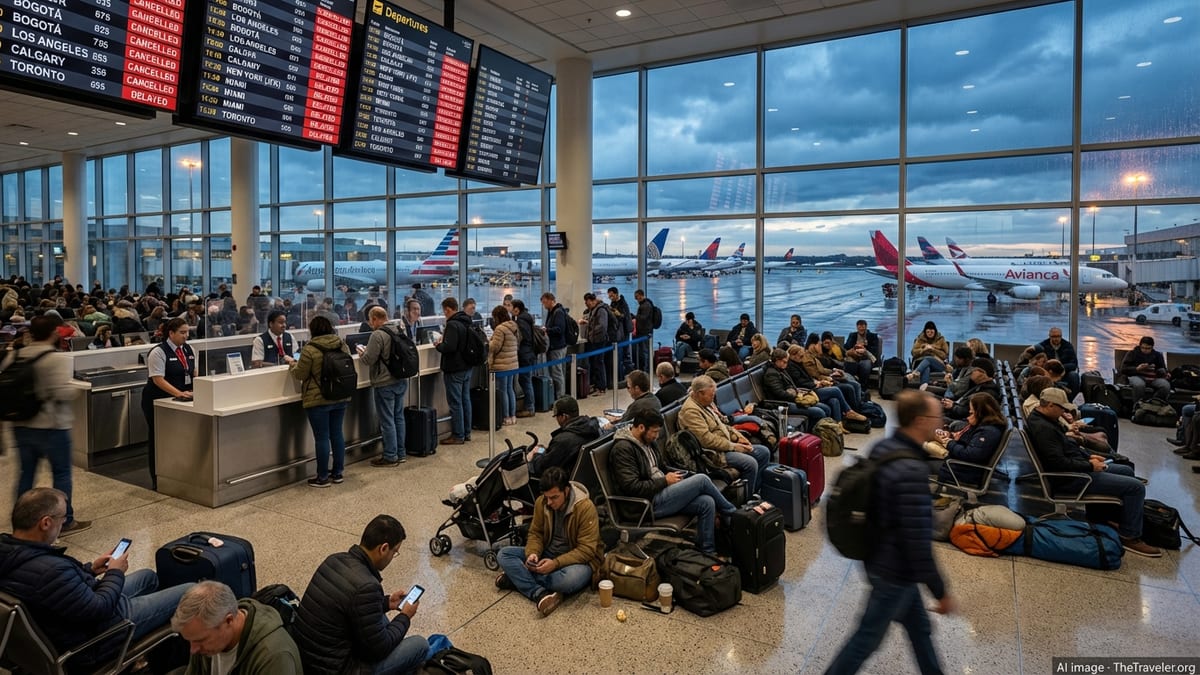
New reporting rule carves out ten disruption categories
The U.S. Department of Transportation has adopted a final rule amending its on time performance reporting system to implement Section 511(b) of the FAA Reauthorization Act of 2024. The rule directs airlines to move ten specific types of disruptions out of the long standing “Air Carrier” cause code and into a new, separate reporting category. According to publicly available regulatory documents, the change is intended to bring federal statistics in line with Congress’s distinction between events within an airline’s control and a new set of excluded circumstances.
The affected events range from certain aircraft maintenance scenarios to unusual situations such as contamination of an aircraft cabin or the need to clean or secure a plane after a passenger dies onboard. Other items on the list involve operational constraints that regulators now treat differently from routine carrier controlled issues. While the underlying events already occurred in day to day operations, they were previously grouped together under a single carrier cause code.
The rule’s effective date is tied to its publication in the Federal Register, with a 45 day implementation window. Once in force, airlines reporting to the Department of Transportation’s on time performance database must start using the new category when a disruption falls into one of the ten enumerated exclusions. That database feeds consumer facing tools and dashboards that travelers and the media often use to judge how reliably individual airlines run their schedules.
Regulatory filings emphasize that the rule does not change the total number of delays or cancellations that occur. Instead, it reclassifies which bucket certain events fall into. However, that technical adjustment has drawn attention because many airline customer service commitments, especially those highlighted on federal dashboards, rely on whether a disruption is labeled as within the airline’s control.
Link to reimbursements and customer service promises
In recent years, the Department of Transportation has pressed U.S. carriers to publish written customer service plans spelling out what they will provide when flights are disrupted for reasons considered within the airline’s control. These commitments, displayed on official airline passenger rights dashboards, commonly include meal vouchers during long delays, hotel accommodations when travelers are stranded overnight, and ground transportation to and from lodging after late night cancellations.
Those assurances do not have the force of a flat federal mandate. Instead, they function as public promises that airlines choose to make and can be held to through consumer protection enforcement if they fail to honor them. The key trigger for many of those benefits is whether a delay or cancellation is classified as carrier controllable. If a disruption is attributed to weather or air traffic control, the same commitments typically do not apply.
Because the new rule removes ten categories of events from the traditional carrier cause code and places them in an excluded bucket, analysts note that fewer disruptions may now fall under the “controllable” heading that airlines use when describing their obligations. Department of Transportation economic analysis prepared for the rule acknowledges this possibility, suggesting that amenities and compensation tied to controllable events are expected to decline, although the agency did not estimate a precise impact.
The change arrives alongside other consumer focused initiatives, including a separate final rule requiring automatic cash refunds when flights are cancelled or significantly changed and passengers choose not to travel. That refund framework applies regardless of cause, but it deals with returning the ticket price and certain fees, not with covering incidental expenses like meals and hotels. As a result, the new reporting categories matter most for the supplementary reimbursements that many travelers look for during overnight or extended disruptions.
Interaction with FAA law on “significant delay” reimbursements
The FAA Reauthorization Act of 2024 created a new statutory requirement directing the Transportation Department to ensure that airlines establish policies regarding reimbursement for lodging, transportation between lodging and the airport, and meal costs when there is a flight cancellation or a significant delay directly attributable to the air carrier. Federal law in turn defines what counts as “significantly delayed” in terms of changes to the arrival or departure time at the originally ticketed destination.
Under that framework, the Department is responsible for making sure every airline flying scheduled interstate or intrastate passenger service in the United States has clear reimbursement policies when disruptions are directly attributable to the carrier. Those policies can vary by airline, so the statute stops short of ordering a uniform dollar amount or standardized compensation schedule. However, it does require that the policies exist and apply in carrier attributable cases.
The newly adopted reporting rule does not rewrite the underlying statute, but it does redraw the border around events that are treated as attributable to the airline in federal data. By carving out ten excluded categories, the technical definition of what is reflected as an “air carrier” cause in official delay and cancellation statistics now diverges from the broader everyday understanding that travelers may have of controllable disruptions.
Consumer advocates and some travel industry commentators have raised concerns that this divergence could make it harder for passengers to point to federal data when arguing that a particular disruption should qualify for reimbursement. More of the gray area events that once appeared clearly under the airline’s column may now sit in a separate category, even though they are not classic weather or air traffic control issues. How airlines align their written reimbursement policies with the changed reporting taxonomy will be a key point to watch.
What changes for travelers in practice
For individual passengers, the rule does not alter the core automatic refund rights that took effect under a separate regulation in 2024. When a flight to, from or within the United States is cancelled, or significantly changed in ways defined by federal rules, and a traveler declines alternative transportation or credits, the airline must still provide a cash refund of the unused ticket and certain ancillary fees. That obligation applies regardless of whether the cause is carrier related, weather or something else.
The practical impact is more likely to show up around hotel, meal and ground transportation reimbursements after disruptions. Where airlines have pledged to provide those benefits only when a delay or cancellation is within their control, the narrower reporting definition could give carriers more room to characterize edge case events as falling outside their control commitments. If an overnight disruption is reported under one of the ten excluded categories, published analyses indicate that an airline might decline to offer the same level of coverage it would have provided when the same event was logged simply as “air carrier.”
Travelers may also notice changes in how airline performance is portrayed on public dashboards and in media coverage. With a slice of previously carrier attributed disruptions now moved into an excluded category, on time performance statistics for some airlines could appear to improve, even if the total number of late or cancelled flights remains the same. That shift could influence how passengers compare airlines when choosing routes, especially on delay prone corridors and during peak travel seasons.
Airlines are not required to change their customer service plans in lockstep with the reporting adjustment, and some may decide to keep or even expand their current reimbursement promises as a competitive offering. Others could revise their policies more closely around the new federal categories. In the coming months, consumer groups are expected to scrutinize updated customer service plans and advise travelers on which airlines maintain broader commitments in the face of the reclassification.
How passengers can protect themselves right now
In the near term, travelers planning trips within, to or from the United States face a landscape where refund rights, reimbursement policies and the new disruption categories overlap. Automatic cash refunds for cancelled or significantly changed flights remain grounded in federal regulation, but reimbursement for meals, lodging and transport after disruptions depends heavily on airline specific policies that may evolve after the reclassification takes effect.
Consumer information posted by the Department of Transportation continues to urge passengers to review an airline’s customer service plan before booking, paying particular attention to what is offered when disruptions are considered within the carrier’s control. Given the new rule’s narrower definition for what shows up under the carrier cause code, travelers may wish to look for language in those plans that goes beyond the strict reporting categories and addresses a broader range of operational problems.
Published commentary from travel law experts also highlights the role of third party protections, such as trip insurance or premium credit card travel benefits, which operate independently of federal delay classifications. These products often reimburse reasonable expenses for covered disruptions based on their own terms, regardless of whether an airline or regulator labels the cause controllable. While such coverage comes with its own conditions and limitations, it can provide a backstop in situations where evolving federal definitions and airline policies leave gaps.
As the new reporting rule moves from the Federal Register into day to day airline operations, its full effect on passenger reimbursements will likely emerge gradually. Travelers watching for that impact may focus on how often airlines now cite the ten excluded categories when responding to claims, how customer service plans are updated, and whether on time performance statistics shift in ways that alter perceptions of reliability across major U.S. carriers.