

More news on this day
A proposed U.S. border policy that would expand social media screening for millions of foreign visitors is already reshaping global travel sentiment, with roughly one-third of surveyed international travelers saying they would be less likely to visit the United States if the changes go ahead.
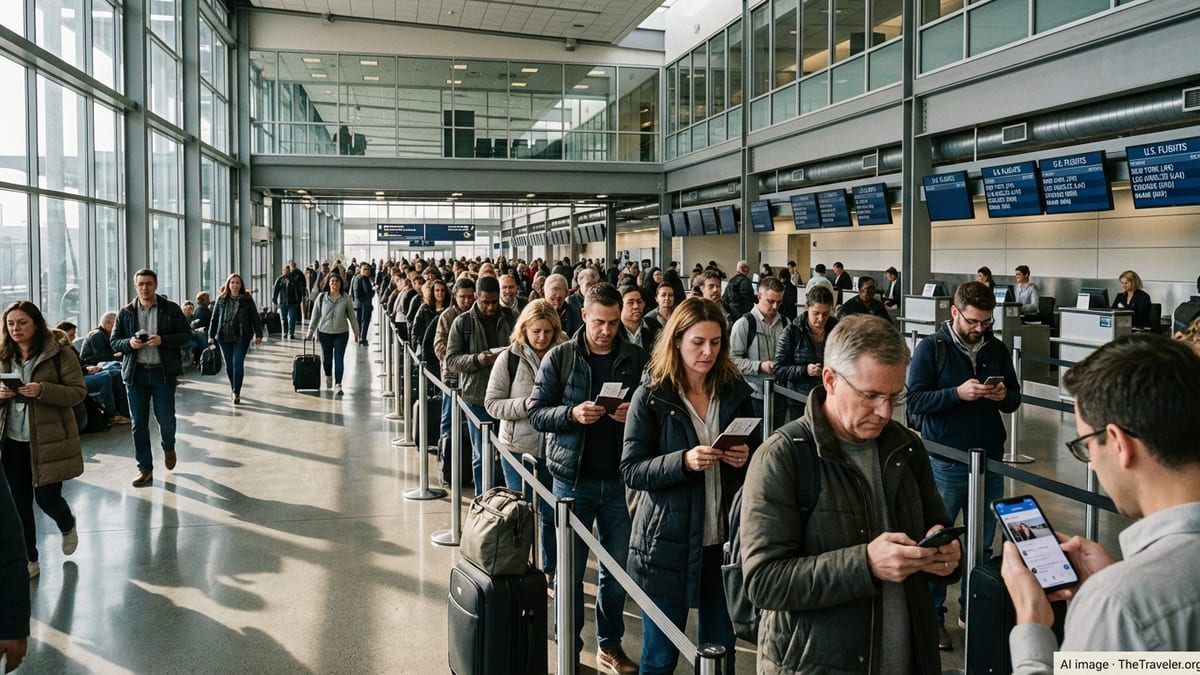
What the Proposed U.S. Travel Policy Would Change
At the center of the concern is a proposal to require broader disclosure of social media identifiers from travelers using the Electronic System for Travel Authorization, or ESTA. The system covers visitors from dozens of mainly European and other visa waiver countries who currently undergo an online pre-clearance before boarding flights to the United States.
Under the draft rule, applicants would be expected to provide more of their social media account names as part of their travel authorization process. U.S. Customs and Border Protection officials say the identifiers would be checked against existing intelligence and security databases to help flag potential threats before people arrive at American airports and seaports.
Officials have stressed that the content of posts is not intended to be systematically reviewed for political views or personal opinions, and that the rule has not yet been finalized. The measure is framed as part of a broader effort to tighten border screening, in line with recent executive orders focused on national security and counterterrorism.
Even at the proposal stage, however, the idea of mandatory social media disclosure is feeding a perception abroad that entry to the United States is becoming more intrusive, more complex and less welcoming for ordinary visitors.
One-Third of Travelers Say They Would Be Less Likely to Visit
The sharpest warning so far comes from new research commissioned by the World Travel and Tourism Council, which surveyed more than 4,500 international travelers across multiple visa waiver countries. In that poll, about 34 percent of respondents said they would be somewhat or much less likely to visit the United States in the next two to three years if the proposed social media requirement is implemented.
Only a small minority, roughly one in eight, reported that the policy would make them more likely to travel to the country. The rest said it would not change their plans either way. This leaves a significant net negative swing in travel intent at a time when the United States is still working to fully rebuild its inbound tourism after several years of political tensions, strong-dollar headwinds and pandemic-era disruptions.
The same survey found that awareness of the proposal is already high, with about two-thirds of respondents saying they had heard about potential social media screening at the U.S. border. Industry analysts say that level of awareness, before any final rule is in place, suggests that any policy shift could have relatively quick consequences for booking patterns, especially in sensitive long-haul markets.
Beyond simple trip decisions, the research highlights a deeper reputational issue. Many respondents said the measure would make the United States feel less open and less attractive for both leisure holidays and business travel, raising concerns in a global market where travelers have an expanding range of alternatives.
Billions in Visitor Spending and Thousands of Jobs at Stake
Economic modeling released alongside the survey attempts to quantify what a shift in sentiment of this scale could mean for the U.S. travel economy. In a high-impact scenario, analysts estimate the country could see as many as 4.7 million fewer international arrivals from ESTA countries in 2026 than would otherwise be expected.
The projected hit to visitor spending is equally stark. Reduced trips and shorter stays could translate into up to 15.7 billion dollars less in international tourism receipts, according to the research. That figure captures spending on hotels, restaurants, attractions, transport and retail by visitors who might instead choose destinations perceived as less restrictive.
The World Travel and Tourism Council warns that such a shortfall would ripple quickly through employment, with as many as 157,000 U.S. jobs at risk across airlines, hotels, tour operators, restaurants and local service providers dependent on overseas guests. For communities that have only recently begun to see visitor numbers return toward pre-disruption levels, a renewed decline in international arrivals could slow or reverse fragile recoveries.
Industry groups argue that these potential losses would land just as major events, including the 2026 FIFA World Cup hosted in multiple U.S. cities, are expected to draw heightened global attention. While domestic travel remains robust, international visitors typically spend more per trip, making them especially valuable to urban centers and gateway states.
Security Aims Collide With Perceptions of Privacy and Welcome
U.S. officials maintain that enhanced social media checks are designed to improve border security without unduly burdening legitimate visitors. They say usernames would be compared with classified information and watchlists to help identify potential security risks earlier in the process, and that public feedback is being collected before any final rule is issued.
Yet privacy advocates and many frequent travelers contend that mandatory disclosure of social media identities creates a chilling effect, particularly for journalists, activists and business travelers who rely on online anonymity or sensitive communications. They argue that even if officials say they will not review content for political views, the perception that posts might be scrutinized could discourage free expression and deter travel.
From a customer experience standpoint, travel companies fear that the measure adds another layer of complexity to an already demanding entry regime. International visitors to the United States routinely point to long queues, detailed security interviews and strict customs inspections as factors that make arrival more stressful than in competing destinations.
When benchmarked against rivals such as Canada, the United Kingdom, Japan and major European tourism hubs, the proposed U.S. approach is widely viewed in the industry as more intrusive. That perception may prove decisive for travelers choosing between otherwise similar long-haul holidays or conference destinations.
Global Competition for Tourists Intensifies
The warning signs over the planned policy come as the United States confronts a broader loss of market share in the international tourism arena. While global travel flows have largely recovered, recent data show that the U.S. has underperformed several other major destinations in attracting overseas visitors, particularly from Europe and neighboring Canada.
Analysts point to a combination of factors, including a strong dollar that makes visits more expensive, lingering political tensions and the aftershocks of a 2025 slump in cross-border travel. Several U.S. states have launched their own campaigns to lure visitors back, emphasizing open skies, cultural experiences and upcoming sports events, but those efforts may be undercut if new federal rules are perceived as discouraging entry.
Other countries are moving in the opposite direction, simplifying e-visa processes, introducing multi-year digital entry permits and softening some pandemic-era measures to reduce friction at the border. In that context, even a narrowly targeted U.S. social media rule could reinforce a narrative that the United States is becoming a more difficult and less predictable place to visit.
Industry leaders are urging policymakers in Washington to weigh the national security benefits of expanded screening against the economic and reputational risks. With one in ten jobs globally tied in some way to travel and tourism, many argue that maintaining an open, competitive stance is essential if the United States wants to remain among the world’s top destinations.