

More news on this day
American travelers heading to Mexico’s Caribbean resorts are being urged to exercise heightened caution after the U.S. State Department updated its Mexico travel advisory and issued new security alerts highlighting growing risks in Cancun, Tulum, Playa del Carmen and the broader Riviera Maya corridor.
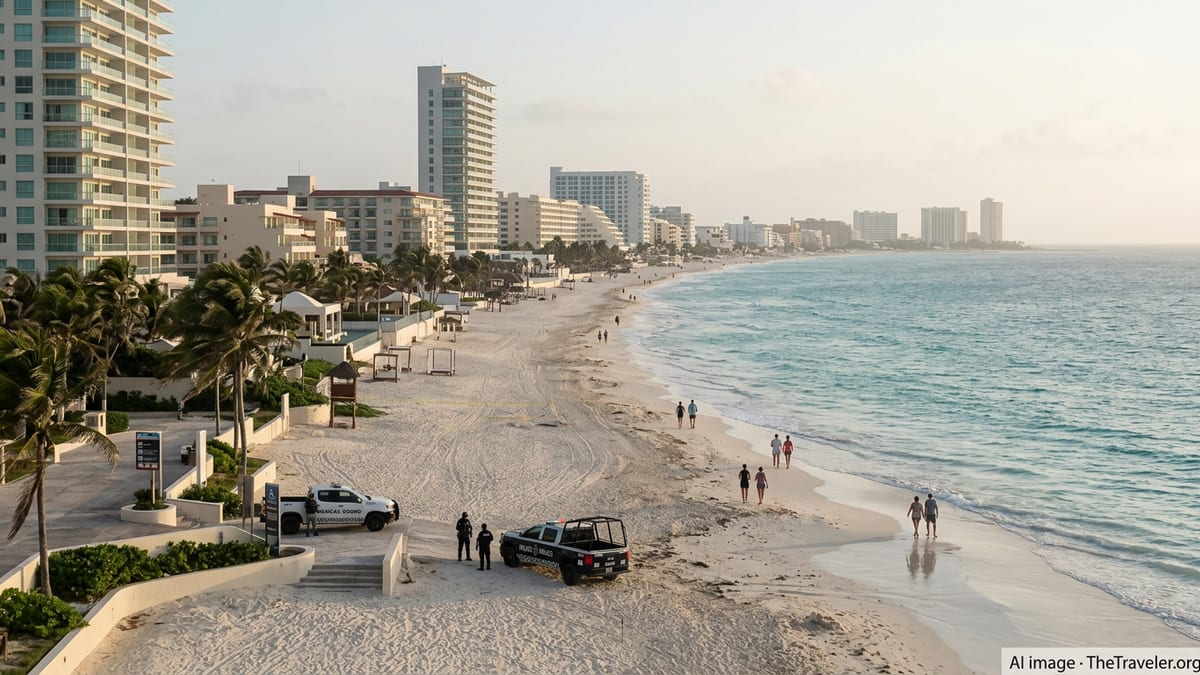
U.S. Advisory Update Puts Quintana Roo Under Fresh Scrutiny
The U.S. State Department’s most recent adjustment to its Mexico travel advisory, logged on August 12, 2025, reaffirmed Quintana Roo, home to Cancun, Tulum and Playa del Carmen, at Level 2, meaning travelers are advised to exercise increased caution due to crime and kidnapping risks. While this is not a “do not travel” order, it underscores what officials describe as a complex and evolving security picture in some of the country’s most visited beach destinations.
The revised advisory introduced a terrorism risk indicator for Mexico as a whole, adding it to existing nationwide concerns about crime and kidnapping. For Quintana Roo specifically, U.S. officials emphasize that violent crime can and does occur, including in areas frequented by tourists, and that travelers should remain alert to the possibility of targeted shootings, robberies and other incidents connected to organized crime disputes.
Quintana Roo remains one of Mexico’s top earners from international tourism, receiving millions of visitors annually. That economic weight helps explain why, despite the Level 2 rating, there are no blanket restrictions on movement for U.S. government employees in the state. Instead, officials frame the designation as a call for vigilance rather than alarm, encouraging visitors to stay in well-known tourist zones, book reputable transportation and monitor official security updates throughout their stay.
The broader Mexico advisory also reminds Americans that conditions can change quickly, with localized spikes in violence sometimes affecting resort areas, transportation routes and nightlife districts. Travelers are urged to review destination-specific guidance for Quintana Roo immediately before departure and again during their trip.
Cartel Unrest and Security Alerts Reverberate Across Tourist Zones
Concerns about safety in Mexico’s tourist regions intensified in late February 2026 after Mexican security forces killed the leader of a powerful criminal organization in the western state of Jalisco, triggering days of blockades, arson attacks and armed confrontations across multiple states. In response, the U.S. Embassy in Mexico City issued an urgent security alert advising American citizens in several affected regions to shelter in place and limit movement while authorities worked to restore order.
The alert, which covered a long list of states from Baja California to Veracruz and included Quintana Roo, recommended that U.S. tourists remain inside their hotels or other accommodations and avoid travel until the situation stabilized. U.S. government staff in cities such as Guadalajara and Puerto Vallarta were temporarily ordered to work remotely or stay under curfew, highlighting how quickly a law enforcement operation in one part of the country can ripple through the national security environment.
By February 23, U.S. officials reported that conditions in Quintana Roo, including Cancun, Playa del Carmen, Cozumel and Tulum, had largely returned to normal, and resort operations continued without major disruption. However, the brief inclusion of Quintana Roo in the broad security alert reinforced the message that even destinations far from the epicenter of cartel unrest can be affected by nationwide security operations and temporary transport disruptions.
Mexican tourism authorities and local business leaders have sought to reassure visitors that the state’s resort hubs remain open and heavily guarded, pointing to increased patrols, surveillance systems and closer coordination between local police, the National Guard and private security teams. Still, the latest alerts have reminded many travelers that Mexico’s overall security challenges are closely intertwined, and that famous beach towns are not completely insulated from wider criminal dynamics.
Violent Incidents Underscore Risks in Cancun, Tulum and Playa del Carmen
In recent years, a string of high-profile violent incidents in and around Cancun, Tulum and Playa del Carmen has drawn global attention and fed into the State Department’s cautionary tone. Authorities and local media have documented shootings near beach clubs and nightlife areas, armed attacks on government facilities and isolated killings of tourists caught up in disputes linked to local drug sales and extortion rackets.
One of the most disturbing cases cited by regional outlets involved the killing of a foreign visitor on a Cancun beach near a major resort, an incident that rattled both local officials and the business community. In Tulum, an armed assault on the offices of the state attorney general heightened perceptions that criminal groups are willing to challenge authorities even in high-visibility tourist areas. Playa del Carmen, a key hub along the Riviera Maya, has also seen sporadic gun violence and targeted attacks against individuals believed to be involved in the local drug trade.
Law enforcement agencies attribute much of the bloodshed to rival criminal groups fighting over lucrative markets for street-level drug sales, protection rackets and migrant smuggling routes. While tourists are rarely the direct targets, officials acknowledge that bystanders can be caught in the crossfire when shootings occur in or near crowded public spaces such as beaches, bars, shopping streets and ferry terminals.
Local business associations argue that the risk for visitors remains statistically low compared with the volume of tourism, noting that millions of people still pass through Cancun’s international airport each month without incident. Nonetheless, hoteliers and tour operators have tightened security protocols, added private guards, upgraded surveillance systems and increased coordination with police, aware that even isolated episodes can reverberate widely through international media and affect future bookings.
Security “Bubbles” and Intensified Patrols Aim to Protect Tourists
Facing pressure from both domestic stakeholders and foreign partners, Mexican federal and state authorities have rolled out a series of security measures designed to shield key tourist corridors along the Caribbean coast. Officials describe these as “security bubbles” around destination zones such as Cancun’s hotel strip, central Playa del Carmen and Tulum’s beach and archaeological areas, where combined forces from local police, state authorities and the National Guard carry out visible patrols and rapid-response operations.
These measures include increased checkpoints on main access roads, expanded video surveillance networks, maritime patrols near busy beaches and stepped-up inspections of nightlife venues where authorities suspect drug dealing and money laundering may be concentrated. During peak periods such as spring break and major holiday weeks, additional National Guard troops are deployed to beaches, hotel zones and club districts to deter potential incidents and respond quickly if trouble breaks out.
Tourism officials insist that the reinforcements are working, pointing to declining incident reports in certain sectors and high hotel occupancy rates. They also highlight cooperative programs that pair resort operators with law enforcement liaisons who can share information about suspicious activity and coordinate emergency responses. At the same time, U.S. officials stress that enhanced security does not eliminate risk and that travelers should continue to use common-sense precautions, particularly at night and in areas off the main tourist circuit.
Industry groups in Quintana Roo have tried to reframe the issue as a matter of transparency rather than alarm, arguing that acknowledging security challenges and communicating clear guidance to visitors can help sustain confidence. Many resorts now brief guests on local safety considerations at check-in, including which areas to avoid, how to use official taxis or ride-hailing services and where to find on-site security staff if concerns arise.
What American Travelers Are Being Urged To Do Now
As the high season and spring break periods approach, U.S. officials are not telling travelers to abandon plans for Cancun, Tulum, Playa del Carmen or the wider Riviera Maya. Instead, the emphasis is on preparation, situational awareness and adherence to local guidance. Prospective visitors are encouraged to review the Mexico country page and the Quintana Roo section of the State Department advisory before booking and again shortly before departure to check for any new alerts or location-specific restrictions.
On the ground, officials recommend that Americans keep a low profile, avoid displaying expensive jewelry or electronics, and stay within well-known tourist zones, especially at night. Using registered taxis or reputable ride-hailing apps, confirming transportation arrangements through hotels or licensed operators, and avoiding unauthorized street cabs are all emphasized as basic risk-reduction steps. Travelers are also urged not to purchase or use illegal drugs, which U.S. and Mexican authorities say significantly increases the likelihood of encountering violent criminal actors.
The advisory further suggests enrolling in the Smart Traveler Enrollment Program so that U.S. citizens can receive real-time security updates and be easier to contact in an emergency. Visitors are advised to keep copies of identification documents, maintain contact information for the nearest U.S. embassy or consulate, and have a plan for communicating with family or companions if connectivity is disrupted.
For now, the message from officials is that Mexico’s Caribbean resorts remain accessible but require more forethought than in the past. The combination of heightened U.S. warnings, recent cartel unrest and ongoing localized violence has transformed how safety is discussed in Cancun, Tulum, Playa del Carmen and the Riviera Maya, placing security considerations at the center of trip planning for many American tourists.