

More news on this day
Thousands of Australians planning trips to the United Kingdom from late February could be turned away at the airport or left stranded mid-journey, as Britain moves to strictly enforce new digital entry rules that carriers warn they can no longer overlook.
What Is Changing on 25 February 2026
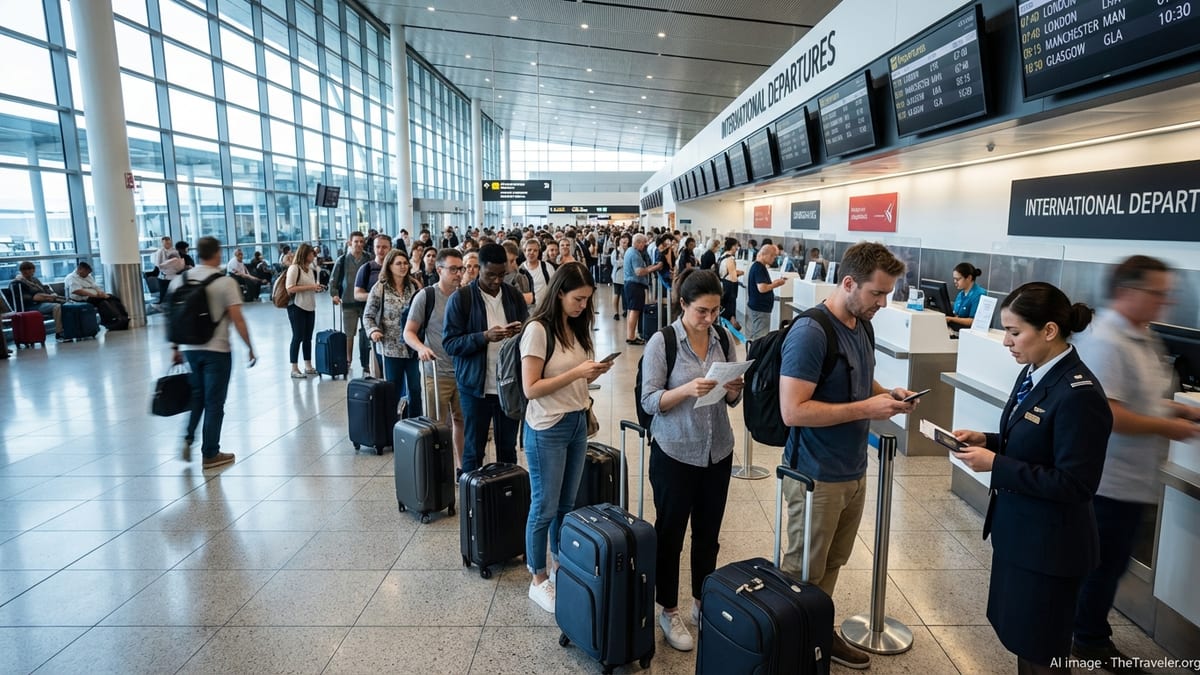
The United Kingdom is about to flip the switch on a border overhaul that has been rolling out quietly for more than two years. From 25 February 2026, most visitors who previously could simply board a flight and present their passport on arrival will instead need a pre-approved Electronic Travel Authorisation, or ETA, before they even check in. Without it, airlines, ferry companies and train operators will be obliged to refuse boarding.
The change marks the end of a long grace period during which carriers and border officials have applied the rules with some flexibility. UK ministers have now adopted a blunt mantra for the new regime: no permission, no travel. That means the real moment of risk for Australians will no longer be at the border desk in London or Manchester, but hours earlier at check-in in Sydney, Melbourne, Perth or a transit hub in Asia or the Middle East.
Officials argue the system will ultimately make travel smoother and more secure by allowing advance screening of visitors and digitising immigration checks. Yet critics point to a lack of clear communication, fast-approaching enforcement and particularly complex rules for dual nationals as a recipe for airport chaos and ruined holidays in the final week of February and beyond.
How the UK ETA System Works for Australians
The UK’s ETA is a digital travel permission linked electronically to a traveller’s passport. For Australians, it is required for short stays of up to six months for tourism, visiting friends or family, short study, and most business visits, provided they do not already hold a visa or UK immigration status. It is also needed for many transit journeys where the passenger passes through UK passport control, even if the United Kingdom is not their final destination.
Applications are made online or via an official mobile app. Travellers submit personal and passport details, answer security and immigration questions and pay a fee of around 16 pounds, roughly the equivalent of 30 Australian dollars at recent exchange rates. The British government says most applications are decided in minutes, but strongly advises allowing up to three working days in case additional checks are needed.
Once approved, an ETA is valid for multiple trips over two years, or until the associated passport expires, whichever comes first. That means frequent visitors can enter and leave the United Kingdom many times on a single authorisation, provided each stay is within the usual six-month limit for visitors. However, an ETA is not a visa and does not guarantee entry; border officers can still question travellers and refuse admission if they are not satisfied with the purpose of stay or funds.
Importantly for Australians, every traveller who needs an ETA must hold their own approval, including children and infants. Families cannot travel on a single group permission. Each family member’s ETA must be granted and electronically matched to their passport details before the airline will allow them to board a UK-bound flight.
Why So Many Australians Are at Risk of Being Stranded
Australian tourism bodies estimate that hundreds of thousands of Australians visit the United Kingdom each year, to see relatives, study, work short term or use British airports as gateways to Europe. Many of those visitors have long relied on the relative simplicity of the former system: book a ticket, fly, and clear passport control on arrival. With airlines now under pressure to police digital permissions, that habit suddenly becomes a vulnerability.
The most immediate risk is for Australians who are due to travel on or after 25 February but booked flights months ago and either have not heard about the ETA requirement or assume it will be handled at the airport. Under the new enforcement rules, check-in agents will be required to confirm an ETA or visa in airline systems. If no approval is found, staff must refuse boarding, even if a traveller insists they will apply on the spot using airport Wi-Fi.
Compounding the danger is the fact that ETA enforcement coincides with a sharpened stance on dual British citizens, some of whom live in Australia and travel regularly. New rules mean many dual nationals who once entered the United Kingdom on their Australian passport now face demands to show a valid British passport or an expensive certificate of entitlement. Confusion about who needs what document has already led to reports of cancelled journeys and families scrambling for emergency paperwork.
There is also a specific risk for Australians transiting through British hubs such as Heathrow. Some routes require passengers to clear UK passport control, while others remain airside. Under the new regime, those who must pass through border control will need an ETA, even if they are only in the country for a few hours between flights. Travellers who do not realise their itinerary involves entering the United Kingdom could discover at the departure gate that they are missing the necessary digital approval.
New Pressure Points for Dual British–Australian Citizens
While the ETA scheme was designed primarily for non-British, non-Irish visitors, the knock-on effects of wider border reforms are being felt acutely by dual nationals. In recent weeks, the UK government has confirmed that dual British citizens are exempt from needing an ETA. However, that exemption comes with a significant catch: to rely on it, they are expected to travel using a valid British passport or, in limited circumstances, a certificate of entitlement proving right of abode.
From 25 February 2026, dual citizens who attempt to enter the United Kingdom using only their Australian passport are at heightened risk of being stopped at check-in or refused boarding. Airlines are being told to treat such passengers differently from ordinary Australian tourists, because dual nationals are not eligible for an ETA and are supposed to travel as British citizens. Those caught in the middle could find themselves unable to obtain an ETA and simultaneously lacking the British passport that would allow them to bypass the requirement.
In response to a growing outcry, British authorities and carriers have discussed short-term workarounds, including the possibility of accepting certain expired British passports for travel when the holder also carries a valid passport from an ETA-eligible country such as Australia. Yet this approach remains a limited and temporary concession, and the final decision to board still rests with the airline or ferry company. For thousands of Australians with British heritage, the message is clear: ensure British documentation is in order well before departure, or risk being stranded.
Travel agents in Australia report a spike in urgent inquiries from British-born residents who assumed their status guaranteed frictionless re-entry to the United Kingdom. Many are now confronting processing delays for new British passports and balking at the high cost of a certificate of entitlement, which can run to several hundred pounds. With the enforcement deadline approaching, some may be forced to postpone or cancel trips altogether.
What Carriers Will Check Before You Board
The most visible change for travellers will take place at the departure counter, not at the UK border. Airlines and other carriers are being integrated into a digital pre-clearance system that requires them to verify each passenger’s permission to travel before issuing a boarding pass. In practice, that means your passport details will be checked against UK databases confirming either a valid ETA, visa or exemption such as British or Irish citizenship.
For Australians travelling purely as visitors, the process should be straightforward if the ETA has been properly issued and linked to the correct passport. Check-in staff will scan the passport, receive a green light from the system and proceed as normal. However, any discrepancy in personal details, changes of passport after the ETA was granted, or last-minute bookings made before the digital permission is approved could trigger a red flag. In such cases, staff are expected to err on the side of caution and deny boarding rather than risk fines and operational disruption.
The pressure on carriers is intense. UK authorities have made it clear that from 25 February, the grace period that previously allowed some discretion is over. Airlines face potential penalties for transporting passengers who lack the proper digital authorisation, and may absorb costs if travellers are turned around on arrival. As a result, front-line staff are likely to apply the rules strictly, especially in busy holiday periods when queues and delays can quickly escalate.
Passengers changing planes in cities such as Singapore, Doha or Dubai should be prepared for checks at multiple stages of their journey. Some carriers may verify ETA status at the original departure point in Australia, while others could also re-check documents at transit gates for flights bound directly for the United Kingdom. Travellers who rely on tight connections without leaving time to resolve a documentation issue risk missing their onward flights entirely.
How to Protect Your UK Trip From Disruption
For Australians with travel plans to Britain in 2026, the best defence against disruption is early preparation. The first step is to confirm whether you need an ETA, a visa or can rely on British or Irish citizenship. Ordinary Australian tourists and business visitors without any form of UK immigration status should assume they need an ETA for any trip on or after 25 February, including many transit journeys that pass through passport control.
Apply for the ETA well before booking non-refundable flights or accommodation, or at the very latest several days before departure. When completing the application, double-check that every personal detail exactly matches your passport, including middle names, date of birth and document number. If you renew your passport after obtaining an ETA, you will need to apply again, as the permission is tied electronically to a single document.
Dual British–Australian citizens should review their British documentation as a priority. If you hold a British passport that is expired or close to expiry, seek advice on whether it will be accepted for travel and consider renewing it as soon as possible. Those relying on right of abode or other complex statuses should not assume that airline staff will understand the nuances at the check-in desk. Carry printed evidence of any official guidance you have received, and be prepared for additional questions.
All travellers, regardless of status, should build extra time into their airport plans from late February onwards. Longer queues at check-in and boarding are likely as carriers adjust to stringent checks and as early confusion plays out in real time. Arriving at the airport with only a short window before departure and discovering a problem with your ETA could turn a long-awaited UK holiday into an expensive missed connection.
Key Questions Australian Travellers Are Asking
The acceleration of the UK’s digital border project has left many Australians with practical questions. One of the most common is whether an ETA is required for short stopovers where passengers remain on the aircraft or within a secure transfer area. In general, those who do not pass through UK passport control and remain airside at airports such as Heathrow or Manchester do not currently need an ETA. However, route changes, delays or rebooking can sometimes force travellers through immigration unexpectedly, which is why some experts advise obtaining an ETA even for seemingly simple transits.
Another frequent query is whether holding a valid ETA will guarantee entry at the border. The answer is no. Just as with visa systems in other countries, the ETA confirms permission to travel but final admission is still determined by UK Border Force officers on arrival. Australians should be ready to explain the purpose of their visit, show evidence of onward travel or accommodation and, if requested, demonstrate they have sufficient funds for their stay.
Families are also seeking clarity on applications for children. Every minor, including babies, requires a separate ETA linked to their own passport. Parents cannot add children to an adult’s authorisation. Given processing times and the risk of errors in children’s documents, families are urged to apply well ahead of school holidays and peak travel periods, when demand for flights to Britain traditionally spikes.
Finally, travellers want to know what happens if their ETA is refused. In that case, the individual will not be able to use the visa-free route and must instead explore applying for an appropriate UK visa, which involves more detailed documentation, higher fees and longer processing times. Those with urgent reasons to travel, such as family emergencies, should seek advice from official channels promptly, as turning up at the airport without a valid permission is no longer a viable option.