

More news on this day
Travelers heading to Japan’s major cities and popular holiday regions are facing fresh uncertainty as Qatar Airways, Japan Airlines, Air Do and other carriers move to cancel or scale back more than 20 flights, affecting key routes into Tokyo, Osaka, Hokkaidō, Fukuoka and Okinawa just as spring and summer travel plans ramp up.
Get the latest news straight to your inbox!
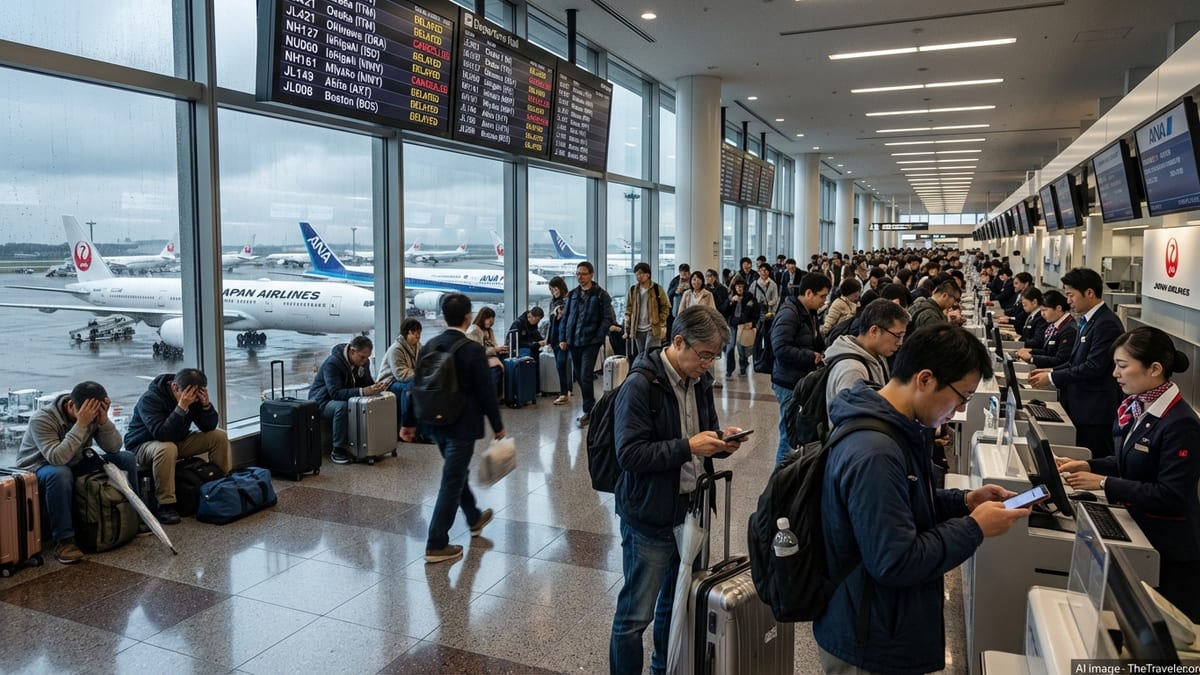
International Capacity Squeezed as Qatar Airways Trims Japan Links
The latest disruption began rippling through booking systems this week after Qatar Airways confirmed it is operating only a limited global schedule while it gradually restores regular services, triggering targeted cancellations on several routes that feed Japan. Although the airline has not suspended all Japan-bound operations, capacity to Tokyo and Osaka has been reduced on select days, leaving passengers with fewer one-stop options from Europe, the Middle East and parts of Africa.
Industry analysts note that even modest cuts by a large hub carrier can cascade quickly across connecting itineraries. Travelers who originally booked through Doha to reach Tokyo Haneda, Narita or Kansai International are increasingly being rebooked onto alternative routings or different travel dates, often with longer travel times and tighter connections. For some, particularly those on non-flexible fares, the changes are arriving with little room to maneuver ahead of Japan’s busy spring tourism period.
Travel agents in North America and Europe report a noticeable uptick in schedule-change notifications involving Qatar Airways connections to Japan this month, with some itineraries shifted to partner airlines while others are being canceled outright. That patchwork of adjustments is complicating planning for travelers who had chosen Qatar Airways for its historically strong on-time and low cancellation record, and now must re-evaluate their options.
Japan Airlines Adjusts Domestic and Regional Networks
Japan Airlines, which had been steadily rebuilding its international and domestic network through 2025, is also making targeted reductions that contribute to the overall disruption picture. Recent schedule filings for the late 2025 and early 2026 seasons show JAL fine-tuning frequencies across its domestic system, including routes touching Tokyo, Osaka, Fukuoka and Okinawa, as it balances recovering demand with operating costs.
While JAL continues to emphasize growth on strategically important international routes, especially within Asia and on high-demand leisure markets, its domestic schedule shows a series of seasonal reductions and trimmed frequencies. These include cutting some off-peak round trips and consolidating flights on overlapping city pairs, changes that collectively amount to more than a dozen flight reductions across a broad range of routes rather than a single headline-grabbing suspension.
For travelers, the impact is most visible in narrower time windows. Popular morning and evening departures between Tokyo and secondary cities are being thinned out on certain days, reducing flexibility for business passengers and domestic tourists trying to make same-day connections. On routes into Okinawa and Fukuoka, where multiple airlines compete, JAL’s adjustments can still mean longer gaps between departures, particularly outside of peak holiday periods.
Air Do and Hokkaidō Routes Face New Pressures
Hokkaidō-focused carrier Air Do, a key player on routes linking Sapporo with Tokyo and other Japanese cities, has also been under pressure to rationalize its network. Airport schedules and recent timetable updates indicate that Air Do has scaled back or consolidated services on select Hokkaidō routes, including connections into major gateways such as Tokyo and, by extension, onward links that feed Osaka and Kyūshū.
These changes may not always show up as complete route withdrawals, but rather as frequency cuts that quietly remove several weekly flights from the market. Taken together, they significantly narrow options for travelers heading to northern Japan, especially during shoulder seasons when tourism demand is softer and airlines look to shore up load factors.
Local tourism operators in Hokkaidō report growing concern that reduced seat capacity, even if spread across different airlines, could push up fares on remaining flights during popular periods. Travelers who once relied on a choice of multiple daily departures between Sapporo, Tokyo and Osaka may now find fewer time slots available, adding pressure to book far in advance or accept less convenient schedules.
Knock-On Effects for Osaka, Fukuoka and Okinawa
The cumulative effect of Qatar Airways’ international reductions, JAL’s domestic fine-tuning and Air Do’s network cuts is being felt most acutely at Japan’s busiest hubs and resort gateways. Osaka, Fukuoka and Okinawa in particular are seeing a tightening of capacity as airlines adjust both direct services and feeder flights that connect through Tokyo.
In Kansai’s Osaka region, modest reductions in domestic frequencies can translate into fewer onward connections for international passengers arriving from Europe and North America. This is especially true for travelers who were routed via Doha or other Asian hubs and then onto JAL or other domestic carriers for the final leg to Osaka, Kobe or nearby airports.
Fukuoka and Okinawa, both heavily reliant on domestic tourism and increasingly popular with international visitors, are similarly exposed. When Tokyo flights are canceled or retimed, it disrupts the carefully choreographed network of connections that feed Japan’s southern islands. Families heading to Okinawa’s beaches and divers connecting to smaller islands may now face overnight layovers or additional stops that extend travel time and increase costs.
Travel planners warn that even incremental changes can have outsized effects in Japan’s aviation system, where high-frequency domestic services traditionally provide the backbone for regional and international connections. With multiple airlines trimming at least some flights across the network, the risk of missed connections and tighter seat availability is rising.
What Travelers Should Expect in the Coming Months
For now, industry observers describe the current wave of cancellations and reductions as a recalibration rather than a wholesale pullback from Japan. Demand for travel to Tokyo, Osaka, Hokkaidō, Fukuoka and Okinawa remains strong, and most major routes retain multiple daily options on at least one carrier. However, the combination of Qatar Airways’ limited schedule and domestic network adjustments by Japanese airlines is creating pockets of disruption that travelers will need to navigate.
Passengers with existing bookings to or within Japan over the coming months should monitor their reservations closely through airline apps and email alerts, as additional fine-tuning of timetables is likely. Where flights have been canceled, most carriers are offering rebooking on alternative services or dates, but popular departures are filling quickly, especially around weekends and holidays.
Travel experts advise building extra buffer time into itineraries that rely on tight domestic connections, particularly when traveling onward from Tokyo to Osaka, Sapporo, Fukuoka or Okinawa. Booking flexible fares where possible, and considering secondary airports or alternative carriers, can help mitigate the impact of last-minute schedule changes as Japan’s airlines continue to adjust their operations into 2026.