

More news on this day
Travelers across Türkiye are facing a new round of flight disruptions after Qatar Airways, Flydubai and several other carriers canceled nearly a dozen additional services linking Istanbul, Antalya and İzmir with major hubs such as Bahrain, Dubai, Doha and Algiers, according to newly published airline updates and aviation tracking data.
Get the latest news straight to your inbox!
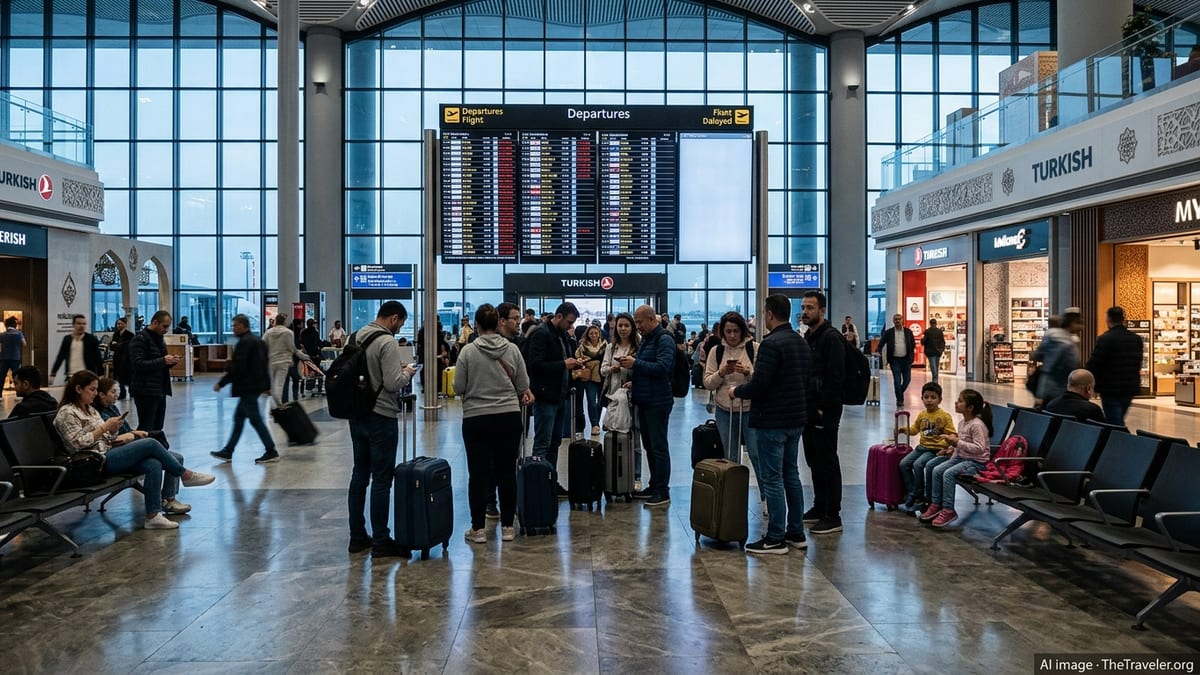
Fresh Cancellations Hit Key Turkish Gateways
Publicly available schedules and airport information for March 24 indicate that Qatar Airways and Flydubai have withdrawn a series of departures and arrivals at Istanbul, Antalya and İzmir, adding to weeks of turbulence across regional air travel. The latest adjustments include services connecting Türkiye with Gulf and North African destinations, with routes to Bahrain, Dubai, Doha and Algiers among those affected.
Data from airline booking systems and flight tracking platforms shows that multiple departures that had been listed as operating earlier in the week now appear as canceled or removed from sale. While the total number of flights involved is relatively small compared with overall traffic through Türkiye’s airports, the impact is being felt most acutely by transit passengers who rely on hub connections in Doha and Dubai.
The new round of cancellations follows a period of rolling schedule changes since late February, as carriers continue to react to airspace constraints and operational challenges around the wider Middle East. For travelers in Türkiye, the pattern has translated into last minute changes, extended layovers and in some cases overnight delays as they seek alternative routings.
Regional aviation analysts note that Türkiye’s role as a key detour and connection point has grown during the recent disruption period, with Istanbul in particular serving as a backup hub for rerouted long haul journeys. The latest cancellations, however, underline that even these alternate corridors remain vulnerable to shifting operational decisions.
Routes to Bahrain, Dubai, Doha and Algiers Most Affected
According to airline timetables and independent aviation monitoring, the majority of the newly canceled flights involve services between Turkish cities and major regional hubs. Connections from Istanbul and Antalya to Dubai, operated by Flydubai and codeshare partners, are among those showing fresh cancellations on March 24 and the surrounding days.
Qatar Airways, which has already been operating a reduced schedule amid ongoing regional airspace issues, has pulled additional services between Türkiye and Doha, limiting options for passengers using Hamad International Airport as a transfer point to Asia, Africa and Oceania. In parallel, selective cancellations on routes from Türkiye to Bahrain and Algiers have been recorded, tightening capacity on already busy corridors.
Travel industry observers indicate that these cuts often cluster on specific days and time bands, as airlines attempt to consolidate demand onto fewer flights and maintain aircraft utilization while navigating alternative routings. For passengers holding tickets on affected sectors, this can mean involuntary rebooking via different hubs, longer total journey times or, in some cases, complete itinerary changes.
Despite the disruptions, core trunk routes between Türkiye and major European destinations are largely continuing to operate, which has led some travelers to reconfigure plans to route via cities such as Frankfurt, Paris or London instead of traditional Gulf hubs. However, this strategy is not always available for passengers whose final destinations are in the Gulf or North Africa, where nonstop and one stop options are more limited.
Knock On Effects for Connecting Travelers
The timing of the latest cancellations is particularly challenging for travelers who planned complex itineraries with tight connections via Doha, Dubai or Bahrain. With some flights being removed from schedules only days before departure, connecting passengers report having to rearrange hotel bookings, ground transport and even visa plans at short notice, based on information shared in public forums and travel community discussions.
In several cases highlighted in recent online posts, travelers have seen their original Gulf hub itineraries canceled and then been rerouted via Istanbul or other European gateways, only to encounter further changes as airlines continue to adjust. This cascading effect has created uncertainty for passengers who need to make time sensitive trips for work, family or study.
Travel planners note that the disruption is especially pronounced for journeys involving multiple carriers on a single ticket, as each schedule change can trigger a chain reaction of missed connections and reissues. While many airline policies currently allow for fee free changes or refunds for impacted dates, the process of securing alternative flights has at times been slowed by high call center volumes and limited same day availability.
For Türkiye’s tourism sector, the cancellations arrive just as the country gears up for the spring travel season. Industry figures have expressed concern in public commentary that continued volatility in regional air links could dampen arrival numbers from Gulf and North African markets, even as demand from Europe shows signs of resilience.
What Travelers in Türkiye Can Do Right Now
With schedules still in flux, travel experts recommend that passengers departing from Istanbul, Antalya or İzmir in the coming days closely monitor their bookings through airline apps and airport departure boards. Many carriers are updating timetables in stages, meaning that a flight that appears as confirmed today could still be subject to change as operational plans evolve.
Publicly available guidance from airlines indicates that customers whose flights are canceled are typically eligible for one of several options, such as rebooking on the next available service, rerouting via an alternative hub or requesting a refund or travel credit. However, the exact choices depend on the fare type, the partner airlines involved and the dates of travel, so travelers are advised to review the specific conditions attached to their tickets.
Given the current environment, travel agents and frequent flyer communities suggest building in extra buffer time for connections, particularly when itineraries involve links through Doha, Dubai, Bahrain or other affected hubs. Where possible, selecting longer layovers can reduce the risk of misconnecting if an upstream flight is retimed or replaced at short notice.
Passengers who have some flexibility in their plans are also exploring alternative routings that avoid the most affected hubs altogether, for example by flying via major European cities or other regional centers with more stable schedules. While these options can sometimes be more expensive or involve additional stops, they may offer greater certainty for travelers who need to arrive by a fixed date.
Outlook for Regional Flight Operations
Looking ahead, aviation analysts caution that the pattern of rolling cancellations and late adjustments in and out of Türkiye is likely to persist as long as airspace restrictions and operational constraints remain in place across parts of the Middle East. Airlines such as Qatar Airways and Flydubai are expected to continue fine tuning their schedules in response to evolving conditions, potentially adding back some services while trimming others with little lead time.
Industry commentary suggests that carriers are balancing competing priorities: maintaining vital international links, honoring existing bookings and ensuring that any detours around affected airspace remain commercially and operationally viable. This juggling act can result in sudden changes on routes that had appeared stable only days earlier.
For travelers, this means that flexibility and up to date information will remain essential when planning trips involving Istanbul, Antalya or İzmir, particularly for connections to Bahrain, Dubai, Doha, Algiers and neighboring destinations. While the vast majority of flights to and from Türkiye are still operating, the latest cancellations underscore how quickly circumstances can shift in a region where aviation networks are closely interlinked.
As airlines publish further updates over the coming days, passengers and travel providers will be watching closely to see whether the current wave of cancellations deepens or gradually eases, and whether additional corridors through Türkiye emerge as reliable alternatives for long haul journeys.