

More news on this day
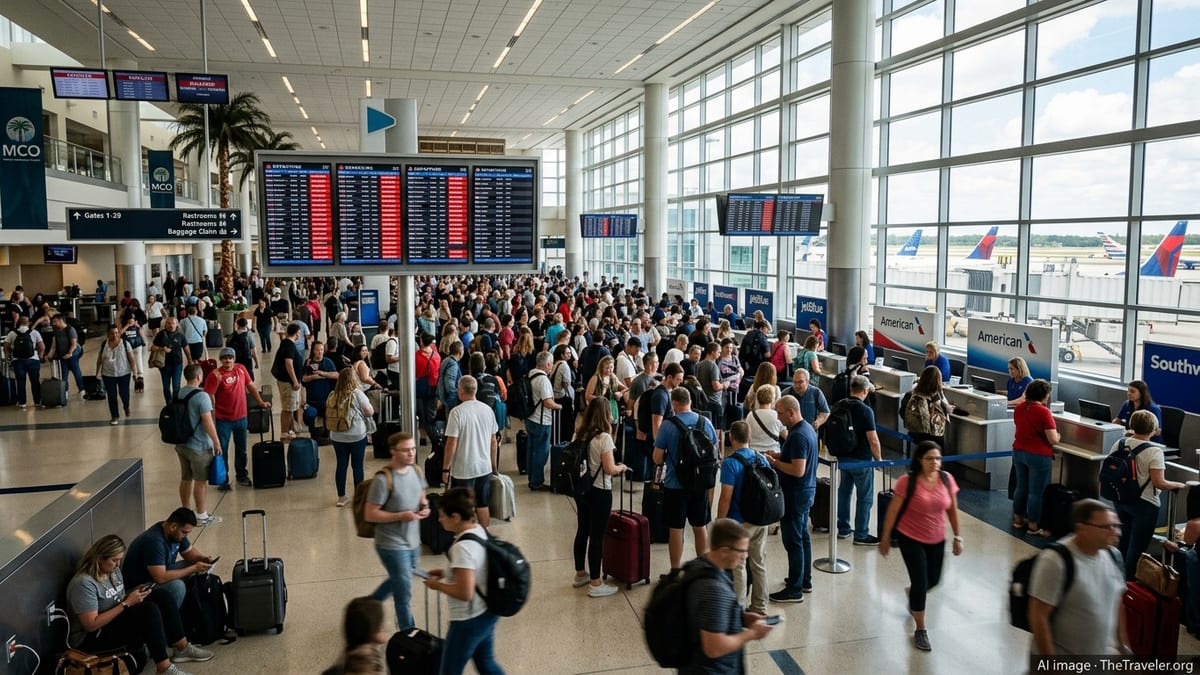
Travelers at Orlando International Airport faced fresh disruption on March 23 as new cancellations across Delta Air Lines, American Airlines, JetBlue, Southwest and other carriers rippled through key routes linking the United States with Europe, the Middle East and major domestic hubs.
Get the latest news straight to your inbox!
Fresh Cancellations Hit Major Carriers and Long-Haul Routes
Flight-tracking data on March 23 indicates at least 14 additional departures and arrivals involving Orlando International Airport were canceled across a mix of U.S. and international airlines. The disruption affected services operated by Delta Air Lines, American Airlines, JetBlue, Southwest and several partner and codeshare carriers, compounding residual delays from a turbulent stretch of weather and airspace rerouting earlier in the month.
The newest cancellations touched a number of high-profile routes linking Orlando with major global gateways. Publicly available schedules and same-day operational data show disruptions on flights connecting to London and Paris, as well as services feeding into long-haul networks serving Dubai and other Middle Eastern hubs via European and U.S. connection points. Several transcontinental and East Coast flights, including services to Los Angeles and Boston, were also scrubbed or significantly delayed, tightening capacity on remaining departures.
For passengers, the impact went beyond the raw number of cancellations. With many flights already running close to full at the start of the busy spring break period, the loss of multiple rotations in a single day left fewer rebooking options and extended connection times. Some travelers faced the prospect of overnight stays in Orlando or intermediate hubs when onward connections to Europe and the Middle East could not be guaranteed.
The situation unfolded against a backdrop of heightened sensitivity around reliability at Florida airports, which, according to recent data analyses of nationwide operations, have trended among the most delay-prone in the country in recent years. Those longer-term patterns have amplified the frustration for visitors who planned carefully timed itineraries to and from one of the United States’ busiest leisure gateways.
Knock-On Effects to Europe and the Middle East
The cancellations at Orlando came as transatlantic and Middle East networks were already under strain from weather-related and geopolitical complications earlier in March. Publicly available information and traveler reports describe a patchwork of reroutings on flights between North America and Europe, as well as adjustments to routings over or near parts of the Middle East, contributing to extended block times and tighter crew scheduling margins.
For Orlando-based travelers heading to London and Paris, the latest cancellations meant that some nonstops and key connections through major hubs were no longer available on their planned dates. While other airlines maintained operations on certain city pairs, limited remaining seats during the peak travel period left many passengers reliant on multi-stop routings or departures from alternative U.S. gateways.
Connections toward the Middle East, including itineraries involving Dubai, were also indirectly affected. When Orlando flights into major European and East Coast hubs were canceled or severely delayed, passengers lost onward links to overnight departures to the Gulf and beyond. Some travelers reported being shifted to later transatlantic flights with extended layovers, while others were rebooked for travel one or more days later to secure space on downstream legs.
The complexity of modern hub-and-spoke networks meant that a cancellation in Orlando could reverberate quickly. Aircraft and crew scheduled to operate onward segments were sometimes left out of position, resulting in rolling delays on subsequent services. This dynamic was particularly evident on routes where Orlando flights feed into tightly banked connection waves to Europe and the Middle East.
Domestic Hubs and Key U.S. Cities Feel the Strain
Domestically, the latest wave of cancellations at Orlando International weighed heavily on services to major U.S. cities that serve as both origin-destination markets and critical hubs. Flights to Los Angeles and Boston, as well as key connections to major airline centers in the Northeast and Midwest, experienced disruptions that left travelers scrambling for alternatives.
Los Angeles routes, which link Florida tourists and business travelers with the West Coast and onward Pacific services, saw particular pressure as a small number of cancellations removed hundreds of seats from the market in a single day. With remaining transcontinental flights already operating at high load factors, the margin for accommodating displaced Orlando passengers was slim.
Boston, an important market for both leisure and cruise-related traffic into Florida, was also affected. Earlier in March, winter weather in the Northeast had already caused extended delays and ground holds, leaving some Orlando-bound travelers stranded for hours in crowded terminals. The new cancellations on March 23 added another layer of uncertainty for those attempting to complete postponed trips or return journeys.
Other domestic hubs, including major connecting points in the Southeast and along the Eastern Seaboard, reported elevated levels of missed connections and rolling delays as Orlando-bound or Orlando-originating flights were pulled from the schedule. Even in cases where flights continued to operate, delayed departures from central hubs caused knock-on late arrivals into Florida, compressing turn times and increasing the risk of further schedule changes.
Passengers Confront Crowded Terminals and Limited Options
By mid-afternoon on March 23, images and descriptions shared publicly by travelers depicted crowded gate areas and long customer-service queues in Orlando’s main terminals. Reports from recent days had already highlighted busy scenes at the airport as earlier storms in the Northeast and operational challenges at several airlines backed up traffic into Florida.
Passengers affected by cancellations confronted familiar trade-offs: accept a significantly delayed same-airline itinerary, request a refund and make new arrangements, or seek rebooking through alternative carriers where inventory remained. In some cases, travelers opted for last-minute one-way tickets at elevated prices on competing airlines or shifted to nearby airports in search of more reliable departure times.
Families and group travelers, particularly those returning from theme park vacations or cruises, often had the fewest flexible options because they needed enough seats together on a single flight. With spring break crowds in full swing, many of the remaining departures from Orlando and nearby airports were already heavily booked, complicating efforts to keep groups on the same itinerary.
As the day wore on, social media and traveler forums captured a picture of weary passengers attempting to secure hotel rooms, ground transportation and updated travel plans on short notice. For some, the combination of earlier delays this month and the latest round of cancellations represented the second or third major disruption to a single trip.
What Travelers Can Do If They Are Booked Through Orlando
For those scheduled to fly into or out of Orlando International in the coming days, publicly available advisories and recent operational trends point to several practical steps. Travelers are being encouraged by airlines and airports to monitor flight status frequently on official apps and information boards, as same-day schedule changes have become more common when weather and airspace disruptions converge.
Rebooking policies vary by carrier and fare type, but many airlines have been offering limited-fee or fee-waived changes when disruptions are linked to severe weather or large-scale operational challenges. Passengers may find more options by searching across nearby airports in Florida or along the Eastern Seaboard, particularly for long-haul journeys where a different U.S. or European gateway could preserve an onward connection to London, Paris or Middle Eastern hubs.
Travelers with tight connections through Orlando or onward to Europe and the Middle East may want to consider building in longer layovers or selecting earlier departures in the day to create a buffer for delays. Those with flexible plans might also evaluate shifting travel to less congested days of the week, when historical performance data suggests slightly lower cancellation and delay rates.
While the current round of 14 new cancellations represents a fraction of the hundreds of daily flights operating at Orlando International, the episodes of concentrated disruption this month have underscored how quickly conditions can change. For now, anyone planning to pass through the airport can benefit from extra planning, backup options and close attention to rapidly evolving schedules.