

More news on this day
Air travel across the United Arab Emirates has been thrown into renewed turmoil as Emirates, Etihad, Air Arabia and flydubai cancel or curtail more than 200 flights, disrupting operations at Dubai, Abu Dhabi, Sharjah, Ras Al Khaimah and Al Maktoum International airports and severing key links to Mumbai, Doha, London, Shanghai, Bangkok and other global destinations.
Get the latest news straight to your inbox!
Airspace Tensions Trigger Widespread Cancellations
The latest wave of disruption follows severe regional tensions that led to the closure and subsequent partial reopening of airspace across the Gulf, forcing UAE carriers to ground large portions of their networks. Aviation advisories issued this month describe an environment in which operators must constantly reroute or stand down flights because of security restrictions, debris risks and evolving overflight bans.
Dubai International, the region’s busiest hub, along with Abu Dhabi’s Zayed International Airport, Sharjah International, Ras Al Khaimah and Al Maktoum International have all operated on reduced or irregular schedules as airlines assess safe corridors and available routings. Airport authorities have confirmed that only a limited number of movements can be accommodated while safety checks and operational constraints remain in place.
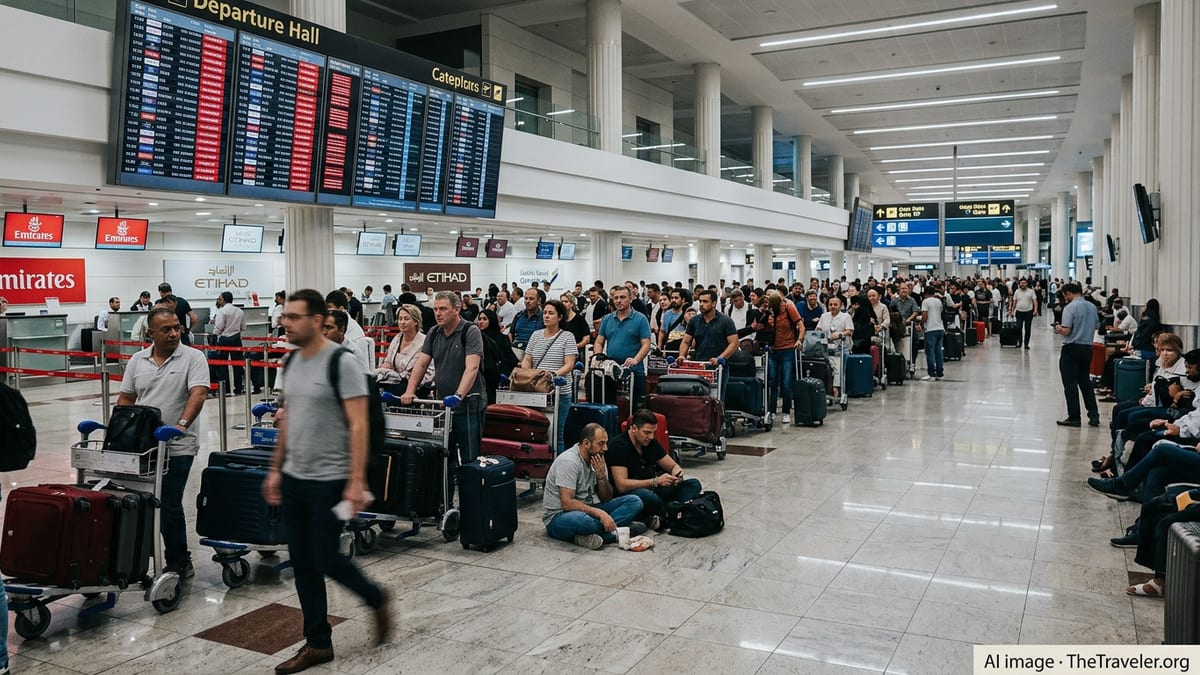
In practical terms, that has translated into more than 200 cancellations and a cascade of delays over recent days, with departure boards across the country showing large blocks of scrubbed services. While a small but growing number of flights have resumed, schedules remain volatile and many services are being cancelled with only a few hours’ notice.
Major UAE Carriers Cut Back Global Networks
Emirates, the largest operator at Dubai International, has been rebuilding operations after an almost complete suspension of scheduled passenger flights at the height of the crisis. The airline is now operating a reduced network, restoring service on some long haul routes while continuing to cancel others as airspace permissions change. Travellers have reported last minute notifications affecting flights to and from London, Shanghai and Bangkok, as well as onward connections to Europe, North America and Australasia.
Etihad Airways in Abu Dhabi has followed a similar pattern, initially suspending all passenger flights to and from its hub before announcing a limited restart focused on key destinations. Even as selected services return, the carrier has warned that further cancellations are possible on short notice, particularly on routes that rely on now-constrained transit corridors across the wider Middle East.
Sharjah based Air Arabia and Dubai based flydubai, both crucial for regional and South Asian links, have also pared back schedules, cancelling and consolidating flights serving cities such as Mumbai and other Indian metros, as well as regional points in the Gulf. With many of their passengers relying on tight connections or single weekly rotations, even a single cancellation can strand travellers for days.
Key Routes to Asia, Europe and the Gulf Severely Disrupted
Some of the worst disruption has been felt on high demand routes connecting the UAE to major population centres in Asia and Europe. Flights linking Dubai, Abu Dhabi and Sharjah with Mumbai and other Indian cities have faced repeated cancellations and retimings, compounding pressure during what is already a busy travel period for workers, students and families moving between the two countries.
Links with London and other UK and European hubs have also been affected, with reduced frequencies, forced diversions and day of departure cancellations. For many long haul travellers using Dubai or Abu Dhabi as transit points between Europe and Asia or Australasia, a single cancelled leg can unravel an entire itinerary, leaving passengers to navigate crowded rebooking queues and limited alternative routings.
Although scheduled non stop services between Dubai and Doha had already been limited before the current crisis, the broader network of Gulf connections has suffered as airlines cut regional services or reroute around affected airspace. Further east, flights to Shanghai and other Chinese gateways have experienced irregular operations, as carriers balance crew duty time limits and longer flight paths with reduced access to preferred air corridors.
Passengers Face Long Delays, Rebookings and Uncertain Plans
For passengers on the ground, the operational complexity translates into long waits, sudden plan changes and financial uncertainty. Travellers at Dubai and Abu Dhabi airports have described packed terminals, extended queues at airline service desks and difficulty securing near term rebookings, especially for long haul journeys or peak time departures.
Some customers report being offered alternative itineraries days later than originally planned, or routings via secondary airports in the region or beyond. Others are opting to cancel trips entirely when given the option, especially in cases where connecting segments to cities such as Mumbai, Bangkok or London can no longer be guaranteed.
While airlines have issued general assurances that affected passengers can rebook or request refunds, many travellers say they are struggling to secure concrete options quickly. With cancellations sometimes coming only hours before departure, those needing to reach family events, medical appointments or business commitments face difficult choices between waiting in the UAE, purchasing new tickets on other carriers or rerouting via alternative hubs far from the Gulf.
Authorities and Airlines Urge Travellers to Monitor Flights Closely
UAE authorities stress that safety remains the overriding priority and that any reopening of routes must be gradual, coordinated and fully compliant with regional airspace restrictions. Aviation notices indicate that regulators and air navigation authorities are working closely with local and international airlines to define and maintain safe corridors, including higher fuel reserves, adjusted cruising altitudes and contingency routings in case of sudden changes.
Carriers are urging passengers to monitor flight status repeatedly in the 24 hours before departure and to keep contact details updated so that last minute changes can be communicated. Many airlines have activated flexible travel policies, waiving some change fees and allowing rebookings without fare differences on nearby dates, although availability on popular routes remains constrained.
Travel agents across the Gulf and in key origin markets such as India and the United Kingdom report a surge in inquiries from anxious customers. Industry analysts say that even as more flights are gradually restored, it could take weeks before schedules stabilise enough for predictable planning. Until then, anyone travelling to or through the UAE is being advised to prepare for potential disruptions, build in longer connection times and have alternative arrangements in mind should flights be cancelled again at short notice.