

More news on this day
Travelers across the United States faced another punishing day of air disruption on March 9 as 88 new flights were delayed and 40 canceled at Charlotte Douglas International Airport, compounding a nationwide wave of operational breakdowns already frustrating passengers from Houston to Chicago, Savannah and San Antonio.
Charlotte Douglas Emerges as a Fresh Trouble Spot
Charlotte Douglas International Airport, a key hub in the American Airlines network, saw disruptions mount through Monday, with fresh delays and cancellations rippling across its tightly timed banked schedule. Aviation tracking platforms showed a growing list of late departures, including multiple American Airlines services to major domestic and Caribbean destinations, turning what should have been routine spring travel into a day of uncertainty for thousands of passengers.
By midafternoon, airport data indicated 88 additional flights departing or arriving Charlotte were running late, while 40 services had been scrubbed outright as carriers struggled to recover from earlier operational shocks. Even flights that did depart often left well behind schedule, forcing missed connections and frantic rebookings as the hub’s intricate web of regional and mainline routes began to fray.
Conditions on the ground did not appear to be driven by local weather, with observations at Charlotte reporting scattered clouds, light winds and mild temperatures during the peak of the disruption. Instead, the problems reflected the vulnerability of a heavily banked hub to strain elsewhere in the system, with inbound aircraft and crews arriving late from other afflicted airports.
The disruption at Charlotte came on the heels of one of the worst operational days of 2026 for the U.S. aviation system, with nearly 5,000 flights disrupted nationwide on Sunday. With airlines still working through that backlog, even a relatively calm weather day proved insufficient to restore normal service at one of the country’s busiest connecting hubs.
Nationwide Backlog Spills Into Houston, Chicago, Savannah and San Antonio
The knock-on effects from Charlotte were felt most acutely in other cities that rely heavily on its hub-and-spoke connections. In Chicago, airport delay boards showed a steady build-up of late departures throughout the day, while specific American Airlines flights from O’Hare to Charlotte posted revised departure and arrival times that pushed well beyond their original schedules.
In Houston, travelers departing from William P. Hobby Airport and George Bush Intercontinental reported long lines and extended waits at security and boarding gates as airlines reshuffled equipment and crews. Officials at several airports warned passengers to arrive far earlier than usual, citing staffing shortages at security checkpoints and the cascading impact of delayed arrivals on outbound flight readiness.
Secondary and midsize markets such as Savannah and San Antonio also experienced schedule disruptions as regional aircraft that typically feed into Charlotte arrived late or remained out of position. For many travelers in these cities, the first sign of trouble came via app notifications that their early morning or midafternoon connections to Charlotte were delayed, triggering a wave of missed onward flights to the Northeast, Midwest and Caribbean.
These secondary delays underscored how dependent many smaller U.S. airports are on a few major hubs. When a hub like Charlotte becomes constrained, even for reasons outside local control, the effects quickly propagate along its spokes, stranding passengers far from the original source of the problem.
Government Shutdown and Staffing Strains Deepen the Chaos
The latest wave of disruptions landed amid a broader backdrop of strain across the U.S. aviation system linked to the ongoing partial shutdown of the Department of Homeland Security. With the agency’s staffing stretched, airports have been warning for days that security screening could become a choke point during already busy spring travel periods.
Passengers at Charlotte, Houston and New Orleans reported waits stretching well beyond typical screening times, with some missing flights despite arriving at the airport more than two hours before departure. Airport officials urged travelers to build additional buffer into their plans, noting that shorter staffing at checkpoints and among support personnel can slow boarding and aircraft turnaround even when flights are technically ready to depart.
Industry analysts say the combination of government-related staffing shortages, residual weather impacts from recent storms and an aggressive spring schedule has left airlines and airports with little margin for error. When a single hub faces operational constraints, they argue, there are fewer standby crews and aircraft available to absorb the shock, increasing the likelihood that localized problems will cascade into nationwide disruption.
The Federal Aviation Administration has not announced any new ground stops or broad flow-control measures specific to Charlotte. However, air traffic managers have warned in recent weeks that constrained staffing in key facilities and among partners, alongside high traffic volumes, could periodically require metering of flights into already congested hubs.
Passengers Confront Uncertainty, Confusion and Limited Options
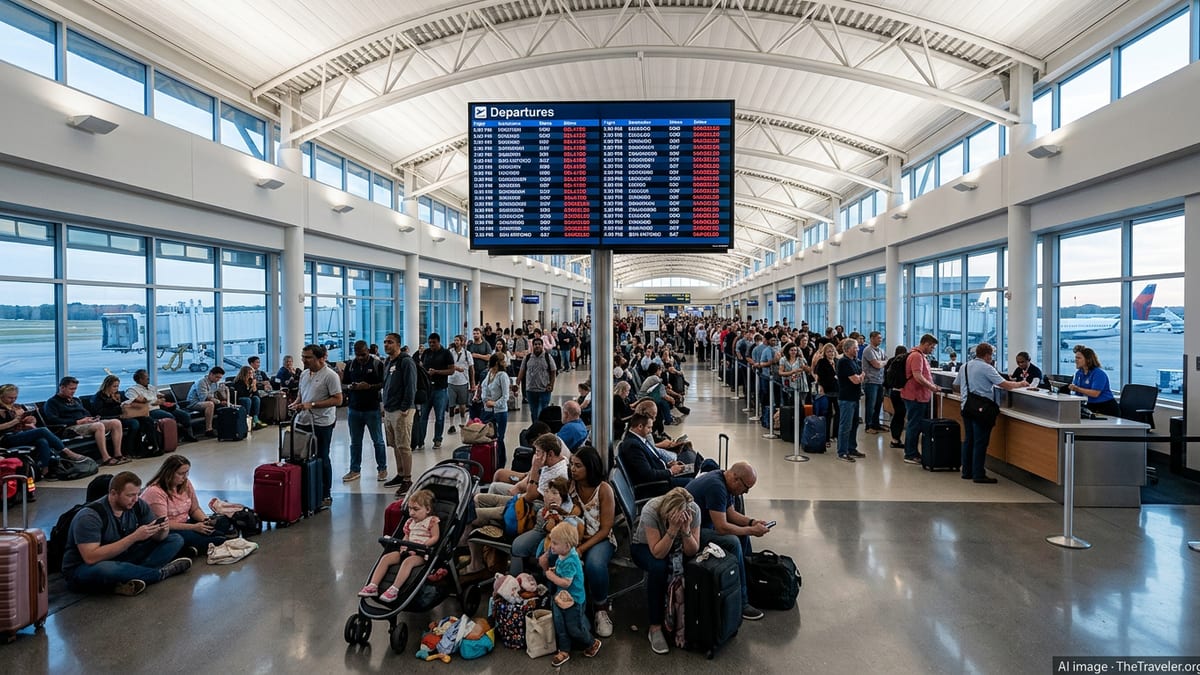
For travelers on the ground, the operational story translated into a familiar personal ordeal: long queues at customer service desks, crowded gate areas and a maze of conflicting notifications from airline apps, gate agents and airport displays. Many passengers connecting through Charlotte said they were “perplexed” to see clear skies and no obvious weather problems while their flights remained stuck in rolling delay status.
Families connecting from leisure destinations described missed cruises, prepaid resort stays and nonrefundable tours eroding the value of long-planned vacations. Business travelers, meanwhile, scrambled to rebook meetings or pivot to video calls from airport lounges and concourses as their carefully timed same-day itineraries unraveled.
With so many flights disrupted nationwide on Sunday and Monday, rebooking options quickly dried up on some routes, particularly to smaller markets that rely on just a handful of daily frequencies. Some passengers reported being offered alternative itineraries that would arrive a full day later than originally planned, or being asked to connect through multiple hubs instead of the usual single stop in Charlotte.
Social media channels filled with images of crowded departure boards, children asleep on terminal floors and snaking security lines at several of the affected airports. While some passengers acknowledged that frontline staff were doing their best under difficult circumstances, frustration mounted at what many saw as poor communication about the root causes of delays and the realistic prospects for getting out the same day.
What Travelers Can Expect Next at Charlotte and Other Hubs
Operational data suggest that the ripple effects from Monday’s delays and cancellations will likely continue into the evening and early Tuesday, particularly on routes that depend heavily on aircraft and crews cycling through Charlotte. Late-arriving aircraft tend to compress already tight overnight maintenance windows, raising the risk of knock-on disruptions for first-wave departures the following morning.
Travel experts advise passengers scheduled to travel through Charlotte, Houston, Chicago, Savannah or San Antonio in the next 24 to 48 hours to monitor their flight status frequently and to opt for earlier departures where possible, providing more flexibility if rebooking becomes necessary. Those with tight international connections are being urged to consider longer layovers or alternative routings through less affected hubs.
Consumer advocates also remind travelers that, while U.S. regulations do not guarantee compensation for weather-related disruptions, passengers may be entitled to meal vouchers, hotel accommodations or rebooking assistance when delays are driven by crew or equipment issues under airline control. They recommend documenting all communications with carriers and retaining receipts for any out-of-pocket expenses incurred during the disruption.
As airlines and airports work to clear the backlog, all eyes will be on how quickly Charlotte’s complex hub operation can stabilize. With the busy spring break travel window approaching, the latest meltdown serves as a stark warning of how fragile the nation’s air travel network remains when multiple stress points converge at once.